Rome To Bari By Train Travel Guide
Plan your rome to bari by train journey with our expert guide. Discover top picks, timing tips, and practical booking advice for a smooth trip to Italy's coast.
On this page
Rome To Bari By Train
Traveling from the historic capital to the sun-drenched Adriatic coast is a classic Italian experience. The **rome to bari by train** route connects ancient ruins with charming seaside culture in just a few hours. High-speed rail options make this journey efficient and comfortable for every type of visitor.
You will see the landscape transform from the rolling hills of Lazio to the vast olive groves of Puglia. This trip offers a perfect blend of convenience and scenic beauty as you cross the Italian peninsula. Modern trains ensure you arrive refreshed and ready to explore the coastal wonders of the south.
Must-See Rome Attractions Before Your Train
Most high-speed trains to Bari depart from Roma Termini throughout the morning and early afternoon, which means you can comfortably fit in a half-day of sightseeing before boarding. The Colosseum and Roman Forum are within metro distance of the station and take roughly three hours to visit properly. Booking skip-the-line tickets the night before is strongly recommended in peak season (June–September) since walk-up queues can easily consume two hours of your buffer time.
If you prefer a shorter loop, the Pantheon (free entry, no reservation needed) and the Trevi Fountain are both walkable from each other and sit about 25 minutes by metro from Roma Termini. Allow yourself at least 40 minutes to return to the station, clear the security check, and reach your platform — Italian high-speed services close boarding 3 minutes before departure. Missing your Frecciarossa or Italo means buying a new ticket, so give yourself a generous buffer.
Travelers catching a morning departure between 07:00 and 10:00 can instead use Termini's own piazza as their last Roman moment — the station's food hall has excellent cornetti and espresso, and the neighbourhood around Piazza della Repubblica is quieter than the centro storico. Vatican City and the Borghese Gallery require advance reservations and half-day commitments; save those for a dedicated Rome stay rather than squeezing them into a train-day morning.
Museums, Art, and Culture in Rome
Rome's museum scene is rich but requires planning if you are fitting a cultural visit into a train-day itinerary. The Vatican Museums take a minimum of three hours and are best done on a full Rome day, not as a rushed pre-train detour. The Borghese Gallery is a sharper option for art lovers on a time budget: entry is limited by appointment, viewings last exactly two hours, and the collection of Bernini sculptures and Caravaggio canvases is staggeringly good for the size of the visit. Reservations are mandatory and sell out weeks ahead in summer 2026.
The Capitoline Museums on the Capitoline Hill offer an efficient 90-minute visit covering ancient bronze and marble statues alongside sweeping views of the Forum below. If you are departing on the 13:00 or later Frecciarossa, the Capitoline makes an excellent morning stop — it sits near the Colosseum metro station, and a direct metro line back to Termini takes under 15 minutes. For a no-cost cultural hit, the church of San Luigi dei Francesi in the historic centre contains three masterwork Caravaggio paintings and charges no admission fee whatsoever.
Parks, Gardens, and Outdoor Spots in Rome
For travelers wanting a relaxed, low-stress start to a train-day, Rome's outdoor spaces beat the crowded museums by a wide margin. Villa Borghese park surrounds the Borghese Gallery and is free to stroll — you can rent a bike at the park entrance and ride the shaded pathways for a flat €5–8 per hour in 2026. The park's elevated terrace at Pincio also delivers one of Rome's finest city panoramas without any queue or admission cost, and it sits a short downhill walk from the Spagna metro stop.
Janiculum Hill (Gianicolo) requires a bus or taxi since no metro stop is nearby, making it better suited for a leisurely Rome day than a train-day morning. The Appian Way regional park is similarly time-consuming to reach from the centre. If you have an early departure, the riverside path along the Tiber between Castel Sant'Angelo and Piazza del Popolo is an underrated 45-minute morning walk that stays mostly flat and requires zero planning. It connects naturally to the Flaminio metro station for a quick ride back to Termini.
Family-Friendly and Budget-Friendly Options in Rome
Families traveling the Rome-to-Bari route on a budget will find the train itself already delivers good value. Trenitalia's FrecciaFAMILY promotion lets children under 14 travel for free and adults receive a discount on the same booking — a meaningful saving on a family of four. Book directly on Trenitalia.com and select the family fare when prompted. Italo runs a similar "Italo Family" offer with children under 14 riding free alongside an adult with a 50% discount, while travelers aged 14–29 qualify for the Italo Young discount of up to 70% off standard fares.
In Rome itself, budget-minded families are well catered for. The Pantheon is free to enter on weekdays (a nominal reservation fee applies on weekends in 2026). The Trastevere neighbourhood requires no entrance fees at all — its cobblestone streets, piazzas, and church interiors are free to explore, and a family meal at a local trattoria here typically costs €12–18 per person including wine. The church of San Luigi dei Francesi in the historic centre houses three priceless Caravaggio canvases that anyone can view without charge.
Children enjoy the interactive Leonardo da Vinci Exhibition near the Pantheon, which offers hands-on displays of the Renaissance inventor's models. Standard adult admission runs around €14 in 2026, with reductions for children aged 6–11. If your train departs in the early afternoon, this 90-minute attraction pairs neatly with a morning visit to the Forum before a calm return to Termini.
How to Plan a Smooth Rome Attractions Day
Efficiency is key when trying to see major sights before your **rome to bari by train** departure. Travelers should Enhance Your Italy Experience Cut The Lines, Cost, & Hassle From Your Trip Get My ItaliaPass to save time. Using a pass can help you skip long ticket queues at the most popular landmarks.
Public transportation in Rome is the fastest way to move between distant neighborhoods and the train station. The metro system connects the Vatican, the Colosseum, and Rome Termini with ease. Buying a daily transit pass can save you money if you plan multiple trips across the city.
Check out various options for how to get to Bari to ensure your timing aligns with your sightseeing plans. Most high-speed trains leave from Termini, so choosing a hotel nearby can simplify your logistics. Planning your route in advance prevents unnecessary stress during your final hours in the capital.
Train from Bari to Rome
The return journey from Bari Centrale back to Roma Termini mirrors the outbound trip in nearly every respect: same operators (Trenitalia Frecciargento and Frecciarossa, plus Italo), same 4-hour-15-minute to 4-hour-30-minute duration on direct services, and the same price floor of around €13–€16 when booked in advance. In 2026 Italo runs three direct departures daily from Bari Centrale toward Rome, while Trenitalia adds several Frecciargento and Intercity services, bringing the total to roughly 10–11 trains through the day. The earliest practical departure is around 06:30 and the last direct service typically leaves before 19:00, with overnight Intercity trains available for night travelers.
Booking your return leg at the same time as your outbound journey almost always secures the lowest fares, since both operators price dynamically and popular summer slots fill up several weeks in advance. Italo's "day return" promotion lets you change date and time up to three days before departure — a useful safety net if your Puglia plans shift. Trenitalia's Super Economy and Economy fares are non-refundable but deeply discounted; the Base fare costs more but is fully changeable without penalty.
Passengers departing from Bari Centrale should budget 10–15 minutes to navigate the station. The platforms are clearly numbered and the concourse is compact compared to Rome Termini, so arriving 20 minutes before departure is comfortable. If you are connecting from the airport, check the Bari airport to city center guide — the airport-to-station transfer takes roughly 30 minutes by bus and must be factored into your timing. The return train offers different scenery: the Pugliese countryside gives way to the Murge plateau and then the dramatic Apennine passes before the train descends into Lazio, making it a worthy journey in its own right.
Direct Trains from Rome to Bari Centrale
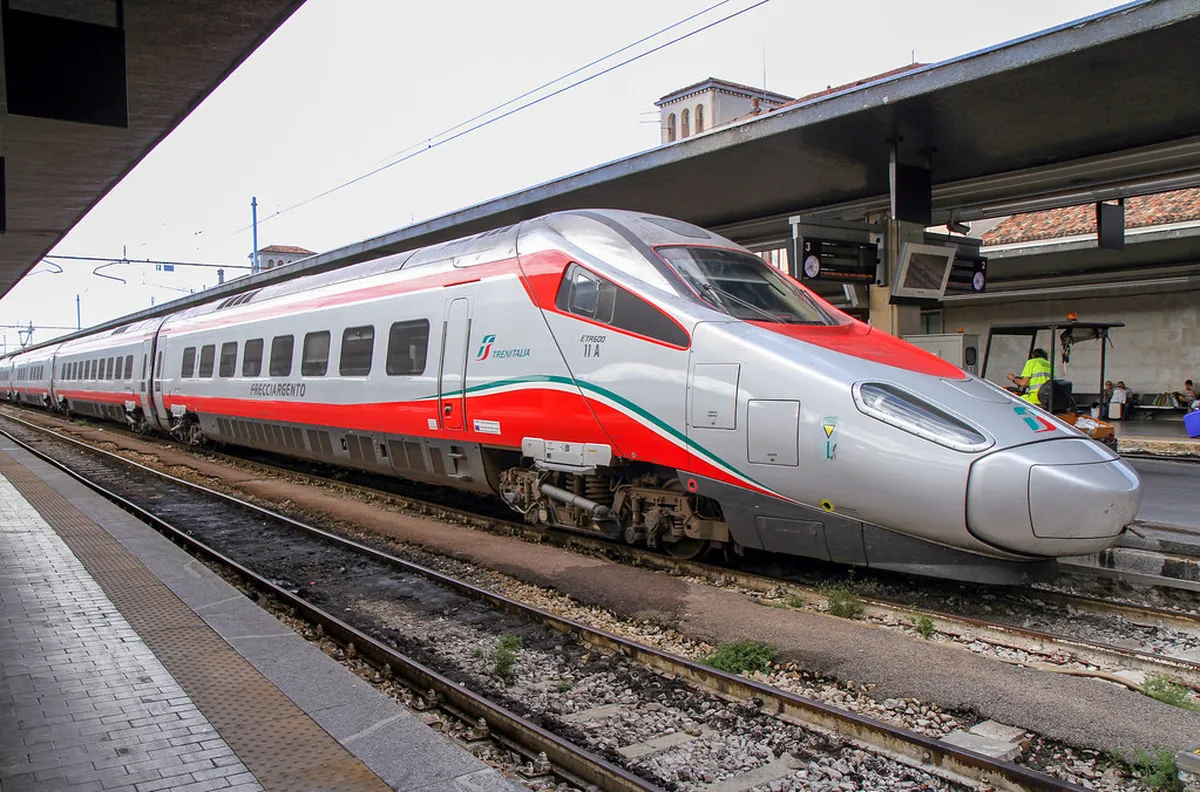
High-speed rail is the dominant choice for the Rome-Bari route, with direct trains covering 375–480 km in 4 hours and 15–23 minutes. Three operators run direct services: Trenitalia (Frecciargento and Frecciarossa), and the private operator Italo. The Italo route makes intermediate stops at Caserta, Benevento, Foggia, Barletta, Trani, Bisceglie, and Molfetta before arriving at Bari Centrale — useful if you are visiting any of those towns en route. Some Trenitalia Frecciargento services run non-stop or with fewer stops, shaving a few minutes off the journey time.
| Operator | Train Type | Duration | Price from | Classes |
|---|---|---|---|---|
| Trenitalia | Frecciargento | 4h 23m | €13.90 | Second / First Class |
| Trenitalia | Frecciarossa | 4h 30m | €19.90 | Standard / Premium / Business / Executive |
| Italo | AV High-Speed | 4h 15m | €12.90 | Smart / Prima / Club Executive |
Class choices have a significant impact on comfort and price on this four-hour route. On Trenitalia's Frecciarossa, Standard class has eco-leather reclining seats and free Wi-Fi, while Business adds a complimentary food box and Illy espresso; Executive upgrades to spacious leather armchairs, lounge access at selected stations, and meals designed by Michelin-star chef Carlo Cracco. On Italo, the entry-level Smart class includes reclining leather seats and power outlets, Prima adds fast-track boarding and at-seat welcome service, and Club Executive provides access to the Italo Club lounges, personal entertainment screens, and dedicated catering. You can find Rome - Bari TICKETS on Italo's site, or compare both operators on a third-party aggregator. Both train types provide free Wi-Fi and power outlets across all classes.
Book your Rome-Bari tickets 3-4 weeks in advance to save up to 50% with Super Economy fares. Mid-week departures are usually cheaper than Friday-Sunday options.
- High-Speed Frecciarossa Service
- Duration: 4 hours
- Speed: 300 km/h
- Departures: Hourly
- Comfort: Premium
- Italo High-Speed Train
- Duration: 4 hours
- Class: Club Executive
- Price: Competitive
- Booking: Online
Journey Details: What To Know Before You Board
All high-speed trains on the Rome-Bari route depart from Roma Termini (station code RMT), not Roma Tiburtina or Roma Ostiense. Platform numbers (Binario) are announced on the large departure boards roughly 15 minutes before departure — platform assignments can change right up until boarding closes, so check the screens rather than relying on any printed information. Italian high-speed trains close boarding 3 minutes before the scheduled departure time; if you miss the cut-off you will need to purchase a new ticket regardless of your existing booking.
On board, both Trenitalia and Italo trains have luggage racks above seats and at the ends of carriages. There is no formal baggage check-in — you manage your own bags. Italo permits carry-on luggage up to 75 × 53 × 30 cm in Smart class; Business and Executive classes have no size limit. Trenitalia imposes no standard size limit but asks that bags fit the available rack space. Folding bicycles are permitted on both operators at no extra charge; full-size bicycles are not.
Tickets are digital by default — both operators allow you to show a QR code on your phone to the conductor rather than printing anything. If you are arriving in Bari to catch a ferry onward to Greece or Croatia, consult the Bari ferry port guide for connection timings. The ferry port is roughly 10–15 minutes from Bari Centrale by taxi. Travelers looking for the cheapest fares should book at least three weeks ahead — Super Economy fares on Trenitalia and equivalent promotional rates on Italo represent up to 50% savings over day-of-travel pricing. Mid-week departures (Tuesday–Thursday) are consistently cheaper than Friday and Sunday afternoon slots.
Trainline Trainline is Europe’s Nº 1 destination for train and bus tickets*
Using a specialized booking app can take the hassle out of managing your Italian rail travel. You can Get a link to download the app and start comparing different ticket prices instantly. This tool allows you to see both Trenitalia and Italo options in one place.
The app features a helpful 'Say hello to Your Account' section where all your digital tickets are stored safely. You no longer need to worry about printing paper tickets or losing your confirmation emails. Simply show the QR code on your phone to the conductor during the ticket check.
Check our Italy travel blog for more tips on using digital tools for European transit. These apps often provide real-time updates on platform changes or any potential delays. Staying informed through your mobile device makes for a much smoother and more modern travel experience.
What To Do in Bari After You Arrive
Bari Centrale station sits directly at the edge of the modern city centre, and within 10 minutes on foot you can reach Bari Vecchia — the compact historic quarter whose maze of whitewashed alleys is one of the most atmospheric old towns in southern Italy. The Basilica of San Nicola, which contains the remains of Saint Nicholas (yes, Father Christmas's saint), is the neighbourhood's most famous landmark and draws pilgrims and curious visitors year-round. Admission to the church itself is free; the treasury and crypt museum charge a small fee. The Castello Svevo (Swabian Castle) stands immediately adjacent and houses changing exhibitions on regional archaeology and art, typically priced at €3–€6 in 2026.
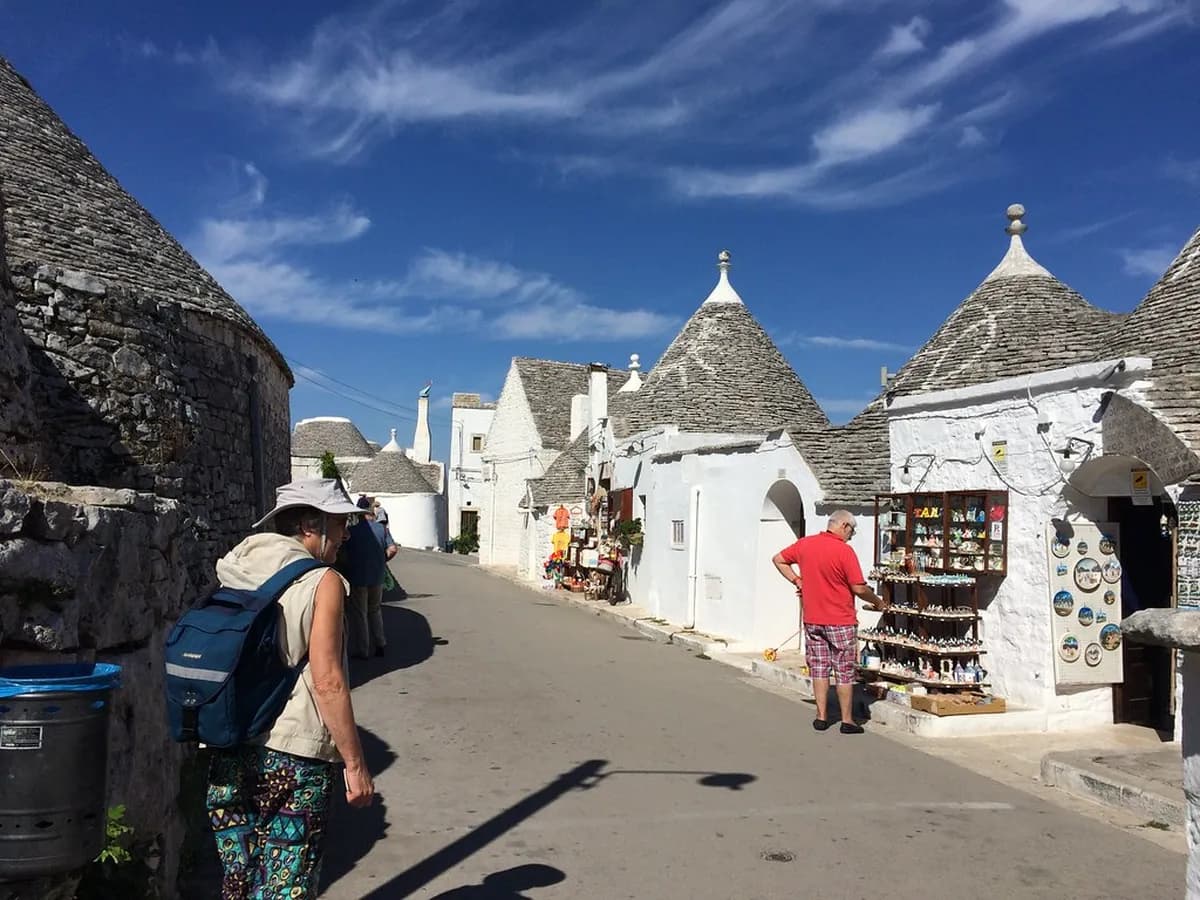
Bari is a genuine foodie destination and the train journey gives you a strong appetite for a reason to try it. The local specialties are orecchiette pasta (best experienced at the street stalls run by local women on Via Arco Basso in Bari Vecchia), focaccia barese topped with tomatoes and olives, and tiella barese — a baked layered dish of rice, potatoes, and mussels that is deeply regional. For seafood, the restaurants around the old port district are reliable and priced well below Rome equivalents: expect €25–€35 per person for a full meal with wine. A day trip to Alberobello (40 minutes by regional train from Bari Sud) to see the famous trulli houses is one of the most popular excursions from the city, and the slow regional train journey through olive groves is a pleasant contrast to the high-speed ride that brought you here.
Types of Trains From Rome to Bari Centrale
Three distinct train types serve the Rome-Bari corridor in 2026, each with a different speed, stop pattern, and price profile. Understanding the differences helps you choose the right ticket rather than simply defaulting to the first result on a booking site.
The Frecciarossa ("red arrow") is Trenitalia's flagship, capable of 300 km/h and equipped with four service classes. It is the most comfortable option but not the fastest on this specific route because the line south of Naples includes older, curvier sections where top speed cannot be sustained. The Frecciargento ("silver arrow") actually achieves faster end-to-end times on the Rome-Bari route for many departures — it is optimised for the tilting curves of the southern network and consistently clocks in at around 4 hours 23 minutes on the fastest scheduled services. Its two classes (First and Second) are simpler than the Frecciarossa but include reclining seats, free Wi-Fi, power outlets, and a FRECCIABistrò dining car. Italo's trains are the third option: modern, all-high-speed, and priced competitively, particularly when booked via their own website. Their Smart class starts from €12.90 and provides a comfortable four-hour-plus journey, while Club Executive is one of the premium train experiences in Italy and compares favourably with Frecciarossa Executive on comfort and catering. For budget-focused travellers the choice usually comes down to the cheapest available fare on any of these three services on your travel date — the journey time difference between them is typically under 15 minutes.
Frequently Asked Questions
How do I find cheap train tickets from Rome to Bari Centrale?
Booking your tickets at least three to four weeks in advance usually secures the lowest prices. Mid-week travel is often cheaper than weekend departures. You can also look for 'Super Economy' fares on the official Trenitalia website for the best savings.
What are the train times from Rome to Bari Centrale?
Trains typically run from 6:00 AM until approximately 8:00 PM daily. High-speed services depart every one to two hours during peak times. The total journey time for direct trains is usually between 3 hours and 50 minutes and 4 hours and 15 minutes.
Which rome to bari by train options fit first-time visitors?
Direct high-speed trains like the Frecciarossa or Italo are best for first-time visitors due to their speed and simplicity. These trains require no changes and offer clear announcements in English. If you have extra time, taking the Bari to Alberobello train after arrival is a popular next step.
Taking the train from the capital to the coast is a seamless way to experience the diversity of Italy. You can move from the ancient streets of Rome to the white-washed charm of Bari in a single afternoon. Modern high-speed rail makes this transition both comfortable and incredibly efficient.
Plan your journey ahead of time to enjoy the best prices and the most convenient schedules. Whether you are seeking art in Rome or fresh seafood in Bari, the train is your best connection. Enjoy the ride as you cross the heart of the Italian peninsula toward the Adriatic Sea.
For the bigger picture, see our How To Get To Bari guide — or dive into Bari Airport To City Center Travel Guide and Bari Ferry Port Guide.
You might also like


Continue reading
More guides you'll find useful