Bari to Lecce by Train: 10 Essential Travel Tips
Plan your trip from Bari to Lecce by train with our 2024 guide. Includes ticket prices, booking steps, station maps, and tips for a perfect Puglia day trip.
On this page
Bari to Lecce by Train: 10 Essential Travel Tips
Traveling from **Bari Centrale** to **Lecce** is one of the most scenic rail journeys in Southern Italy. I have taken this route many times while exploring the stunning coastline of the Puglia region. On my last trip, the **Regionale** was delayed by twenty minutes due to maintenance near Brindisi. This guide was last updated in 2026 to ensure you have the latest pricing and schedule info.
Quick Answer: The **Regionale** train is the best default option, costing €11 / ~$12 and taking roughly 90–100 minutes. For faster travel, the **Frecciarossa** takes as little as 81 minutes but costs significantly more at €20+ / ~$22+.
The tracks run through the heart of Puglia for 139 kilometers, passing vast olive groves and small white-washed towns that define the Salento landscape. There are around 32–33 trains per day on this route, with the first departure at 05:02 and the last service leaving **Bari Centrale** at 23:02. If you are planning a longer trip, read our guide on how to get to Lecce from other cities.
Understanding the Bari to Lecce Train Route
The rail connection between these two cities is efficient and runs frequently throughout the entire day. Most travelers will find that trains depart every thirty to sixty minutes during peak daylight hours. The distance is 139 kilometers, making it an ideal length for a comfortable morning ride down into Salento. Check the ItaliaRail Route Guide for a detailed map of the stops along the way.
You can choose between high-speed services and slower regional trains depending on your personal travel budget. The slower trains stop at smaller stations like Polignano a Mare and Monopoli along the way, giving you a ground-level glimpse of the Apulian countryside. High-speed options skip most intermediate stops, pausing only at **Brindisi** before reaching **Lecce**. This route carries around 32 daily services and is popular with commuters, so expect busier carriages during the 07:00–09:00 and 17:00–19:00 windows.
The first train departs **Bari Centrale** at 05:02 and the last leaves at 23:02, giving you almost 18 hours of scheduling flexibility. Regional tickets are sold at a fixed price and do not sell out, so you can walk up and buy one the same morning. If you prefer a guaranteed assigned seat, the **Frecciarossa**, **Frecciargento**, or **Intercity** services require a reservation — book these in advance, especially on summer weekends when seats fill quickly. I always recommend checking the 'Partenze' board for the Lecce-bound platform number (binario) before descending to the tracks.
Step-by-Step: How to Book Your Tickets Online
Booking your train tickets online is the most convenient way to prepare for your Puglian adventure. Digital platforms allow you to compare prices and travel times without standing in station lines. You can use the Trenitalia Official Site for direct access to all local schedules. Many travelers also enjoy using the Trainline Booking App for a user-friendly English interface.
The process is straightforward but requires attention to the specific train types and departure times. Remember that regional tickets have a fixed price and do not sell out like high-speed seats. I once saw a tourist struggle with a broken ticket machine for fifteen minutes during rush hour. Avoid that stress by having your digital ticket ready on your smartphone before reaching the platform.
- Step 1: Choose your preferred booking platform
- Visit the official Trenitalia website for the most accurate schedules and lowest available prices.
- Expect the booking process to take about five minutes from start to finish on mobile.
- Avoid third-party sites that add high service fees for simple regional ticket purchases.
- Step 2: Enter your departure and arrival stations
- Input **Bari Centrale** and **Lecce** into the search fields to see all available options.
- Ensure you select the correct date and approximate time for your planned morning or afternoon departure.
- Check that you have not accidentally selected a bus replacement service instead of a train.
- Step 3: Select the best train for your budget
- Compare the **Regionale** price of €11 / ~$12 with the faster high-speed alternatives.
- The regional option is best when you have no large luggage and arrive in daylight.
- Look for the 'Economy' or 'Super Economy' fares if you are booking a high-speed train.
- Step 4: Provide passenger details and payment info
- Enter your full name as it appears on your passport for identification purposes.
- Most major credit cards and digital wallets like PayPal are accepted for secure online payments.
- Double check your email address to ensure the digital ticket arrives in your inbox immediately.
- Step 5: Save the digital QR code to your phone
- Download the PDF ticket or save it to your digital wallet for easy access offline.
- This step takes only a few seconds but prevents issues if the station internet is weak.
- Ensure your phone battery is charged so you can show the code to the conductor.
- Step 6: Understand the validation rules for your ticket
- Digital tickets on your phone do not require physical validation before you board the train.
- Paper tickets must be stamped in the green or yellow machines located near the platforms.
- Failing to validate a paper ticket can result in a fine of over €50 / ~$55.
Comparing Train Types: Frecciarossa vs. Regional
The most important decision you will make for this journey is whether to pay roughly double the price for a time saving of just 15–20 minutes. For most day-trippers the answer is no — the **Regionale** and **Regionale Veloce** cost €11–€12 / ~$12–$13 and take 90–110 minutes, which is perfectly comfortable on a short southern Italian hop. The seats have air conditioning and power outlets, and the coastal scenery near Polignano a Mare and Monopoli is genuinely worth experiencing at a slower pace.
The **Frecciarossa** is the premium high-speed option that cuts the travel time down to 80 minutes. Prices for these seats fluctuate but generally start around €20 / ~$22 and can go much higher. You will enjoy air conditioning, power outlets, and more spacious seating on these modern Italian trains. If you are coming from further away, see our guide on Rome to Lecce travel.
| Train Type | Travel Time | Cost | Stops | Best For |
|---|---|---|---|---|
| Regionale / Regionale Veloce | 90-110 min | 11 EUR | Multiple (Polignano, Monopoli) | Budget travelers |
| Frecciarossa | 80 minutes | 20+ EUR | Brindisi only | Speed seekers |
| Intercity | 90 minutes | 15 EUR | Fewer stops | Balanced value |
**Intercity** trains offer a sensible middle ground: fewer stops than regional services, reserved seating, and a price of around €15 / ~$16 for a journey of roughly 90 minutes. These trains often have older but comfortable carriages with fold-down tables and power sockets. The bottom line: if you are traveling solo on a weekday and your hotel check-in is flexible, the **Regionale Veloce** is the smart choice. Book the **Frecciarossa** only if you are connecting onward from Naples or Rome and every minute genuinely counts.
Departure Guide: Navigating Bari Centrale Station
**Bari Centrale** is a large and busy hub that can be confusing for first-time visitors to Puglia. The main entrance faces Piazza Aldo Moro, where you will find many local bus stops and taxis. Give yourself at least twenty minutes to find your platform and navigate the underground pedestrian tunnels. For more tips on the city, visit our Italy travel blog for local advice.
Most trains heading south to Lecce depart from platforms one through ten in the main station area. Always check the large electronic 'Partenze' boards for the most up-to-date platform or 'binario' number. Sometimes the platform changes at the last minute, so stay alert for announcements in Italian and English. I once waited on the wrong platform because I trusted an old paper schedule instead of the screen.
The station features several cafes where you can grab a quick espresso or a focaccia before boarding. Public restrooms are available for a small fee, usually around €1 / ~$1.10, near the main hall. Luggage storage is also available if you want to explore Bari for a few hours before leaving. Keep a close eye on your belongings in the crowded areas around the ticket machines and entrances.
Always validate paper regional tickets in the green machines before boarding. Digital tickets on your phone do not require physical validation. Failure to validate a paper ticket results in fines over 50 EUR.
Arrival Guide: Getting from Lecce Station to the Old Town
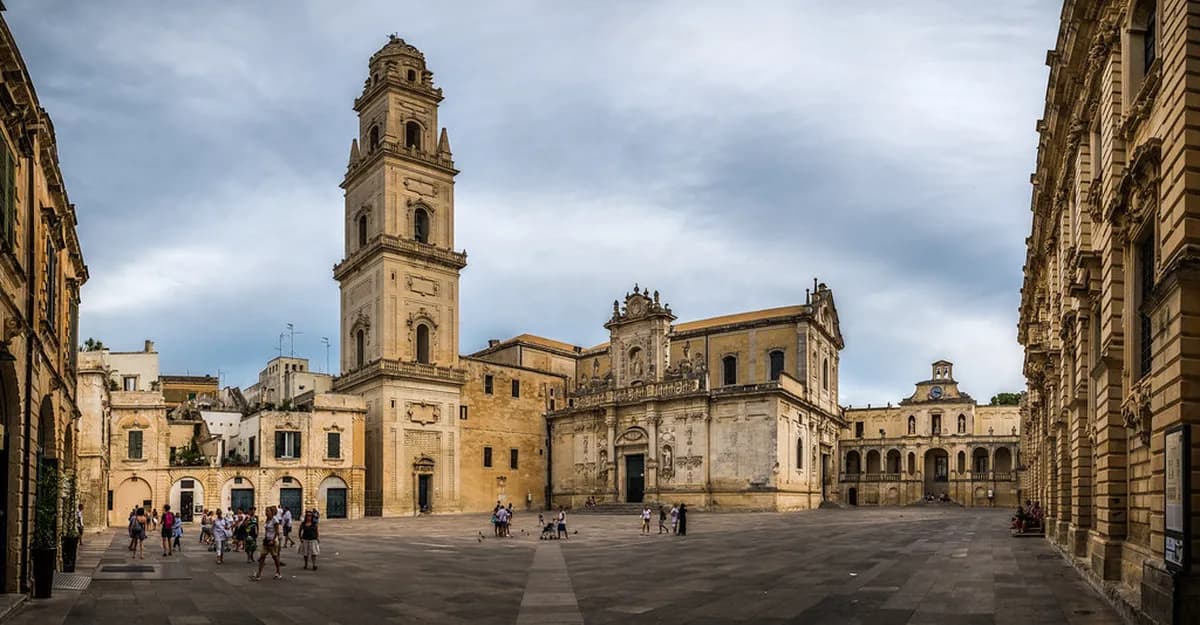
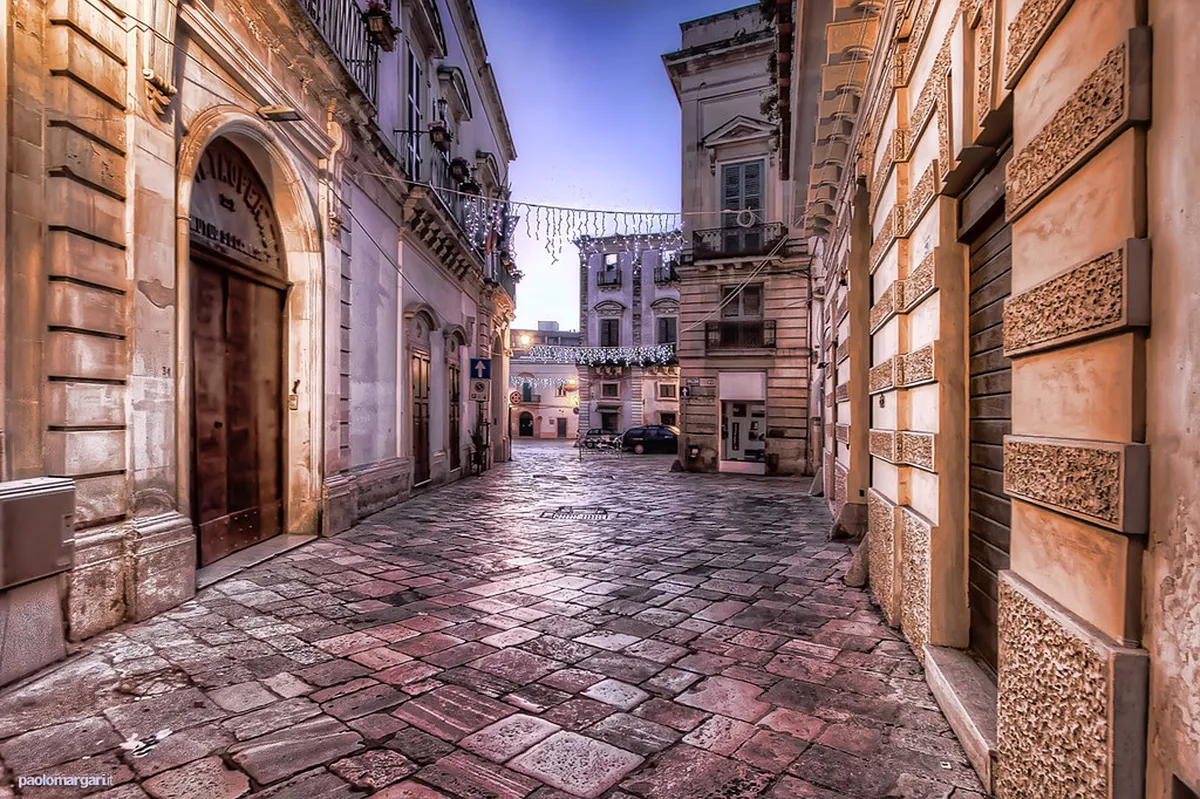
Arriving at the **Lecce** station puts you just a short walk away from the historic Baroque center. The walk to the famous Piazza Sant'Oronzo takes about fifteen minutes through pleasant and safe city streets. Simply exit the station and walk straight down Viale Oronzo Quarta until you reach the old gate. Once you arrive, you can find more info on getting around Lecce for your stay.
If you have heavy luggage, taxis are usually lined up right outside the main station exit door. A short ride to a hotel in the old town typically costs between €10 / ~$11 and €15 / ~$16. Be aware that many parts of the historic center are restricted to local traffic only during the day. Your driver might have to drop you at the edge of the pedestrian zone near the gates.
Local buses also serve the station area, but the walking route is much simpler for most visitors. Lecce is known as the 'Florence of the South' and its beauty is visible immediately upon arrival. Take a moment to admire the ornate stone carvings on the buildings as you enter the old city. The station itself is small and very easy to navigate compared to the larger hub in Bari.
Troubleshooting and Common Journey Problems
While the Italian rail system is generally reliable, small issues can occasionally disrupt your planned travel day. Knowing how to handle these situations will save you time and prevent unnecessary stress during your vacation. Most problems can be solved by speaking with the staff at the 'Biglietteria' or assistance desks. Keep your digital devices charged so you can access your booking information and real-time updates easily.
Strikes are a known part of Italian life and are usually announced several days in advance online. If a strike occurs, regional trains are often guaranteed during specific morning and evening commute hours. Always verify the status of your specific train on the official app before heading to the station. I recommend having a backup plan, such as a bus or private transfer, during known strike days.
- The train is delayed or cancelled
- Check the 'Partenze' board for real-time updates and look for alternative regional connections.
- Listen for announcements regarding platform changes which often happen during unexpected delays.
- Ask the station staff if your ticket can be used on the next available train.
- You forgot to validate a paper ticket
- Find the conductor immediately upon boarding to explain the mistake before they check your ticket.
- They might allow you to pay a smaller fee instead of a full penalty fine.
- Always look for the green machines near the platform entrance before you step on the train.
- The ticket machine is not working
- Try a different machine or head to the staffed ticket window in the main hall.
- Use your mobile phone to book the ticket online via the official Trenitalia website instead.
- Take a photo of the broken machine as proof if you must board without a ticket.
- You missed your scheduled high-speed train
- Go to the ticket office to see if your fare allows for a late change.
- You may need to pay a change fee or purchase a new ticket for the next service.
- Regional tickets are usually valid for several hours, so missing one is rarely a major problem.
- There is no space for your luggage
- Look for the dedicated luggage racks at the end of each carriage on larger trains.
- Smaller bags can usually fit in the overhead racks directly above your assigned seat.
- Avoid blocking the aisles or doorways with large suitcases to keep the path clear for others.
Onboard Amenities and Luggage Policies
What you get on board depends heavily on the train type you choose, and the gap between a **Regionale** and a **Frecciarossa** is substantial. Regional trains offer basic air conditioning, power outlets at most seats, and baggage racks at the end of each carriage. There is no dedicated dining car, but the journey is short enough that you will not miss it — grab a cornetto at the **Bari Centrale** café before you board.
The **Frecciarossa** is a different experience entirely. All four service classes — Standard, Premium, Business, and Executive — include free WiFi, eco-leather reclining seats, a FRECCIABistrò dining car, and the FRECCIAPlay entertainment portal. Business Class adds a complimentary food box with Illy espresso; Executive Class offers unlimited drinks and a rotating gourmet menu. The **Frecciargento** ("silver arrow") matches most of these amenities in its First and Second Class configurations, including a Bistrò bar, free WiFi, and reclining seats with power outlets.
For luggage, there are no size limits on any Trenitalia service — bags travel free. Frecciarossa and Frecciargento trains accept folded bikes (max 80 × 110 × 45 cm) and small pets in a carrier (max 70 × 30 × 50 cm) at no charge. Larger dogs cost €5 / ~$5.50 Sunday–Friday and just €1 / ~$1.10 on Saturdays. Regional trains also allow pets but check the specific carriage rules before boarding.
Planning a Day Trip: Is It Feasible?
A day trip from Bari to Lecce is not just feasible — it is one of the best-value day trips you can do in Puglia. The 2026 summer schedule runs trains from 05:02 to 23:02, giving you roughly 14 usable hours in the city even on a tight itinerary. Here is a realistic timeline that works without rushing:
Depart **Bari Centrale** on the 08:32 **Regionale Veloce** and arrive in Lecce by 10:15. Spend the morning exploring the Baroque old town: the **Piazza del Duomo**, the **Basilica di Santa Croce**, and the Roman amphitheater all sit within a 15-minute walk of each other. Take a long lunch at one of the trattorias on Via Augusto Imperatore — the local pasticciotto pastry and ciceri e tria pasta are non-negotiable. Spend the afternoon browsing the artisan papier-mâché shops and climbing the castle tower. Aim for the 19:02 or 20:02 **Regionale** back to Bari, arriving comfortably before dinner. Total round-trip cost: €22 / ~$24. One long, satisfying day.
The only scenario where a day trip does not work well is if you also want to visit the Salento coast (Otranto or Gallipoli). Those require a hire car — the train gets you to Lecce, but the beaches are 40–60 km further south with poor onward rail links. In that case, plan an overnight stay and pick up a car in Lecce.
Exploring Salento: When to Choose a Car Over the Train
The train is the correct choice for Bari to Lecce. Full stop. But Lecce is only the gateway to Salento, and the rest of the region tells a very different transport story. **Otranto**, with its mosaic cathedral and crystal-clear harbor, sits 40 km southeast of Lecce — a 50-minute drive that becomes a convoluted two-hour bus connection without a car. **Gallipoli**, the photogenic island town on the Ionian coast, is 37 km southwest and equally difficult to reach by public transit in summer.
If your itinerary involves more than one night and includes beach time, renting a car from Lecce is the most practical move. Several agencies operate near the station, and daily rates in 2026 start from around €40 / ~$44 including basic insurance. The roads through the Salento countryside — lined with centuries-old dry-stone walls and gnarled olive trees — are genuinely worth driving slowly. Park in Gallipoli's dedicated lots near the bridge (€2–€3 / hour in July–August) and walk across to the old town.
The short version: take the train from Bari to Lecce to save money and avoid motorway traffic. Hire a car from Lecce if you plan to explore the wider Salento peninsula. The two modes complement each other perfectly and cover the full region without compromise.
Frequently Asked Questions
How much does a train ticket from Bari to Lecce cost?
A standard regional train ticket costs €11 / ~$12 for a one-way trip. High-speed Frecciarossa tickets are more expensive, typically starting around €20 / ~$22 depending on when you book.
How long is the train ride from Bari to Lecce?
The journey takes between 80 and 110 minutes. High-speed trains are the fastest at about 1 hour and 20 minutes, while regional services take closer to 1 hour and 45 minutes.
Do I need to book Bari to Lecce train tickets in advance?
You do not need to book regional tickets in advance as the price remains the same. However, booking high-speed Frecciarossa or Intercity trains early can save you money on premium fares.
Taking the train from Bari to Lecce is a simple, affordable, and beautiful way to see Puglia. Whether you choose the fast **Frecciarossa** or the budget-friendly **Regionale**, you will enjoy a smooth trip. Remember to validate your paper tickets and keep your digital copies ready for the conductor. Enjoy the stunning Baroque architecture and warm hospitality that awaits you in the city of Lecce.
Planning more of the region? See our things to do in Bari guide.
You might also like

Continue reading
More guides you'll find useful