Bari Weather By Season: 9 Essential Insights
Plan your trip with our Bari weather by season guide. Includes monthly temperature charts, rainfall data, packing tips, and the best time to visit Puglia.
On this page
Bari Weather By Season: 9 Essential Insights
I visited Bari in late May, and the weather was absolutely perfect for exploring. Updated October 2024 from my spring 2024 visit. The best time to visit Bari is from mid-May to mid-June for ideal temperatures. This window offers warm days without the stifling humidity of August.
Bari serves as the gateway to the stunning Puglia region in southern Italy. Travelers often wonder how the coastal weather affects their sightseeing and beach plans. This guide breaks down what to expect from the Adriatic climate throughout the year.
Understanding the nuances of the local weather helps you pack the right clothes. You can avoid the heaviest rain or the most intense heat by planning ahead. Let's look at how the seasons change in this historic port city.
Understanding Bari’s Mediterranean Climate
The city experiences a classic Mediterranean climate with hot summers and mild winters. Coastal winds from the Adriatic Sea play a major role in daily temperature feels. Based on typical WeatherSpark Bari Data, the city enjoys over 2,500 sunshine hours annually.
Adriatic humidity can make summer days feel much hotter than the thermometer suggests. Winter months bring a damp chill that requires more than just a light sweater. The sea acts as a thermal regulator, preventing extreme temperature swings throughout the year.
Bari remains relatively dry compared to northern Italian cities during the spring. Most precipitation falls during short, intense bursts rather than long periods of drizzle. Clear blue skies are common even during the cooler months of the year.
Spring: Mild Temps and St. Nicholas
Spring brings a refreshing change as temperatures rise to 15–22°C / 59–72°F. Wildflowers bloom across the nearby Valle d’Itria, making it ideal for day trips. The city starts to feel alive as outdoor cafes set up their seaside tables.
May is a particularly special time to visit because of the St. Nicholas Festival. Held on May 9th, this event usually enjoys bright sunshine and comfortable walking weather. Our late-May trip hit Bora-style winds on two days—pack a light windbreaker just in case.
Sea temperatures remain cool in early spring at 14–16°C (57–61°F), making May ideal for city exploration and cultural walking tours rather than beach swimming.
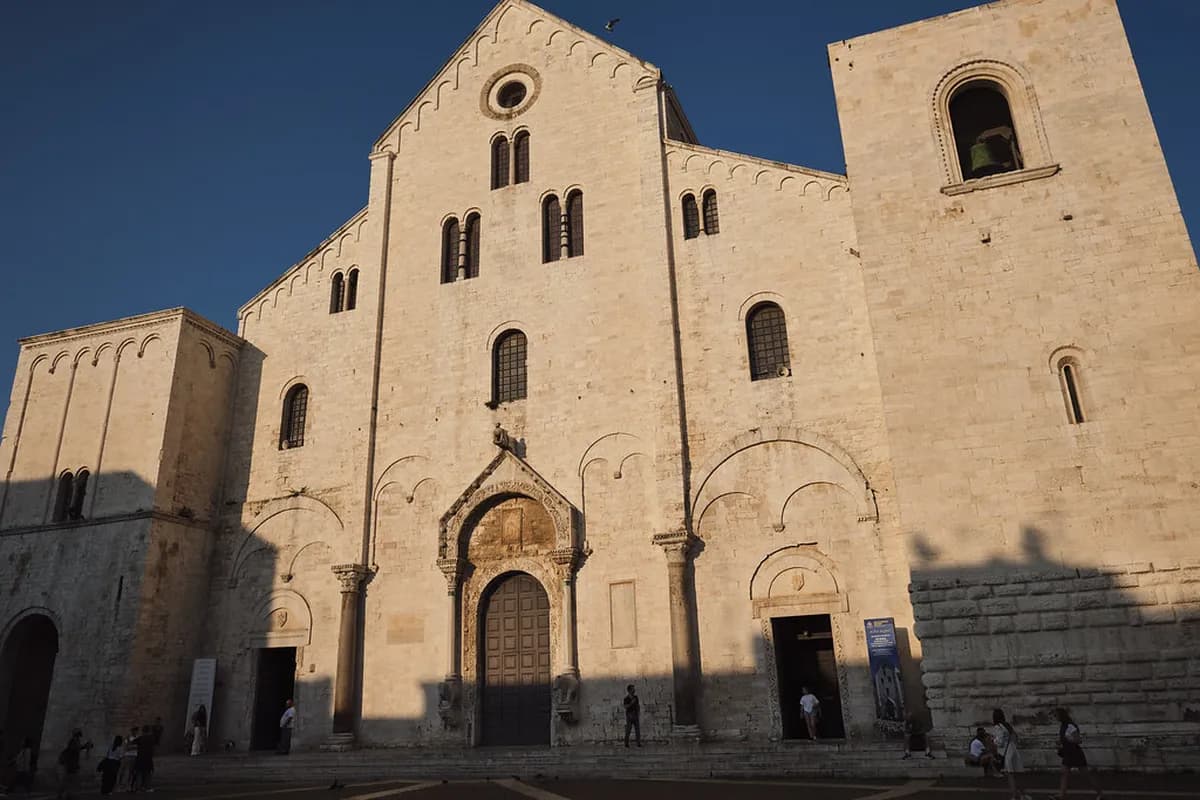
Sea temperatures remain cool in early spring, so swimming is for the brave only. Expect averages of 14–16°C / 57–61°F in the water during April and May. Crowds are manageable, allowing for easy access to the Basilica of Saint Nicholas.
Summer: Peak Heat and Beach Days
Summer temperatures in Bari often climb to 24–30°C / 75–86°F between June and August. July and August are the hottest months, characterized by high humidity and still air. Check our Bari beaches summer guide for the best spots to cool off.
The Adriatic Sea finally warms up to a pleasant 25°C / 77°F by mid-July. Locals and tourists alike flock to the waterfront to escape the city heat. Siesta culture is vital here, as the midday sun can be quite punishing.
Evening temperatures rarely drop below 20°C / 68°F, making for wonderful outdoor dining. Bari’s lungomare comes alive at night with people enjoying the coastal breeze. Rain is very rare during this season, so you can leave the umbrella home.
Autumn: Warm Seas and Harvest Rain
September and October are often considered the 'secret' best months for visiting Puglia. Air temperatures settle into a comfortable 18–24°C / 64–75°F range during the day. The sea remains warm from the summer heat, perfect for late-season swimming.
Rainfall begins to increase as the region moves into November. This month is statistically the wettest, with occasional heavy thunderstorms hitting the coast. Despite the rain, the olive harvest brings a festive atmosphere to the surrounding countryside.
Autumn colors transform the landscape of the nearby Murge plateau and forests. You will find fewer tourists at major landmarks compared to the summer peak. Prices for accommodation also start to drop significantly after the first week of September.
Winter: Cool, Damp, and Quiet
Winter in Bari is mild compared to northern Europe but can feel quite damp. Daily highs usually hover around 8–13°C / 46–55°F from December through February. Snow is an extremely rare sight in Bari, occurring only once every few years.
Bora-style winds from the northeast can bring a sharp bite to the air, and November is the rainiest month with occasional heavy thunderstorms. Always pack waterproof gear for winter visits.
Bora-style winds from the northeast can bring a sharp bite to the air. You should plan for indoor activities like visiting the Swabian Castle or local museums. The city remains vibrant with Christmas markets and local culinary traditions in December.
Budget travelers will find the best deals on hotels during the winter months. Flight prices to Bari Karol Wojtyła Airport are also at their annual lowest. Just be prepared for shorter days and occasional grey, overcast skies.
Season Comparison
Comparing the seasons helps you decide which weather fits your personal travel style. Spring and autumn offer the best balance for those who enjoy walking tours. Summer is the undisputed king for anyone looking to spend time in the water.
Winter provides a peaceful look at local life without the tourist bustle. Each season has a distinct personality reflected in the local food and festivals. The following table summarizes the key data points for your trip planning.
| Season | Weather | Crowds | Prices | Events | Best for |
|---|---|---|---|---|---|
| Late March to early June | 12-22°C / 54-72°F | Moderate | Mid-range | St. Nicholas Festival | City Sightseeing |
| Mid-June to late August | 23-30°C / 73-86°F | High | Expensive | Locus Festival | Beach Holidays |
| September to mid-November | 15-25°C / 59-77°F | Moderate | Mid-range | Olive Harvest | Warm Swims |
| Late November to early March | 8-13°C / 46-55°F | Low | Cheap | Christmas Markets | Budget Travel |
What’s Closed in Low Season
Traveling in the off-season requires awareness of certain local service changes. Seasonal beach clubs, known as lidos, typically close by the end of September. You may find fewer options for sunbed rentals if you visit in October.
Regional ferries to smaller Adriatic ports often stop running between November and March. Direct boat trips to the Tremiti Islands are much less frequent during winter. Always check the latest schedules before planning island hops in the cooler months.
Some coastal restaurants in smaller villages nearby may close for a winter break. Bari's main city center remains open, but smaller tourist-focused shops might reduce hours. Museums and major historical sites generally maintain standard opening times year-round.
Best Time to Visit Bari for Different Activities
What you want from a trip determines when you should go. For sightseeing on foot — the Basilica of Saint Nicholas, Bari Vecchia's labyrinthine alleys, the lungomare — May and October are near-perfect. Air temperatures stay between 18–22°C / 64–72°F, crowds are thin, and the light in the old town has a golden quality that July simply cannot match. You can walk all morning without stopping for shade.
For beach days and swimming, hold out for late June through mid-September. Adriatic sea temperatures peak at 25–27°C / 77–81°F in August, and the lidos along the Bari coast are fully staffed with sunbeds (around €12–18 per day for a double set in 2026). July and August are scorching — plan any outdoor sightseeing before 10:00 or after 18:00, and book accommodation with air-conditioning.
Culture and food festivals follow a shoulder-season calendar. The St. Nicholas Festival on May 9th draws large local crowds but the weather is almost always ideal — clear skies and 19–21°C / 66–70°F. Autumn brings the olive harvest (mid-October to mid-November) and the Locus Festival wraps up the summer. Budget travelers get the best hotel rates from December through February, when a city-centre double room regularly drops below €60 per night.
- Sightseeing and culture: May, late September, October
- Beach and swimming: late June to mid-September
- Food events and olive harvest: October to November
- Budget travel and quiet streets: December to February
What to Pack for Bari's Changing Seasons
Spring visitors (March to May) should build around layering. A lightweight merino or cotton mid-layer plus a windproof shell handles the Bora gusts that can arrive without warning — we hit 40 km/h winds during our late-May visit. Comfortable walking shoes with grip are essential for Bari Vecchia's slick limestone alleyways. Sea temperatures don't clear 18°C / 64°F until mid-May, so leave the swimwear for the second half of the month.
Summer demands breathable, light-coloured clothing — linen shirts and loose trousers do better than synthetic fabrics in the humid Adriatic heat. SPF 50 sunscreen is non-negotiable; UV index regularly reaches 9–10 in July and August. Flip-flops are fine for sandy beaches but bring light trainers for the cobbled old town. A small reusable water bottle is invaluable: Bari has numerous drinking fountains throughout the city centre.
Autumn (September to November) is the most mixed season for packing. Early September still feels like summer — shorts and a light shirt suffice. By late October, switch to a rain jacket and a sweater for evening. November's thunderstorms can be intense, so pack waterproof shoes or ankle boots if visiting then.
Winter travelers need warm layers rather than heavy coats — Bari rarely drops below 5°C / 41°F at night. A waterproof jacket, scarf, and closed walking shoes cover most situations. One umbrella per person is wise; the Bora wind makes larger umbrellas impractical.
Regional Comparison: Bari vs Puglia
Bari sits in the center of Puglia's long, diverse coastline. The weather here can differ from other parts of the region significantly. Consult the Beautiful Puglia Weather Guide for more regional specifics.
Northern Gargano is often 3–4 degrees cooler than Bari due to its elevation. Southern Salento tends to stay warmer in the fall but feels more humid. Bari offers a middle ground with slightly more wind than the southern tip.
The Valle d’Itria hills can be much colder at night than the coast. If you are staying in a trullo, expect cooler temperatures than in Bari. Always check the specific forecast for your inland day trips from the city.
Monthly Temperature and Rainfall Breakdown
The table below consolidates average daily highs, nightly lows, rainfall, sunshine hours, and Adriatic sea temperatures for each month in Bari. These figures are based on multi-decade climate records and are reliable reference points for trip planning in 2026.
| Month | Avg High | Avg Low | Rain (mm) | Sun (hrs/day) | Sea Temp |
|---|---|---|---|---|---|
| January | 12°C / 54°F | 5°C / 41°F | 68 | 5 | 14°C / 57°F |
| February | 13°C / 55°F | 5°C / 41°F | 67 | 6 | 13°C / 55°F |
| March | 15°C / 59°F | 7°C / 45°F | 60 | 7 | 14°C / 57°F |
| April | 18°C / 64°F | 10°C / 50°F | 50 | 8 | 16°C / 61°F |
| May | 22°C / 72°F | 14°C / 57°F | 34 | 9 | 19°C / 66°F |
| June | 27°C / 81°F | 18°C / 64°F | 17 | 11 | 23°C / 73°F |
| July | 30°C / 86°F | 21°C / 70°F | 12 | 12 | 26°C / 79°F |
| August | 30°C / 86°F | 21°C / 70°F | 13 | 12 | 27°C / 81°F |
| September | 26°C / 79°F | 17°C / 63°F | 60 | 10 | 25°C / 77°F |
| October | 21°C / 70°F | 13°C / 55°F | 79 | 7 | 22°C / 72°F |
| November | 16°C / 61°F | 9°C / 48°F | 100 | 6 | 18°C / 64°F |
| December | 13°C / 55°F | 6°C / 43°F | 79 | 5 | 15°C / 59°F |
Key takeaways for swimmers: the sea crosses the 20°C / 68°F comfort threshold in June and stays there through October. August is the warmest month for sea bathing at 27°C / 81°F, but October's 22°C / 72°F sea combined with 21°C / 70°F air temperatures and just 79mm of rain makes it the best month for combining a final swim with relaxed sightseeing. The driest stretch is June to August, with as little as 12mm of rain in July — ideal for any outdoor-heavy itinerary.
Why October Is Bari's Best-Kept Secret
October occupies a sweet spot that most travel guides underplay. The Adriatic still holds 22°C / 72°F of summer warmth, which means comfortable sea swimming without the sardine-tin crowds of August. Air temperatures average a very walkable 21°C / 70°F during the day, and the harsh midday glare that makes July sightseeing uncomfortable has mellowed to a golden-hour quality that lasts most of the afternoon.
Accommodation prices fall sharply — typically 25–40% below peak August rates at the same properties. Flight seats open up and are far cheaper from northern European hubs. The lungomare has space on it again; you can actually stop and look at the sea rather than navigate around sunbathers. Restaurants in Bari Vecchia no longer require advance booking, and the stall owners at Mercato del Pesce on Via Carrassi have time to talk.
The surrounding countryside rewards a day trip in October more than any other month. Olive harvest is under way across the Murge plateau, and you can buy single-estate early-harvest olive oil (olio nuovo) directly from masserie for €10–15 per litre — a fraction of what you'd pay imported at home. The Valle d'Itria trulli glow in amber light and are rarely more atmospheric. If you have flexibility and want the best version of Bari and Puglia with minimum friction, book October.
Frequently Asked Questions
When is the best time to visit Bari for beaches?
The best time for beaches is from July to early September. Sea temperatures are warmest during this peak summer window. Most beach clubs are fully operational during these months.
Does it snow in Bari during the winter?
Snow is very rare in Bari and only happens every few years. The climate is too mild for regular snowfall. Winter is mostly characterized by cool rain and damp winds.
What is the rainiest month in Bari?
November is statistically the rainiest month in Bari. You can expect short, intense thunderstorms during this time. Most other months remain relatively dry and sunny.
Bari offers a wonderful climate that caters to many different types of travelers. Whether you want hot beach days or cool cultural walks, there is a perfect month. I hope this guide helps you plan your ideal trip to this Adriatic gem.
Check our Italy travel blog for more tips on visiting Puglia. Don't forget to pack according to the season to ensure a comfortable stay. Safe travels to the beautiful coast of southern Italy!
You might also like


Continue reading
More guides you'll find useful