Festa di San Nicola Bari Guide: 6 Essential Planning Tips
Master the Festa di San Nicola in Bari with our guide to the 3-day schedule, sea processions, historical parades, and local tips for May 7-9.
On this page
Festa di San Nicola Bari Guide: 6 Essential Planning Tips
If you are a first-timer visiting Puglia, the Festa di San Nicola is the ultimate cultural experience. I spent my last visit navigating the packed alleys of Bari Vecchia during the May celebrations. This guide was last refreshed after my spring visit to ensure you have the latest details. We found that planning for the three-day window from May 7 to May 9 is crucial for success.
This comprehensive Bari festivals and events guide covers everything from the sea procession to the air show. I built this 3-day Bari itinerary after my fourth visit to the city during the patron saint festivities. The city transforms into a vibrant stage where ancient history meets modern Italian street life. You will see how religious devotion and secular parties blend perfectly along the Adriatic coast.
At a Glance: 3-Day Festa di San Nicola Itinerary
The festival schedule is packed with events that span from the early morning until late at night. Most major spectacles are free to attend, but they require arriving early to secure a good spot. I recommend wearing comfortable shoes as you will walk several miles between the harbor and the Basilica. The weather in May is usually sunny and warm, so bring a hat and plenty of water.
I suggest starting your planning at least six months before the May 7th start date. Bari becomes incredibly crowded, with pilgrims arriving from all over the world to honor the saint. Our guide focuses on helping you balance the solemn religious rites with the lively street festivals. This itinerary ensures you do not miss the iconic historical parade or the extraction of the Holy Manna.
Book accommodations 6-8 months ahead — Bari hotels double their prices as May approaches. Staying in the Murat district offers good access to the Old Town plus quieter evenings.
- Day 1: May 7th: History and Grandeur
- Morning: Arrival of the pilgrims at the Basilica.
- Afternoon: Preparation of the historical parade floats.
- Evening: The 500-person Corteo Storico through the city.
- Day 2: May 8th: Coastal Spectacle
- Morning: Statue embarkation and the sea procession.
- Afternoon: Frecce Tricolori air show over the Lungomare.
- Evening: Street parties and festive lighting displays.
- Day 3: May 9th: Spiritual Devotion
- Morning: Solemn masses and religious ceremonies.
- Afternoon: The extraction of the Holy Manna.
- Evening: Grand finale fireworks at Molo San Nicola.
The 3-Day Festival Schedule: May 7th to 9th
The first day focuses on the arrival of the pilgrims and the grand historical parade. We hit the Basilica at 9:30 AM and walked past the massive 11:00 AM queue easily. Consulting the Bari events calendar helps you track any minor shifts in parade start times. The parade typically begins at 8:30 PM and winds through the main streets of the city center.
On the second day, the action moves to the Adriatic Sea for the statue's embarkation. I found that the best view of the sea procession is from the San Nicola pier. Boats of all sizes follow the saint's statue as it is blessed by the local bishop. The afternoon brings the roar of the Italian Air Force display over the Lungomare Nazario Sauro.
The final day is the most spiritual, marking the anniversary of the relics' arrival in 1087. The extraction of the Holy Manna is a rare and moving event held inside the crypt. Crowds gather in the Piazza del Ferrarese to watch the ceremony on large outdoor screens. The night concludes with a massive fireworks display that lights up the entire Bari harbor.
To watch the Frecce Tricolori air show, arrive at Lungomare Nazario Sauro by 2:30 PM on May 8. The show starts at 3:30 PM and lasts 45 minutes, with best views near the Ferris wheel or provincial government building.
- Day 1: May 7th: Historical Parade (Vibe: History)
- Morning: 9:00 AM – 12:00 PM, Basilica visit.
- Afternoon: 2:00 PM – 5:00 PM, Piazza Prefettura preparations.
- Evening: 8:30 PM – 11:00 PM, Corteo Storico parade.
- Time: 14 hours total activity.
- Logistics: Use the metro to Piazza Moro.
- Optional: Visit the Nicolaiano Museum (approx. €5 admission).
- Day 2: May 8th: Sea Procession (Vibe: Coastal)
- Morning: 9:00 AM – 11:30 AM, Statue embarkation.
- Afternoon: 3:30 PM – 5:00 PM, Frecce Tricolori show.
- Evening: 9:00 PM – 12:00 AM, Luminarie light show.
- Time: 15 hours total activity.
- Logistics: Walk the Lungomare for best views.
- Optional: Boat tour to follow the procession.
- Day 3: May 9th: Holy Manna (Vibe: Spiritual)
- Morning: 8:00 AM – 10:30 AM, Morning Mass.
- Afternoon: 5:00 PM – 7:30 PM, Manna extraction ceremony.
- Evening: 10:30 PM – 11:30 PM, Grand fireworks display.
- Time: 16 hours total activity.
- Logistics: Arrive at the pier 1 hour early.
- Optional: Dinner in a Bari Vecchia courtyard.
The History and Legend of Saint Nicholas in Bari
Saint Nicholas was a 4th-century bishop of Myra, a city in what is now southern Turkey. His region had been shaped for centuries by waves of Greek-speaking monks who fled persecution in Byzantium and settled across Puglia, carrying Eastern Orthodox devotion with them. That cultural current made Nicholas — a Turkish bishop — the perfect fusion of East and West, and explains why his cult took such fierce root in Bari when his relics finally arrived.
The transfer happened in 1087. Sixty-two Barese sailors landed at Myra, then under threat from advancing Seljuk Turks, broke into the crypt, and secured the saint's bones before sailing home. When they entered the harbor the entire city turned out to receive them. Construction of the Basilica di San Nicola began almost immediately, and Pope Urban II consecrated the altar in 1089, cementing Bari's status as one of the great pilgrimage destinations of medieval Christendom. Near the Basilica you can still see the Arco delle Meraviglie, a stone arch that legend says was built overnight by a supernatural hand to allow secret lovers to meet — a small reminder of how myth and faith intertwine throughout the Old Town.
The legend most associated with Nicholas globally is his gift of three bags of gold to cover the dowries of three daughters whose father had fallen into poverty — the origin story of Santa Claus. In Bari, this charitable dimension sits alongside the miracle of the sea: an 1087 storm threatened the ship carrying the relics home, and the sailors prayed to the saint they were transporting. The storm stopped. That rescue-at-sea explains why the May festival climaxes on the water, not in a cathedral. You can read more about the full mythology on Deliciousitaly.com.
Top Traditions: Sea Processions and Historical Parades
The sea procession on May 8th is the emotional heart of the entire festival. The sequence is precise: around 06:45 a procession leaves the Basilica carrying the statue of the saint through the Old Town to the harbor. By 10:00 AM the Archbishop of Bari-Bitonto presides over the Eucharistic celebration at the San Nicola pier and formally blesses the Adriatic Sea. The statue is then lifted onto a large decorated fishing boat and the fleet sets out — dozens of vessels large and small following in escort while thousands line the waterfront. You can see historical photos of the flotilla on Italymagazine.com. By 20:00 the statue is brought ashore again at Piazza del Ferrarese in a formal disembarkation ceremony, and the luminarie are switched on immediately after — hundreds of traditional Pugliese light structures illuminating every alley of the Old Town simultaneously.
The historical parade, or Corteo Storico, departs from Piazza Federico II di Svevia (the Svevo Castle square) at around 20:30 on May 7th and arrives at Piazza San Nicola near 22:30. Around 500 participants march in period Norman and medieval costumes — fire eaters, flag throwers, drummers, and a ceremonial guard portraying the 62 original sailors who carried the relics from Myra. The effect at night, with torchlight and the honey-colored stone of Bari Vecchia as backdrop, is extraordinary. Standing near the Teatro Margherita on Piazza Ferrarese lets you see the parade as it rounds the coastal edge of the Old Town before entering the historic quarter.
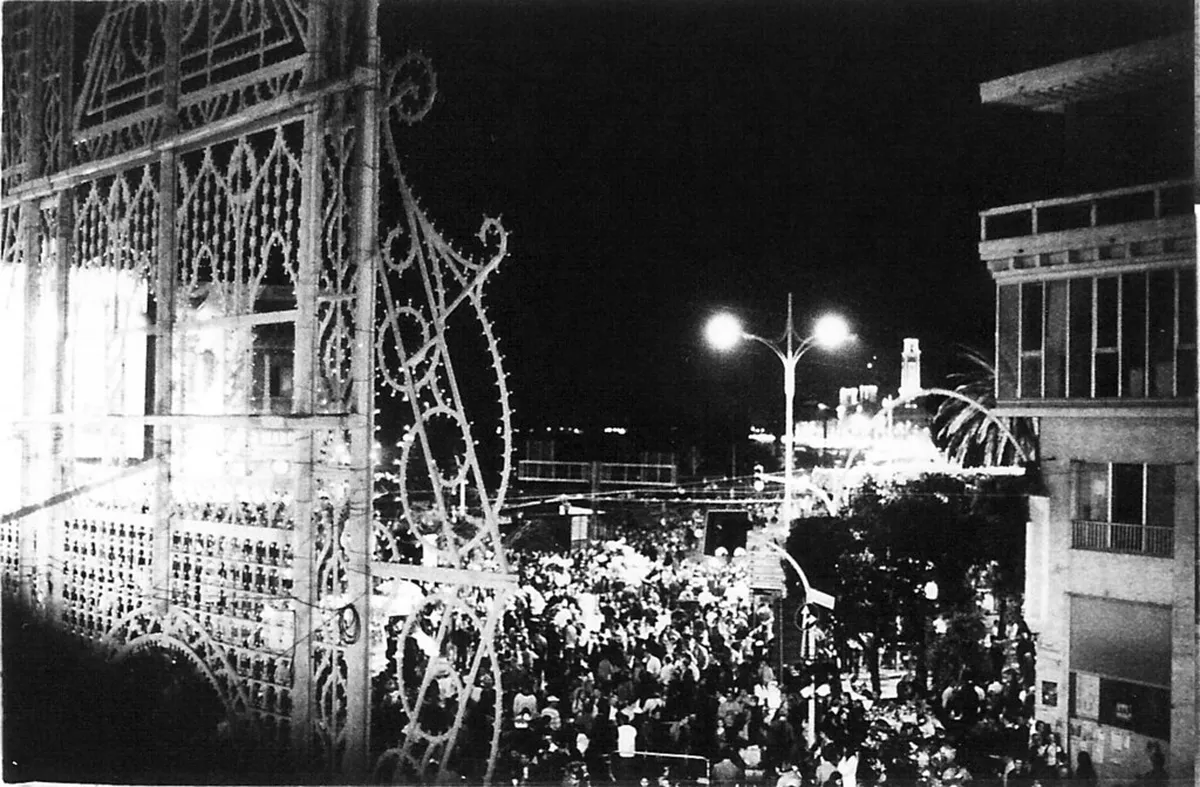
The luminarie deserve their own mention. These massive wooden arch structures, a tradition unique to Puglia, are covered in tens of thousands of tiny LED bulbs arranged in intricate geometric patterns. They transform the narrow streets of Bari Vecchia — particularly Via Argiro and the passages around the Basilica — into glowing tunnels of color from dusk until well past midnight on all three nights.
Book in Advance: Essential Festival Reservations
Because the festival draws nearly 100,000 visitors, booking logistics early is a mandatory step. I recommend securing your hotel or apartment at least six to eight months in advance. Prices for central accommodations can double as the festival dates approach in early May. We found that staying in the Murat district offers a good balance of access and quiet.
If you are traveling from Rome or Naples, book your train tickets three weeks ahead. The high-speed Frecciarossa trains often sell out during this specific holiday window. Regional buses from other parts of Puglia also fill up quickly during the three-day event. Check the official Trenitalia site for the most accurate seasonal schedules and pricing.
Dinner reservations are essential if you want to eat at a sit-down restaurant in Bari Vecchia. Most popular seafood spots require booking at least one week before the festival begins. Expect to pay €30 to €50 per person for a full traditional Pugliese meal. Many locals prefer eating street food to avoid the long wait times at busy restaurants.
Practical Planning: Transport, Timing, and Crowds
Navigating Bari during the festa requires a flexible mindset and a good pair of walking shoes. Most of the city center is closed to car traffic during the parades and sea processions. I suggest using the local metro system to reach the central station from the outskirts. Transit durations from the suburbs are typically 15 to 20 minutes by train or bus.
To watch the Frecce Tricolori air show, arrive at Lungomare Nazario Sauro by 2:30 PM. The show usually starts around 3:30 PM and lasts for about 45 minutes of aerobatics. The best vantage points are near the Ferris wheel or the provincial government building. Be prepared for large crowds and limited shade along the seaside promenade during the show.
Safety is generally good, but keep an eye on your belongings in very crowded areas. The narrow streets of Bari Vecchia can feel overwhelming during the peak evening hours. If you need a break, head toward the Piazza Libertà for a slightly more open space. Check the Italy Wander blog for more general safety tips in southern Italy.
Best Neighborhoods for Staying During the Festa
Choosing the right neighborhood will define your experience of the Saint Nicholas festival. Bari Vecchia is the heart of the action, but it is extremely loud and crowded. I recommend this area only if you want to be steps away from the Basilica. Rooms here are often small and can be difficult to access with large suitcases.
The Murat district is the modern center and offers the best selection of mid-range hotels. It features wide boulevards and is home to the city's main shopping streets and cafes. You can walk to the Old Town in about 10 minutes from most Murat locations. This area remains lively but feels much less congested than the medieval quarter.
Madonnella is a great alternative for those who want to stay near the sea. It is located just south of the center and offers beautiful Art Nouveau architecture. You will be perfectly positioned for the air show and the seaside fireworks displays. Prices in Madonnella are often slightly lower than in the absolute city center.
Add an Extra Day: Coastal Puglia Extensions
If you have an extra day, I highly recommend visiting the town of Polignano a Mare. It is famous for its dramatic white cliffs and turquoise waters just 30 minutes away. You can reach it easily by regional train for about €3 each way from Bari. The town is perfect for a relaxing afternoon after the intensity of the Bari festival.
Monopoli is another fantastic option located just one stop further on the train line. It features a charming old harbor and several sandy beaches within walking distance of the center. We found that the seafood lunch options in Monopoli are some of the best in Puglia. It offers a quieter, more authentic atmosphere compared to the more famous tourist hubs.
Both towns allow you to see the beautiful Adriatic coastline without needing a rental car. Trains run frequently, usually every 30 to 60 minutes throughout the day and evening. Always remember to validate your paper ticket at the green machines before boarding the train. Check the latest schedules online as they can change during the local holiday periods.
Local Food and Drink to Try in Bari Vecchia
You cannot visit the festival without trying the famous street food known as sgagliozze. These are squares of deep-fried polenta sold by local women in the Old Town alleys. They usually cost about €2 for a small bag and are served piping hot. I found that the best vendors are located near the Arco di San Nicola.
Popizze are another local favorite consisting of small balls of fried pizza dough. They are often dusted with salt or sugar and make for a perfect walking snack. For a full meal, look for orecchiette pasta served with turnip tops or tomato sauce. A plate of fresh pasta at a local trattoria typically costs between €10 and €15.
Wash everything down with a cold Peroni beer, which is the unofficial drink of Bari. Locals often gather at the 'Nderr a la Lanz' pier to drink and socialize. It is a great place to soak in the local atmosphere away from the main stages. Always dispose of your glass bottles in the designated bins to keep the harbor clean.
The Holy Manna Ceremony: What Happens on May 9th
May 9th is the spiritual core of the entire three-day celebration — it marks the exact anniversary of the day in 1087 when the relics arrived in Bari. Most general guides mention the Holy Manna in passing, but the ceremony itself is worth understanding in detail if you plan to attend. At 18:00 the Rector of the Basilica di San Nicola presides over a solemn Eucharistic concelebration in the crypt, co-officiated by the Archbishop of Bari-Bitonto as Pontifical Delegate. During this ceremony the Rector descends to the burial tomb and extracts a small quantity of the Manna di San Nicola — a clear, water-like liquid that seeps naturally through the bones of the saint and collects in a sealed vial set into the tomb. The Catholic Church does not classify this extraction as a miraculous event in formal canonical terms, but for pilgrims who have traveled from Russia, Greece, Serbia, and across Catholic southern Europe specifically to witness it, the moment carries enormous devotional weight. The extracted liquid is distributed to the faithful in tiny vials and is regarded by believers as having intercessory healing properties. If you want to witness the ceremony rather than just watch the fireworks, arrive at Piazza del Ferrarese no later than 16:30 to secure a position near the screens, or queue at the Basilica entrance from 15:30 for limited inside standing room.
Religious vs. Secular: How to Balance Your Three Days
The Festa di San Nicola is genuinely two festivals running simultaneously, and understanding that split will help you build a realistic itinerary. On the devotional side you have the early masses (the Basilica opens at 04:30 on May 8th for the first of seven daily Eucharistic celebrations), the crypt-side prayer vigils, and the deeply moving Manna extraction on May 9th. The atmosphere inside the Basilica during these moments is quiet, multilingual, and overwhelmingly sincere — pilgrims kneeling alongside foreign tourists, icons surrounded by candle offerings. Dress conservatively, shoulders and knees covered, and be prepared to wait in a slow-moving queue. On the secular side you have fireworks at Sant'Antonio pier on all three nights (the show on May 8th typically fires at 22:00 and runs around 20 minutes), the Frecce Tricolori aerobatics over the Lungomare Nazario Sauro on the afternoon of May 8th, the luminarie-lit street parties, and the seemingly endless supply of sgagliozze and popizze vendors in Bari Vecchia. A workable balance for most visitors: use mornings for the Basilica and the sea procession embarkation, afternoons for the air show and a coastal walk, and evenings for the parade, the luminarie, and dinner. The one trap to avoid is trying to do both the Manna ceremony (Basilica area, 18:00) and the May 9th fireworks (Sant'Antonio pier, 22:00) without allowing time to eat — the streets between the two points will be at full festival capacity and a simple 10-minute walk will take 30.
Frequently Asked Questions
When is the Festa di San Nicola in Bari?
The main festival takes place every year from May 7th to May 9th. These dates commemorate the arrival of the saint's relics in Bari in 1087. Smaller celebrations also occur on December 6th to mark his feast day.
Is the San Nicola festival in Bari free to attend?
Yes, all the major public events like the parades and sea processions are free. You only need to pay for specific museum entries or private boat tours. Arrive early to get the best views without paying for seats.
What is the Holy Manna of Saint Nicholas?
The Holy Manna is a clear liquid that forms on the bones of the saint. It is extracted by the Rector of the Basilica every May 9th. Faithful believers consider it a miraculous substance with healing properties.
The Festa di San Nicola is a powerful display of faith and community in southern Italy. By following this guide, you can navigate the crowds and experience the best traditions. Whether you are there for the history or the fireworks, Bari will leave a lasting impression. Plan ahead, wear your walking shoes, and enjoy the magic of this ancient Adriatic celebration.
You might also like


Continue reading
More guides you'll find useful