Rock Churches of Matera Guide: A Complete Travel Resource
Discover the best rock churches of Matera with our guide to Sasso Caveoso, Sasso Barisano, and the Murgia Park. Includes maps, history, and booking tips.
On this page
Rock Churches of Matera Guide
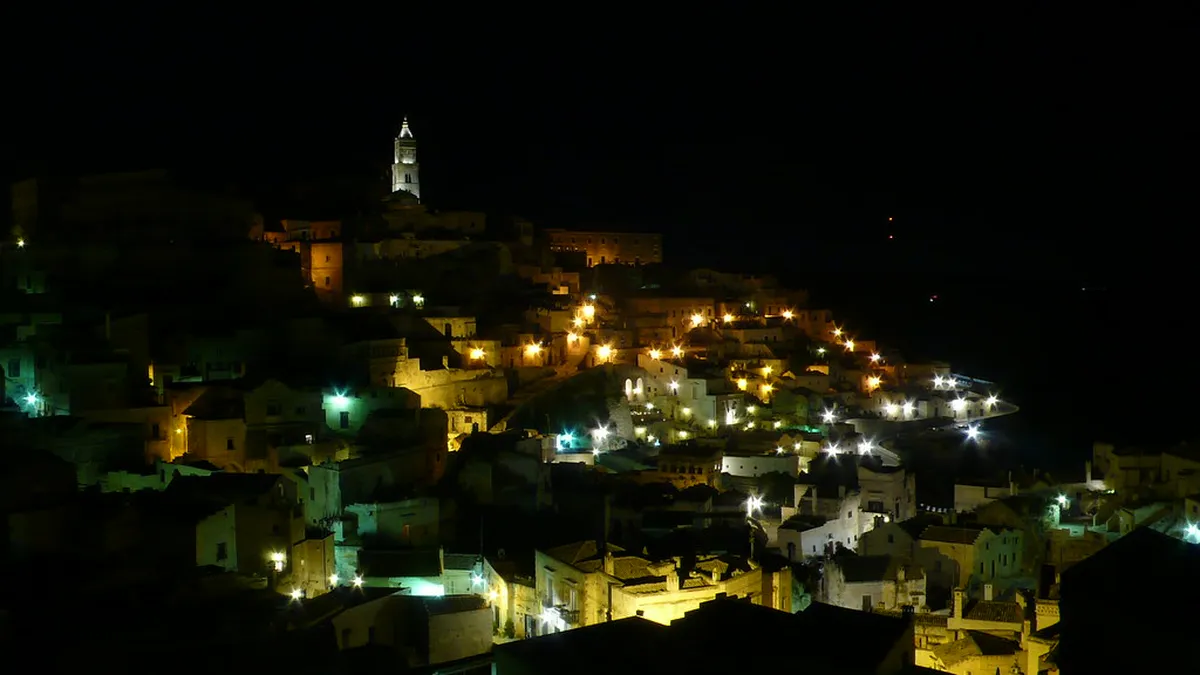
Matera is a city carved directly into limestone cliffs within the stunning Basilicata region of southern Italy.
This ancient landscape features hundreds of rock-cut churches that represent a unique form of negative architecture today.
Visitors often feel like they have stepped back in time while exploring these sacred subterranean caverns and dwellings.
Our guide helps you discover the most beautiful rupestrian sites hidden within this UNESCO World Heritage location.
The History and Magic of Matera's Rock Architecture
Matera is one of the oldest continuously inhabited cities on Earth, with evidence of human settlement dating to the Palaeolithic period. The first traces of organised community life appear in the Neolithic era, when people living on the Murgia plateau carved simple grottos into the soft tufa limestone — not to build shelter from scratch, but to hollow it out. This is the defining principle of negative architecture: space is created by subtraction, not addition.
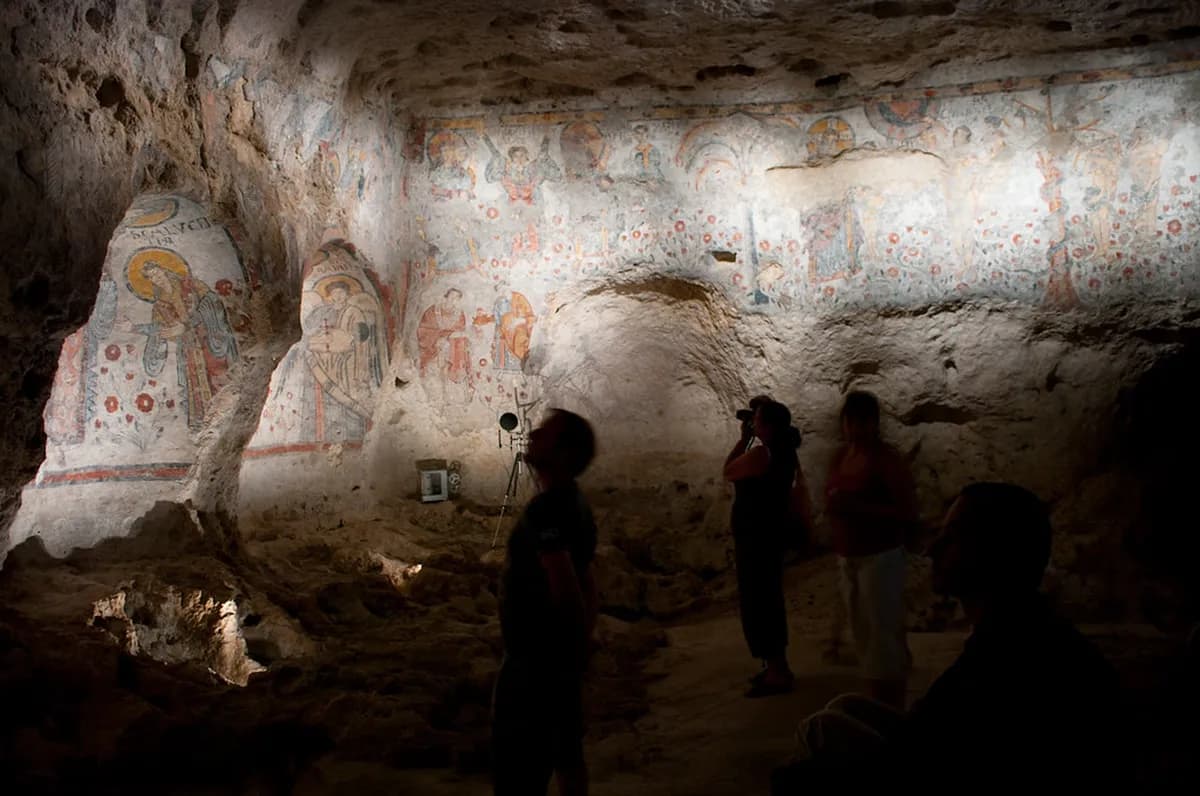
The first settlement nucleus took root on the hill of Civita, where nomadic sheep-farming communities established permanent roots. After the fall of the Western Roman Empire, Matera passed through Byzantine, Lombard, and Saracen control before the Normans descended in 1042. The rock churches visible today date largely from this turbulent period: monks and hermit communities fled advancing armies by carving increasingly elaborate chapels into the canyon walls, decorating them with Byzantine-influenced frescoes that still retain vivid ochre, cobalt, and deep red pigments.
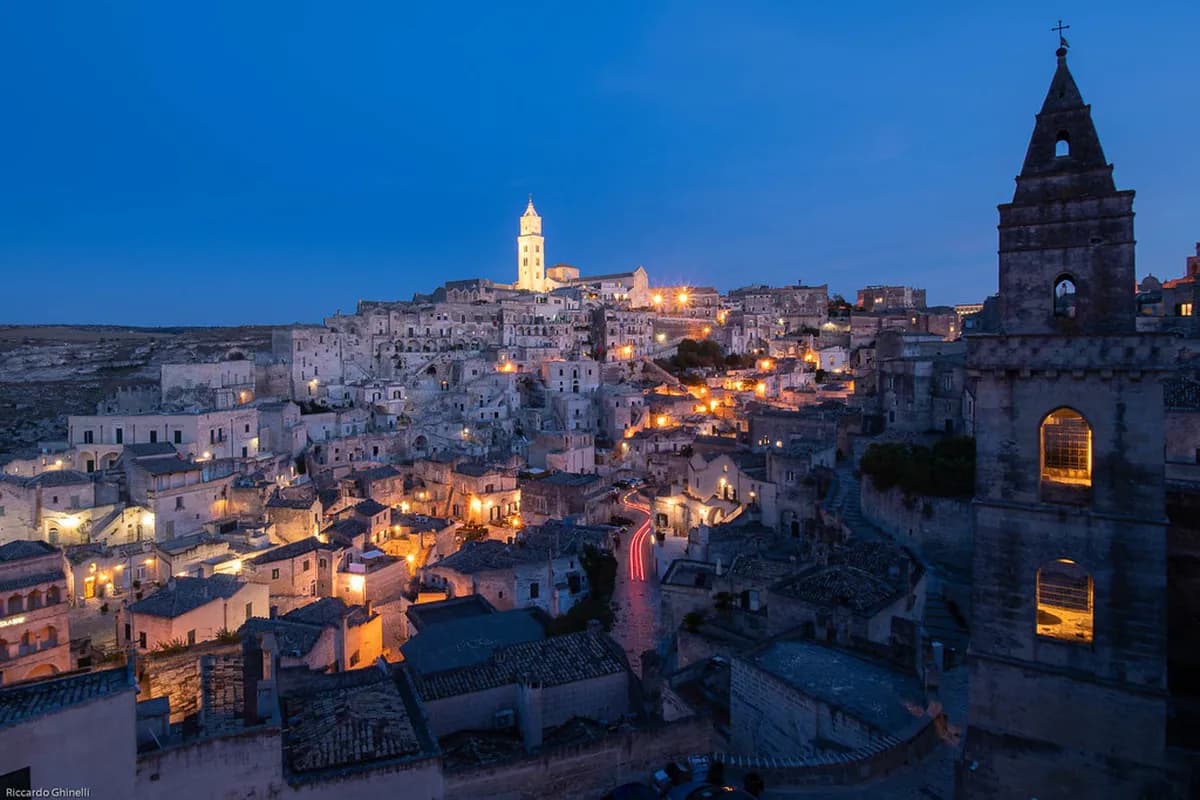
By the 13th century the Civita hill had become the administrative core of a growing city, while the two great natural amphitheatres — Sasso Caveoso to the south-east and Sasso Barisano to the north-west — filled steadily with cave dwellings, churches, and monasteries stacked vertically above the Gravina ravine. The landscape became so evocative that filmmakers chose it for epic biblical productions: Pier Paolo Pasolini shot The Gospel According to St Matthew here in 1964, and Mel Gibson used the Sassi as the backdrop for The Passion of the Christ in 2004. UNESCO recognised Matera's Sassi as a World Heritage Site in 1993, the first site in southern Italy to receive the designation.
Must-See Rock Churches in Sasso Caveoso
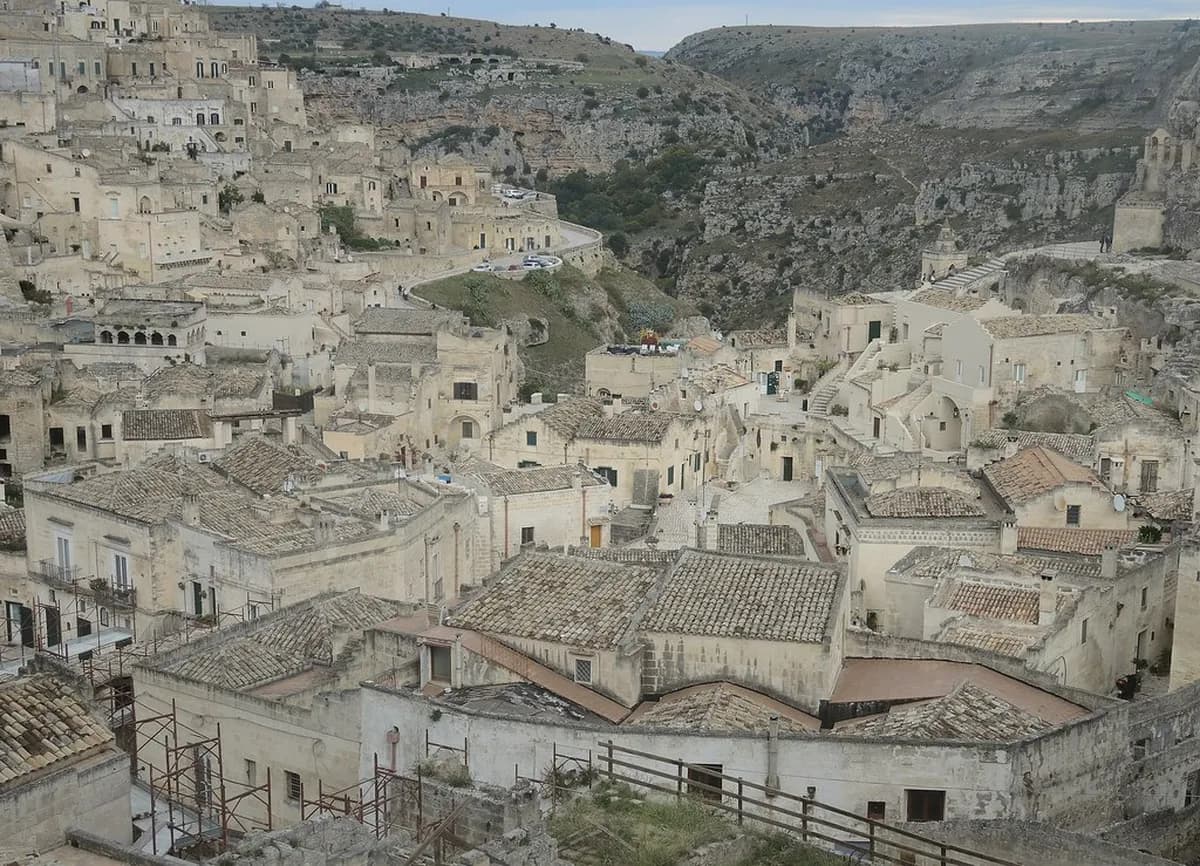
Sasso Caveoso is the older, wilder of the two main Sassi districts. Its cave dwellings remain largely intact — many were still inhabited as recently as 1958, when the Italian government relocated residents to modern housing. The district clings to the canyon edge, so the churches here have a rawness that the more polished Barisano district lacks.
Santa Maria de Idris sits atop the Monterrone rock, a limestone spire jutting from the canyon floor. Its 12th-century frescoes are among the best-preserved in the city, protected by the constant cool humidity of the tufa. The connected San Giovanni in Monterrone shares the same ticket and the same carved-into-the-cliff character — together they make the essential first stop in any Caveoso itinerary. You can learn more about local living conditions by checking our casa grotta matera guide for your visit.
- Santa Maria de Idris
- Best for: Panoramic views
- Location: Monterrone Rock
- Highlight: 12th-century frescoes
- Access: Combined ticket
- San Giovanni in Monterrone
- Best for: Art history
- Connection: Linked to Idris
- Highlight: Well-preserved murals
- Cost: Included in pass
Exploring the Sasso Barisano Rupestrian Sites
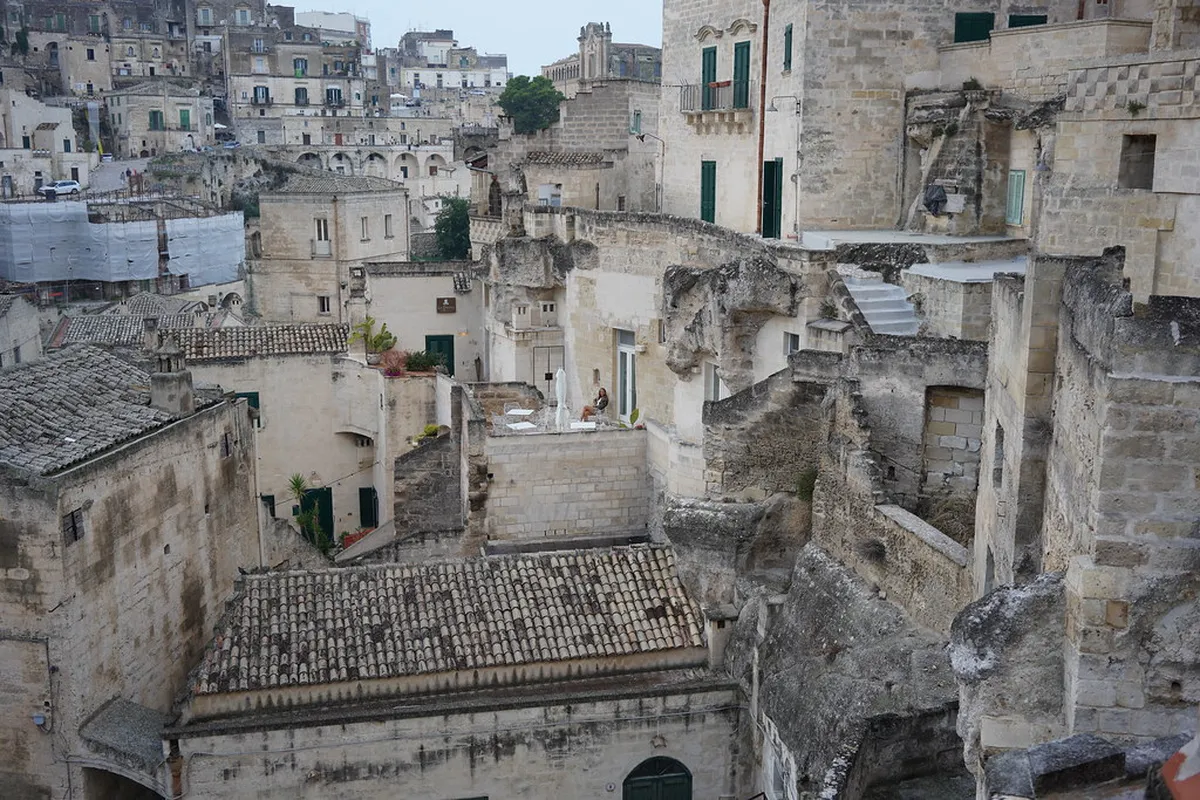
Where Caveoso feels austere, Sasso Barisano has evolved into the social and commercial heart of the Sassi. Boutique hotels, wine bars, and artisan shops occupy the same cave facades that once housed hermit monks. Yet the rupestrian character is never far beneath the surface — the alleys narrow quickly, stairways plunge downward without warning, and carved thresholds mark every corner.
San Pietro Barisano is the largest rock church in all of Matera and rewards close inspection: an underground catacomb extends beneath the nave, with carved niches that once received the bones of the faithful. The combined church ticket (approximately €8 in 2026, covering three Sassi churches) includes entry here. Cripta de La Scaletta, a few minutes' walk away, is smaller and opens only seasonally — typically April through October — so check current hours before including it in your itinerary. Following a matera sassi walking guide helps you navigate the steep stairs and hidden alleys between sites.
- San Pietro Barisano Church
- Type: Largest rock church
- Highlight: Underground catacombs
- Location: Sasso Barisano
- Access: Via combined ticket
- Cripta de La Scaletta
- Note: Seasonal opening times
- Best for: Intimate setting
- Access: Private guide recommended
- Status: Hidden gem
The Murgia Materana Park: Path of Rock Churches
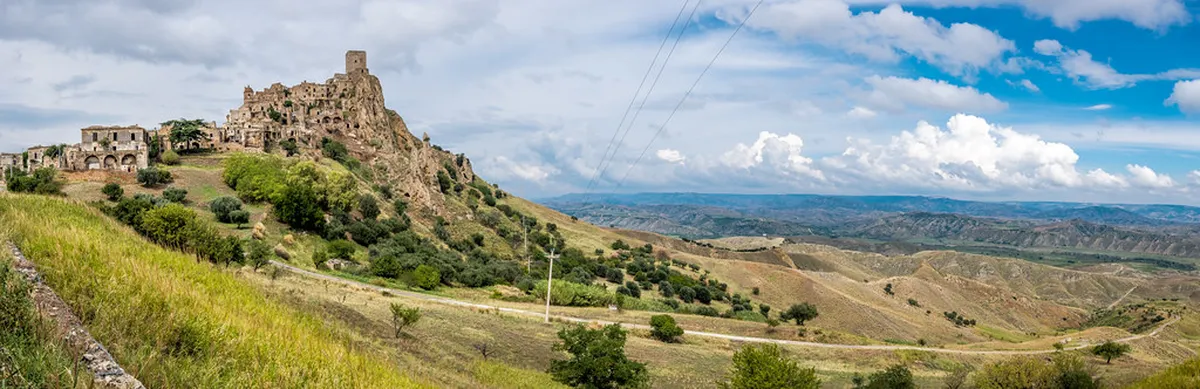
Cross the Gravina canyon and the urban chaos dissolves entirely. The Murgia Materana Park preserves more than 150 rupestrian religious sites carved between the early Middle Ages and the 19th century — ranging from tiny single-nave oratories to multi-chamber monasteries with intact fresco cycles. The signposted Path of Rock Churches links the most significant of these over a 3–4 hour loop that rewards every step with sweeping views back across the Sassi cityscape.
The unmissable site on this route is the Crypt of Original Sin, sometimes called the "Sistine Chapel of rock art." Dating to the Lombard period, its 8th-century frescoes cover every surface of the cave and depict scenes from Genesis alongside the Maiestas Domini — a composition so luminous and complete that scholars rank it among the finest early medieval paintings in Italy. Entry is limited to small guided groups (€11 in 2026, pre-booking essential) and the site sits about 15 km from Matera's centre, accessible by car or organised excursion. Make sure to visit the matera belvedere viewpoints to see the city skyline from across the deep valley.
- Church of Madonna della Loe
- Difficulty: Moderate hike
- Coordinates: 40.6625, 16.6189
- Best for: Solitude
- Tip: Bring plenty water
- Cripta del Canarino
- Highlight: Canary fresco symbolism
- Access: Specialized guide only
- Location: Remote Murgia cliff
- Vibe: Highly spiritual
- Church of Sant'Eustachio
- Effort: High physical climb
- Reward: Best canyon views
- Terrain: Rocky and steep
- Best for: Experienced hikers
Civita: Piazza Vittorio Veneto and Santo Spirito
Before descending into either Sassi district, spend ten minutes in Piazza Vittorio Veneto. This wide square in the Civita — the ancient hilltop nucleus of the city — sits at the exact boundary between the modern upper town and the subterranean world below. From its edges you can look directly down into the Sasso Barisano canyon on one side and orient toward Sasso Caveoso on the other, making it the most efficient starting point for any Sassi itinerary.
Beneath the square itself lies the Palombaro Lungo, a vast 16th-century cistern that collected water for the entire city and now functions as a walkable underground museum — a striking subterranean contrast to the elevated church architecture above. The church of Santo Spirito, just off the piazza, is a small but structurally important landmark that marks the descent stairway toward Barisano. This central square hides several matera hidden gems tucked away in the narrow passages leading down from the square. Using this plaza as a starting point makes navigating between the two main Sassi districts much simpler for first-time visitors.
Practical Information: Tickets, Timing, and Tours
The combined Sassi church ticket (approximately €8 in 2026, covering Santa Maria de Idris, San Giovanni in Monterrone, and San Pietro Barisano) is sold at visitor centres near the main descents and is valid for two days — useful if you plan to split Caveoso and Barisano across separate mornings. The Crypt of Original Sin requires a separate booking at €11 and admits only small guided groups; reserve online at least 48 hours ahead during spring and summer. For the latest prices, check the Official Sassi Ipogei Site before you travel.
Arrive before 10:00 on weekdays to beat the group-tour coaches that typically fill the Caveoso descents between 11:00 and 14:00. Wear sturdy walking shoes because the stone paths are often slippery and the terrain involves many steep staircases. Photography is restricted inside most churches to protect the fragile pigments.
Photography is forbidden inside most churches to protect ancient pigments. Wear comfortable hiking boots for the Murgia Park trails. Book Crypt of Original Sin (€11) online in advance—entry is limited to guided groups only.
- Essential Ticket and Booking Info
- Cost: Varies by circuit
- Booking: Recommended for tours
- Validity: Usually two days
- Where: Local visitor centers
Beyond the Churches: Unusual Places and Local Flavors
Matera rewards visitors who look beyond the obvious church trail. Beneath Piazza Vittorio Veneto the Palombaro Lungo cistern — a vaulted underground lake built in stages from the 16th century — offers an eerie, magnificent counterpoint to the elevated rupestrian sites above. Walkways suspended over the water surface take you through the full length of the structure; guided tours of around 30 minutes run most mornings and cost approximately €3 in 2026.
For food, seek out Pane di Matera at a traditional bakery near the Sasso Barisano entrance before starting your morning hike. This IGP-protected bread is made from locally grown durum wheat, milled coarsely and baked in a wood-fired oven; the result is a dense, golden-crumbed loaf with a hard crust that keeps for days. It underpins many local dishes: the salad-like cialledda (bread softened in tomato water with olives and garlic), and bruschetta topped with Senise cruschi peppers — crunchy, deep-scarlet, and intensely savoury. For a full meal, order pignata, mutton slow-cooked in a sealed clay pot with potatoes, tomatoes, and soppressata. There are many other things to do in matera that pair well with an afternoon of historical exploration.
Guided vs. Self-Guided: Which Approach Works for the Murgia Park?
The Sassi churches in the city centre are easy to visit independently using the combined ticket and a decent map. The Murgia Park is a different proposition. Trails are poorly signed outside the main belvedere viewpoint, several churches are locked and accessible only with a guide who holds the keys, and the canyon terrain can disorient walkers who underestimate the elevation changes.
A licensed Matera guide for the Murgia Park typically charges €20–€35 per person for a half-day excursion (prices 2026, group of four or more). That fee usually includes park entry, access to locked churches such as Cripta del Canarino, and transport to and from the trailhead. Solo travellers or couples will find the per-head cost of a private guide steep; joining a scheduled small-group walk offered by local operators brings it closer to €25 per person.
Self-guided is viable if you stick to the well-marked belvedere loop, which takes roughly 90 minutes and delivers the panoramic views most visitors come for. The Madonna della Loe church (GPS: 40.6625, 16.6189) is reachable without a guide on this circuit, though the final descent to the facade is steep and requires confident footwork. Reserve a guide specifically if your priority is the Crypt of Original Sin, Cripta del Canarino, or Church of Sant'Eustachio — the last demanding a sustained uphill scramble that rewards only those who make it to the top with unobstructed canyon views.
Frequently Asked Questions
Which rock churches in Matera are best for first-time visitors?
First-time visitors should prioritize Santa Maria de Idris and San Pietro Barisano for their accessibility and impressive frescoes. These sites offer a great introduction to the city's unique history and are easy to find. You can see more options in our matera film locations guide.
How much time is needed to walk the Path of Rock Churches?
Walking the main Path of Rock Churches in the Murgia Park usually takes between three and four hours to complete. This timeframe allows for plenty of stops to admire the views and explore the remote cave structures. Wear comfortable hiking boots for the rocky terrain.
Do I need a guide to visit the churches in the Murgia Park?
A guide is highly recommended for the Murgia Park because many remote churches are difficult to find on your own. Professional guides also provide essential historical context and ensure you do not get lost on the winding trails. Some sites require specialized keys for entry.
What is the difference between Sasso Caveoso and Sasso Barisano churches?
Sasso Caveoso churches are often more rugged and carved directly into the cliff faces overlooking the deep canyon. In contrast, Sasso Barisano churches are more integrated into the urban fabric of the city streets. Both districts offer distinct architectural styles and historical significance.
Exploring the rock churches of Matera offers a profound journey into the heart of Italian history and spiritual devotion.
From the dramatic heights of Sasso Caveoso to the remote trails of the Murgia Park, every site tells a story.
Visit our Italy travel blog to find more inspiration for your next adventure in the Basilicata region.
You might also like

Continue reading
More guides you'll find useful