11 Essential Tips for Getting Around the Sassi of Matera
Master getting around the Sassi of Matera with our guide to walking routes, Ape Calessino tours, ZTL parking tips, and accessibility advice for the cave city.
On this page
11 Essential Tips for Getting Around the Sassi of Matera
Matera stands as one of the oldest continuously inhabited cities in the entire world. This UNESCO World Heritage site features ancient cave dwellings carved directly into limestone cliffs. Exploring these stone districts feels like stepping back thousands of years into human history. Visitors today can witness a remarkable transformation from poverty to cultural brilliance.
Navigating this vertical city requires a bit of strategic planning and physical effort. The maze of stairways and narrow alleys can confuse even the most seasoned travelers. Understanding the layout is the first step to a successful and enjoyable visit. Our guide covers everything you need to master getting around the Sassi of Matera with ease.
From choosing the right shoes to booking a local tuk-tuk, logistics play a huge role here. You will find that every corner offers a new perspective on this architectural marvel. Following these essential Matera travel tips will help you avoid common tourist mistakes. Prepare for an unforgettable journey through the heart of Basilicata.
The History and Magic of the Sassi di Matera
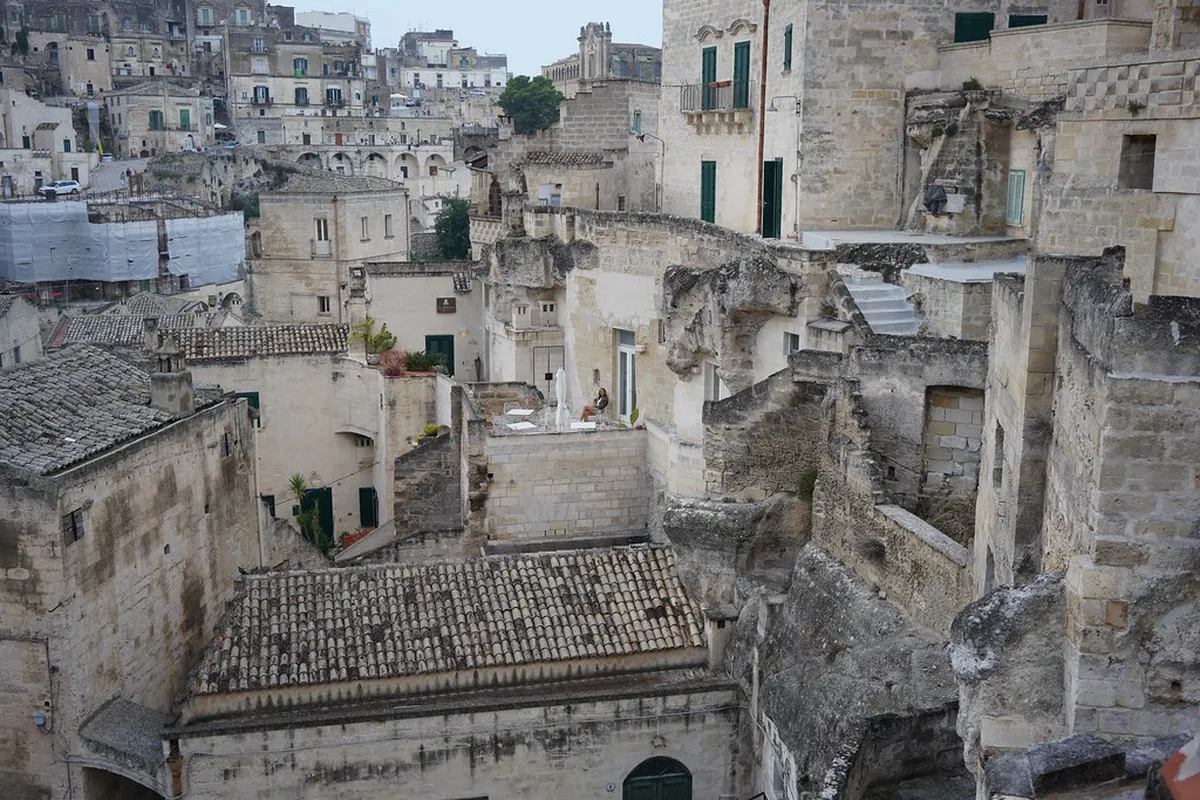
Matera is one of the oldest continuously inhabited cities on Earth, with evidence of Neolithic settlement dating back around 9,000 years. People lived in these natural limestone caves for millennia, expanding them by hand over countless generations into the dense, vertical cityscape you see today. The two cave districts — Sasso Barisano and Sasso Caveoso — together contain close to 3,000 cave dwellings, a feat of communal rock-cutting unmatched anywhere in Europe.
By the mid-twentieth century, the picture had darkened dramatically. Writer Carlo Levi's 1945 novel Christ Stopped at Eboli shone a harsh light on the conditions inside the Sassi, where roughly 15,000 residents shared single-room caves with their mules, pigs, and chickens, with no running water, electricity, or sewage. Italian Prime Minister Alcide De Gasperi called Matera "the shame of Italy," and between 1953 and 1968 the government forcibly relocated virtually the entire cave population to new public housing blocks on the ridge above. The historic Sassi were sealed up and left to decay for decades.
The turnaround began in earnest in 1993 when UNESCO added the Sassi di Matera to its World Heritage List, triggering the first serious investment in restoration. Matera's appointment as a European Capital of Culture in 2019 accelerated the transformation — hotels, restaurants, and museums moved into the repaired caves. Global curiosity spiked further when the 2021 James Bond film No Time to Die used the Sassi's rooftops for a memorable chase sequence. Today, the city of roughly 60,000 residents has fully embraced its heritage, and the cave districts that once embodied poverty are now among the most distinctive cultural destinations in southern Italy.
Understanding the Layout: Sasso Barisano vs. Sasso Caveoso
The historic center of Matera is divided into two main cave districts known as Sassi. Sasso Barisano sits to the north and features more restored buildings and modern amenities. You will find many boutique hotels and upscale restaurants tucked into its limestone facades. It serves as a gentler introduction to the cave dwelling lifestyle for many visitors.
Sasso Caveoso lies to the south and retains a more rugged, ancient atmosphere. Many of the caves here remain in their original state, offering a glimpse into the past. This area feels more like a traditional archaeological site with its steep cliffs and rock churches. Exploring this district requires more climbing but rewards you with incredible historical depth.
Between these two districts sits the 'Piano,' which is the flat upper part of the city. This modern ridge contains the main shopping streets, elegant plazas, and government buildings. Most visitors start their journey on the Piano before descending into the depths of the Sassi. Keeping this three-part layout in mind makes navigation much simpler during your stay.
Best Ways to Get Around: Walking, Ape Calessino, and E-Bikes
Walking is the only true way to reach the innermost corners of the Sassi — the alleyways are simply too narrow for any vehicle. Budget at least three to four hours on foot if you want to cover both Sasso Barisano and Sasso Caveoso without rushing. Start from Piazza Vittorio Veneto, descend the main staircase into Barisano, work your way across toward Santa Maria de Idris, and climb back up through Caveoso's uninhabited cave zone before returning to the Piano. Pack water and wear shoes with a thick, grippy sole — the polished limestone gets treacherous even on dry mornings.
For those who find the stairwork daunting, the Ape Calessino (a three-wheeled tuk-tuk) is the most practical alternative in 2026. Drivers wait at the southern end of Piazza Vittorio Veneto and offer a 45-to-60-minute narrated circuit of both Sassi districts via the wider interconnecting lanes. The experience is genuinely charming — open-sided carriages give unobstructed views and drivers weave through passages that most pedestrians miss. Expect to pay €15–€30 per person depending on the route length and the number of passengers sharing the cab (maximum three adults fit comfortably). It is worth negotiating the price and the stopping points before you set off.
Electric bikes have become a credible third option for the upper reaches of Matera and the plateau beyond. Several e-bike rental outlets operate along Via Roma and around the Piazza del Sedile area on the Piano; most charge €20–€35 for a half-day rental in 2026. E-bikes are best suited for the Murgia Park trail and the road up to Belvedere Murgia Timone rather than for the Sassi interior itself, where the paths are too steep and narrow. Always confirm the battery range before heading out, and lock the bike at one of the designated racks near Porta Pistola before descending into the gorge on foot.
- Ape Calessino Tuk-Tuk Tours
- Cost: €15 to €30
- Duration: 30 to 60 minutes
- Location: Piazza Vittorio Veneto
- Capacity: Up to 3 passengers
- Guided Walking Excursions
- Best for: Deep historical context
- Cost: €20 to €50
- Booking: Recommended in advance
- Link: Explore Matera on a guided tour with me!
Navigating the Terrain: Stairs, Slopes, and Footwear Tips
The terrain in Matera consists of thousands of stone steps and uneven limestone paths. Some surfaces can become incredibly slippery, especially after a light rain or morning mist. You should avoid wearing flip-flops or high heels when exploring the lower cave districts. Sturdy sneakers or hiking shoes with good grip are the best choice for safety.
The Sassi terrain is extremely steep and uneven, with many narrow stairs lacking guardrails. Polished limestone can be as slippery as ice even on dry days. Wear sturdy sneakers or hiking boots with excellent grip, avoid sandals, and take frequent breaks to prevent exhaustion and falls.
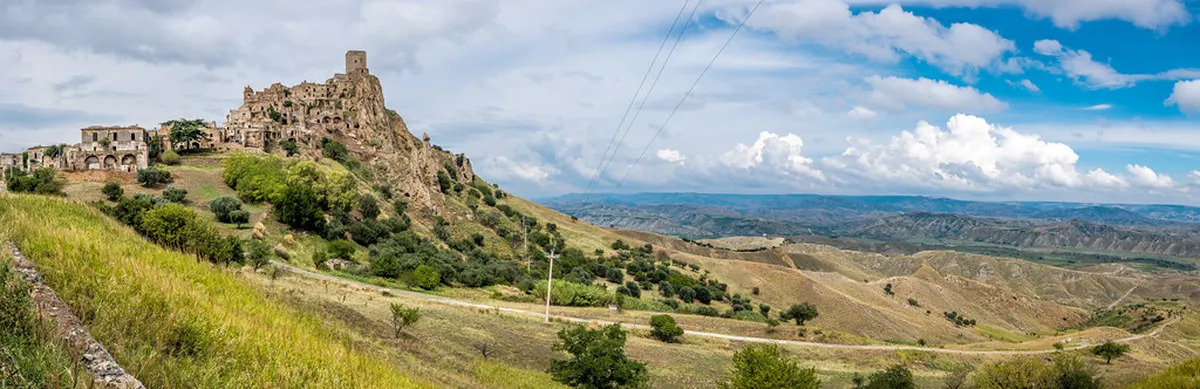
Accessibility can be a major challenge for travelers using strollers or wheelchairs in the Sassi. Most paths involve at least some stairs, making certain areas difficult to reach alone. Stick to the 'Via delle Sette Volte' for a flatter route through parts of the city. Consulting a local Italy travel blog can provide updated accessibility maps for 2026.
Take your time when descending into the deeper parts of Sasso Caveoso during the day. The summer heat can make the climb back up feel much more strenuous than expected. Carry a reusable water bottle to stay hydrated while you navigate the vertical landscape. Public fountains are scattered throughout the Piano and Sassi districts for your convenience.
How to Get to Matera from Bari and Beyond
Bari International Airport serves as the primary gateway for most international travelers visiting Matera. You can take a direct shuttle bus from the airport to Matera central station. The journey typically takes about 60 to 75 minutes depending on the traffic levels. Tickets are affordable and can be purchased online or directly from the driver.
The Ferrovie Appulo Lucane (FAL) operates a narrow-gauge train line between Bari and Matera. This train departs from a separate platform at the Bari Centrale station near the city center. Note that these trains do not run on Sundays or major Italian public holidays. Buses usually replace the train service during these times to ensure traveler mobility.
Driving to Matera offers the most flexibility but requires careful attention to local traffic laws. The Sassi districts are strictly protected by a ZTL (Limited Traffic Zone) with active camera enforcement. You must park your vehicle in a designated garage outside the historic stone perimeter. This prevents heavy fines and keeps the narrow cave streets clear for pedestrians.
- Parcheggio Sant'Isidoro Parking Garage
- Type: Secure multi-story garage
- Best for: Long-term stays
- Location: Via Lanera area
- Access: Shuttle to Sassi
- Bari Airport Shuttle Bus
- Cost: Approx €5 per person
- Frequency: Every 2-3 hours
- Drop-off: Matera Central Station
- Booking: Highly recommended online
Matera Italy Map and Top Viewpoints (Belvedere)
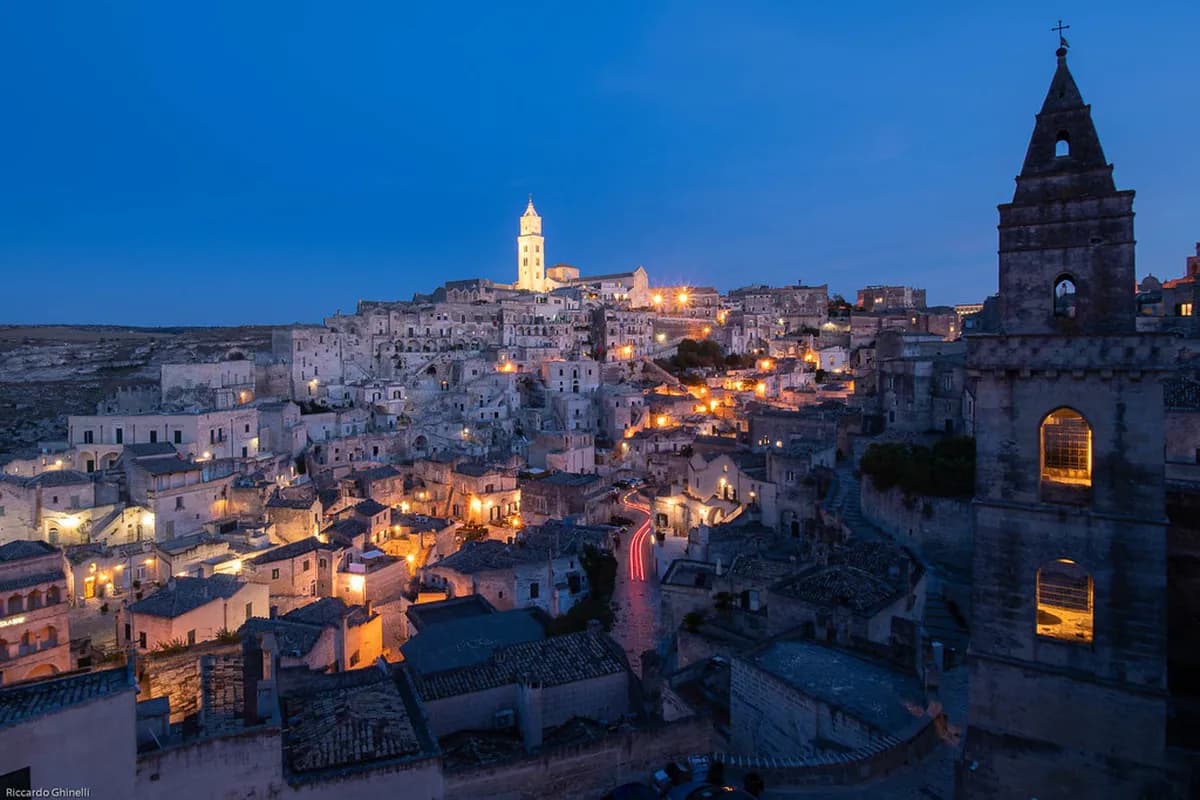
Finding the perfect viewpoint is essential for capturing the true scale of the city. Piazza Pascoli offers one of the most famous panoramas overlooking the Sasso Caveoso district. You can see the rock church of Santa Maria de Idris perched on its cliff. This spot is particularly beautiful during the blue hour just after the sun sets.
Belvedere Guerricchio provides a stunning look at the Sasso Barisano from the upper town ridge. It is located right off Piazza Vittorio Veneto and is very easy to access. The view highlights the complex layering of houses and the Duomo cathedral tower. Many visitors find this to be the best spot for a quick orientation photo.
For a more dramatic perspective, head across the gorge to the Murgia Timone viewpoint. This location requires a short drive or a long hike across the Tibetan suspension bridge. It offers a full frontal view of the entire Sassi skyline from the opposite cliff. This is the exact spot where many famous movie scenes have been filmed.
Exploring the Gravina Gorge and Murgia Park
The Gravina Gorge creates a deep natural border between the city and the wild plateau. A network of hiking trails leads down into the valley and back up the other side. The Tibetan bridge is a highlight for adventurous travelers looking for a physical challenge. Ensure you have proper hiking boots before attempting this steep and rocky descent.
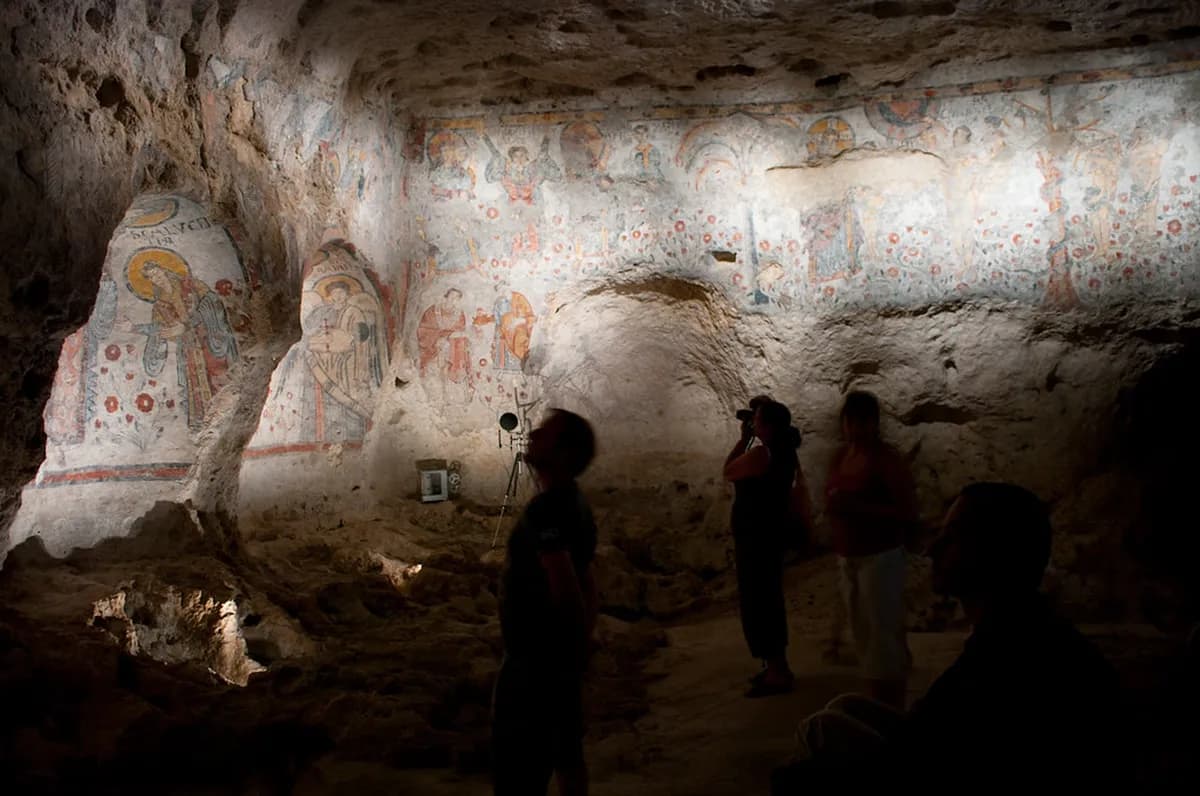
Murgia Materana Park protects the natural landscape and dozens of ancient rupestrian churches. These rock-cut sanctuaries contain faded frescoes that date back to the Middle Ages. You can explore these sites freely, but hiring a guide provides much better historical context. The park offers a peaceful escape from the busy streets of the town center.
Sunset is the ideal time to visit the park for spectacular light across the limestone. The golden glow makes the stone city look like it is carved from solid gold. Always check the weather forecast before heading into the gorge to avoid flash flood risks. The trails can be rugged, so stay on marked paths for your own safety.
Visiting the Rock Churches and Casa Grotta
The rock churches of Matera are architectural wonders carved directly into the soft calcarenite stone. Santa Maria de Idris is perhaps the most iconic, sitting atop a large limestone monolith. Inside, you can find Byzantine-style frescoes that have survived for hundreds of years. Most churches require a small entrance fee that helps support ongoing preservation efforts.
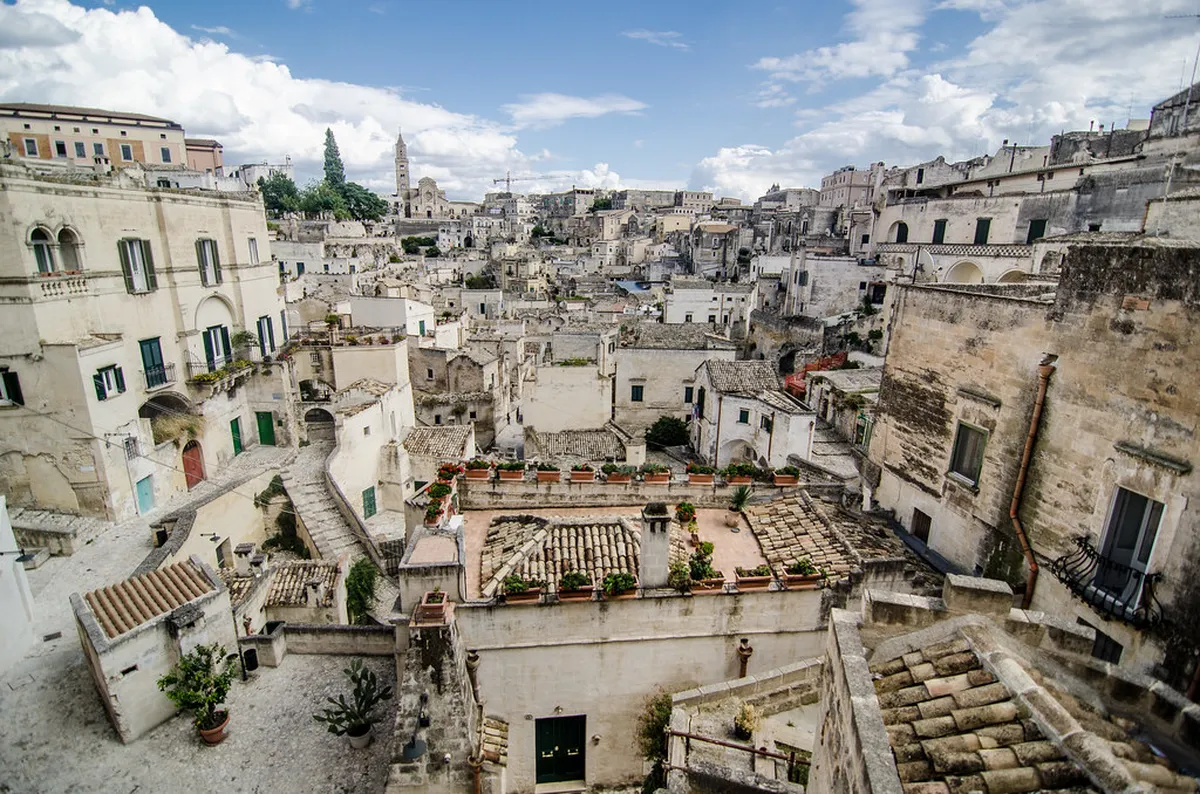
A visit to a Casa Grotta provides an intimate look at traditional cave life. These museum houses are furnished with authentic tools, beds, and even animal stalls from the past. The Casa Grotta di Vico Solitario is a popular choice for its detailed historical recreations. It illustrates how large families lived in a single room alongside their livestock.
Palombaro Lungo is another must-see site located underneath the main square of the Piano. This massive underground cistern once served as the primary water supply for the entire city. Walking through its vaulted stone chambers feels like entering an underground cathedral of engineering. It is a cool and quiet refuge during the hot summer afternoons in Matera.
Where to Stay in Matera: Cave Hotels vs. The Piano
Sleeping in the Sassi is one of the most immersive travel experiences in southern Italy, but knowing the trade-offs helps you choose wisely. Cave rooms maintain a naturally cool temperature in summer and a certain earthy humidity year-round — romantic for a single night, potentially uncomfortable for a three-night stay if ventilation is poor. Before booking, check whether the property has climate control and ask about natural light, since true cave rooms can feel windowless. At the luxury end, Sextantio Le Grotte della Civita (€200–€400/night in 2026) is the gold standard for raw cave aesthetics; Palazzo Gattini (€350–€800/night) offers spa facilities and a rooftop bar in the Sassi without the cave dampness. For mid-range budgets, Hotel Il Belvedere (€100–€150/night) sits right on the Sassi edge with panoramic terrace views and a mix of standard and cave rooms. These prices are high-season benchmarks; shoulder season (March–May, October–November) runs significantly lower.
The Piano area above the Sassi suits anyone arriving by car, traveling with heavy luggage, or preferring a lively evening scene with locals. Hotels here have lift access, street-level parking, and are a short, flat walk to the Belvedere viewpoints. The neighborhood along Via Lucana is particularly convenient for catching early buses or the FAL train. Cave hotels in the Sassi proper cost roughly 20–40% more than comparable Piano hotels, so weigh the experience premium against your budget and comfort needs.
Luggage porterage is a practical service that first-time visitors consistently overlook until they are standing at the ZTL boundary with a 20-kilogram suitcase and three flights of stairs ahead of them. Most Sassi hotels either have a dedicated porter or work with a local baggage-transfer company. The system works like this: you park at one of the approved garages (see the ZTL section below), contact your hotel from the gate, and a porter meets you at a designated handoff point with a motorized trolley capable of navigating the narrow stone lanes. The fee is typically €5–€15 per bag depending on distance. Arrange this in advance — email or WhatsApp your hotel at least a day before arrival and ask specifically about the "servizio facchino" to confirm availability.
What to Eat: 4 Local Specialities to Fuel Your Exploration
Pane di Matera IGP is the city's most celebrated product and one of the best breads in Italy. The protected sourdough loaf has a distinctive conical crown and an intensely crunchy, dark-baked crust that locks in a moist, open-crumbed interior. It was traditionally fermented with a natural starter and baked in communal stone ovens; a well-made loaf stays fresh and soft for up to a week without refrigeration. Pick one up from a forno on the Piano and eat it with the local extra-virgin olive oil — this is the quickest and most authentic meal in Matera.
Peperoni cruschi are dried Senise peppers that are flash-fried in olive oil until they puff up and shatter like edible crisps. They appear on almost every table in Basilicata — scattered over pasta, crumbled onto lamb chops, or eaten straight from a small paper cone as a snack. Their flavour is sweet, smoky, and wholly addictive. You will spot them hanging in scarlet bunches outside most alimentari along Via Ridola; they make a lightweight and flavoursome edible souvenir to take home.
Fave e cicoria — creamy pureed fava beans served alongside bitter sautéed chicory — is the soul food of Lucanian peasant cooking. The beans are slow-cooked until silky smooth and the slight bitterness of the greens cuts through beautifully. Order it as a starter at Trattoria del Caveoso or La Lopa alongside a basket of cruschi and Pane di Matera for a genuinely local lunch that costs under €15. Aglianico del Vulture is the regional red wine to pair with all of the above — a full-bodied, tannic Basilicata DOC made from the Aglianico grape grown on volcanic soils near Monte Vulture. Ask for the house pour; quality is reliably high and prices are modest by Italian standards.
Stop at Gravina in Puglia on Your Return Trip
Gravina in Puglia is a hidden gem located just 30 minutes away from Matera. This town features its own impressive gorge and a stunning Roman-style stone bridge. It is often much less crowded than its famous neighbor, offering a more relaxed atmosphere. Many travelers stop here for lunch while heading back toward the city of Bari.
The underground city of Gravina offers another layer of history to explore during your visit. You can tour a network of caves, cellars, and churches hidden beneath the modern streets. This site provides a fascinating comparison to the Sassi districts you just left behind. The architecture here reflects the same limestone heritage but with a different urban layout.
Parking is generally easier in Gravina, making it a convenient stop for those with rental cars. You can walk across the bridge for a spectacular view of the town's vertical cliffs. This strategic stop adds a final touch of magic to your Southern Italy road trip. It is the perfect way to wrap up your exploration of the region's stone wonders.
ZTL Parking and Accessibility: A Practical Checklist
The ZTL (Zona a Traffico Limitato) is the single most common source of unexpected fines for visitors arriving by car in 2026. The restricted zone covers the entire Sassi area from the moment the road drops below the Piano ridge — fixed cameras photograph every number plate at the entry points, and penalty notices of €80–€160 are sent to rental companies, who pass them on to you. The boundary is not always obvious on the ground, so the safest rule is: once you are below Via Lucana heading toward the Sassi, assume you are in or entering the ZTL and stop.
The most convenient approved parking outside the restricted zone is Parcheggio Sant'Isidoro on Via Lanera (roughly a 10-minute walk from the Belvedere viewpoints, open 24h, approximately €1.50–€2.00/hour in 2026). An alternative is the open-air lot near Piazza Matteotti in the Piano, which is free on Sundays and public holidays. Some cave hotels hold a temporary access permit allowing one brief entry for drop-off — always ask in advance, as this is a hotel-by-hotel arrangement, not a general tourist exemption.
For travelers with reduced mobility or strollers, the honest answer is that much of the Sassi is genuinely inaccessible without assistance. The following breakdown is the most practical guide available for 2026:
| Area | Terrain | Pushchair / Wheelchair |
|---|---|---|
| Piano (Via Ridola, Piazza Vittorio Veneto) | Flat paving | Fully accessible |
| Upper Sasso Barisano (main lane) | Gentle slope, cobbles | Partially accessible with effort |
| Lower Sasso Caveoso (cave zone) | Steep stairs, uneven rock | Not recommended unaided |
| Ape Calessino route | Wider paved lanes | Accessible (driver assists boarding) |
| Murgia Park trail to gorge | Rocky descent, loose stone | Not suitable |
If you are traveling with a stroller or wheelchair, the Ape Calessino tour (€15–€30, departing Piazza Vittorio Veneto) is genuinely the best option for seeing both Sassi districts: drivers navigate the wider connecting lanes and stop at the main viewpoints without any stair work required. The Piano itself is flat and perfectly accessible for all mobility levels, and the Belvedere viewpoints along Via Lucana provide panoramic Sassi views from level ground.
Frequently Asked Questions
Is Matera Italy worth visiting for just one day?
Yes, Matera is worth a day trip, but staying overnight is much better. You can see the main viewpoints and one rock church in a few hours. However, the Sassi truly come alive at night when the stone glows under soft streetlights. Check our essential Matera travel tips for a one-day itinerary.
How do you get around the Sassi of Matera if you have mobility issues?
The best way is to book an Ape Calessino tour from Piazza Vittorio Veneto. These tuk-tuks can navigate the flatter stone paths without requiring you to climb stairs. You can also stick to the Piano area for accessible views. Always contact your hotel to arrange for luggage porterage services upon arrival.
Can you drive into the Sassi di Matera with a rental car?
No, driving into the Sassi is strictly prohibited for non-residents due to ZTL regulations. Cameras monitor every entrance and will trigger heavy fines for unauthorized vehicles. You must park in a designated garage like Parcheggio Sant'Isidoro outside the zone. Most garages offer a shuttle service or a short walk to the historic center.
How much does an Ape Calessino tour cost in Matera?
A standard tour usually costs between €15 and €30 per person for a 45-minute loop. Prices can vary based on the season and the specific route you choose with the driver. It is a great value for seeing both Sassi districts without the physical strain of walking. Negotiate the price before the ride starts for clarity.
Getting around the Sassi of Matera is a physical journey through the layers of time. By choosing the right transport and footwear, you can focus on the incredible beauty of the stone city. Remember to respect the local ZTL rules and use porterage services for a stress-free arrival. Every staircase you climb leads to a viewpoint that makes the effort worthwhile.
This ancient city offers a unique blend of history, culture, and stunning natural landscapes. Whether you are exploring rock churches or enjoying local bread, the experience is truly one of a kind. Plan your visit carefully to balance the steep climbs with moments of quiet reflection in the caves. Matera will undoubtedly leave a lasting impression on your heart and soul.
Be sure to check for any seasonal updates or event schedules before you depart for Basilicata. Following these practical tips ensures you can navigate the maze of the Sassi with confidence. Safe travels as you discover one of Italy's most remarkable and enduring treasures. Enjoy every moment of your adventure in the city of stone.
For the bigger picture, see our 10 Essential Matera Travel Tips guide — or dive into Is Matera Safe for Tourists? 8 Essential Safety Tips & Guide.
You might also like


Continue reading
More guides you'll find useful