Santa Maria Di Leuca From Lecce: 1-Day Trip Highlights
Plan your 1-day trip from Lecce to Santa Maria di Leuca. Discover transport options, the meeting of two seas, sea cave tours, and the iconic lighthouse.
On this page
Santa Maria Di Leuca From Lecce: A Perfect 1-Day Itinerary
Visiting Santa Maria di Leuca from Lecce is a highlight for any first-timer in Puglia. I crafted this guide after my fourth trip to the Salento region. It helps you navigate the southern tip of Italy with ease.
This itinerary focuses on the dramatic coastline and historical landmarks. I last refreshed these tips after my sunny summer visit. You will find the most current logistics for 2026 travel here.
We found that starting early is the best way to avoid the heat. The drive offers stunning views of the olive groves and rocky shores. Prepare for a day of bright blue waters and ancient legends.
1-Day At a Glance: Coastal Wonders
Santa Maria di Leuca sits at the very tip of the Italian heel, where the Adriatic and Ionian seas converge in one of the most dramatic geographic spectacles on the Mediterranean. The town is technically a hamlet of Castrignano del Capo, in the Province of Lecce, but it punches well above its size: the Basilica de Finibus Terrae, a second-highest lighthouse in Europe, a shoreline studded with prehistoric sea caves, and a promenade lined with ornate 19th-century Art Nouveau villas all compete for your attention within easy walking distance of each other.
From Lecce the distance is roughly 70 km, making this an ideal full-day trip rather than a rushed half-day. Structure your time in three blocks: arrive by 09:00 to tour the Basilica and climb the lighthouse before the midday heat sets in; eat lunch at one of the harbor trattorie and then board a boat for the sea-cave circuit (13:00–16:30); finish on foot along the Cristoforo Colombo Promenade at the golden hour. The schedule below shows how the pieces fit together.
- 09:00–10:00 — Basilica de Finibus Terrae (free entry, remove shoes at the door)
- 10:00–11:30 — Lighthouse climb and promontory views over both seas
- 11:30–12:30 — Walk the 284-step monumental staircase to the marina
- 12:30–13:30 — Lunch at a harbor trattoria (risotto alla pescatora or seafood linguine)
- 13:30–16:30 — Boat cave excursion from the port (€25–€40 per person)
- 16:30–18:30 — Stroll the Art Nouveau promenade; gelato at a seafront bar
- 18:30 — Depart for Lecce (or stay for sunset over Punta Ristola)
Detailed 1-Day Itinerary: Lecce to Leuca
Leave Lecce by 07:30 if you're driving, or catch the 08:00 Salento in Bus Line 107 departure from the main bus station on Viale Oronzo Quarta. Both options put you at the Leuca seafront well before 10:00. The day flows naturally from the hilltop Basilica down the monumental staircase to the harbor, so no backtracking is needed.
Once you reach the promontory, the Basilica and the lighthouse flank the same forecourt at an elevation of roughly 102 meters above sea level. Spend the first two hours here: the Basilica interior takes about 30 minutes, and the lighthouse climb — 254 internal steps — another 45 minutes. Reserve your lighthouse slot online in advance if you plan to visit in July or August, as entry numbers are capped. After the climb, walk south along the cliff edge to Punta Meliso to observe where the two seas visibly change color and texture.
Descend via the 284-step monumental staircase, pausing at the dry waterfall basin (the cascade flows only on specific feast days). Lunch near the marina, then board a 3-hour boat excursion that loops around Punta Ristola and enters the main cave system on the Ionian side. Return to port by 16:30, leaving two comfortable hours for the Art Nouveau promenade before the last bus departs at around 19:00 in summer.
- Morning (09:00–12:30): Basilica → lighthouse → Punta Meliso cliff walk → staircase descent
- Midday (12:30–13:30): Harbor lunch
- Afternoon (13:30–16:30): Boat cave excursion
- Evening (16:30–19:00): Promenade walk → depart
Transport Logistics: How to Get from Lecce to Leuca
The 70 km journey from Lecce to Santa Maria di Leuca has three realistic options for 2026, each suiting a different travel style. Driving is the most flexible — take the SS101 south out of Lecce, then join the SS274 coastal road at Maglie for the final stretch to the cape. The total drive is 75–90 minutes and lets you pull over at viewpoints or swing through smaller towns like Tricase along the way. Parking in Leuca is free in the outer lots and costs €1–€2/hour near the marina in peak summer.
The "Salento in Bus" service (Line 107) runs direct from Lecce's central bus station to the Leuca seafront from mid-June through mid-September, with roughly 3–4 departures per day in each direction. A single ticket costs approximately €5 and the journey takes about 75 minutes. Check the latest timetable on the STP Lecce website before you go, as departure times shift between early and peak summer.
Year-round, Ferrovie del Sud Est (FSE) trains connect Lecce south towards Gagliano del Capo. From Gagliano you transfer to an FSE bus for the final 10 km to Leuca — the combined journey takes 2–2.5 hours, so it suits only travelers who enjoy the scenic ride through the Salento interior. The train is not recommended as the primary option for a tight one-day visit.
| Mode | Duration | Cost (one-way) | Best For | Season |
|---|---|---|---|---|
| Car (SS274) | 75–90 min | ~€8 fuel | Flexibility, families | Year-round |
| Salento in Bus Line 107 | 75 min | ~€5 | Solo/couple, no car | Mid-Jun–mid-Sep only |
| FSE Train + Bus (Gagliano) | 2–2.5 hrs | ~€6–€8 | Scenic, budget | Year-round (infrequent) |
The Basilica of Santa Maria de Finibus Terrae
The Basilica of Santa Maria de Finibus Terrae — "at the ends of the earth" — stands at the top of the promontory and is the spiritual heart of the entire cape. Its origins go back to a pre-Christian temple dedicated to Minerva, which early pilgrims converted into a Christian sanctuary. The present Baroque structure was fortified in 1700 to protect against Turkish and Saracen raids, and you can still see the thick outer walls that speak to that defensive history. Entry is free; a small etiquette sign at the door asks visitors to dress modestly and remove hats.
Inside, the nave is surprisingly intimate given the basilica's regional significance. The ornate gilded altar contains a venerated Byzantine-style icon of the Madonna, said to have been brought here by early Christian missionaries arriving from the East. Pilgrims still walk up from the marina via the monumental 284-step staircase on feast days — the most important being 15 August (Ferragosto) and 8 September. The staircase itself is flanked by twin stone balustrades and a dry fountain basin at its base; on special occasions water once cascaded at a flow of 1,000 litres per second, transforming the stairs into a waterfall, though that mechanism is currently inactive. Even without the water, the staircase is one of the most photogenic spots in all of Salento.
The Iconic Lighthouse and Panoramic Promontory
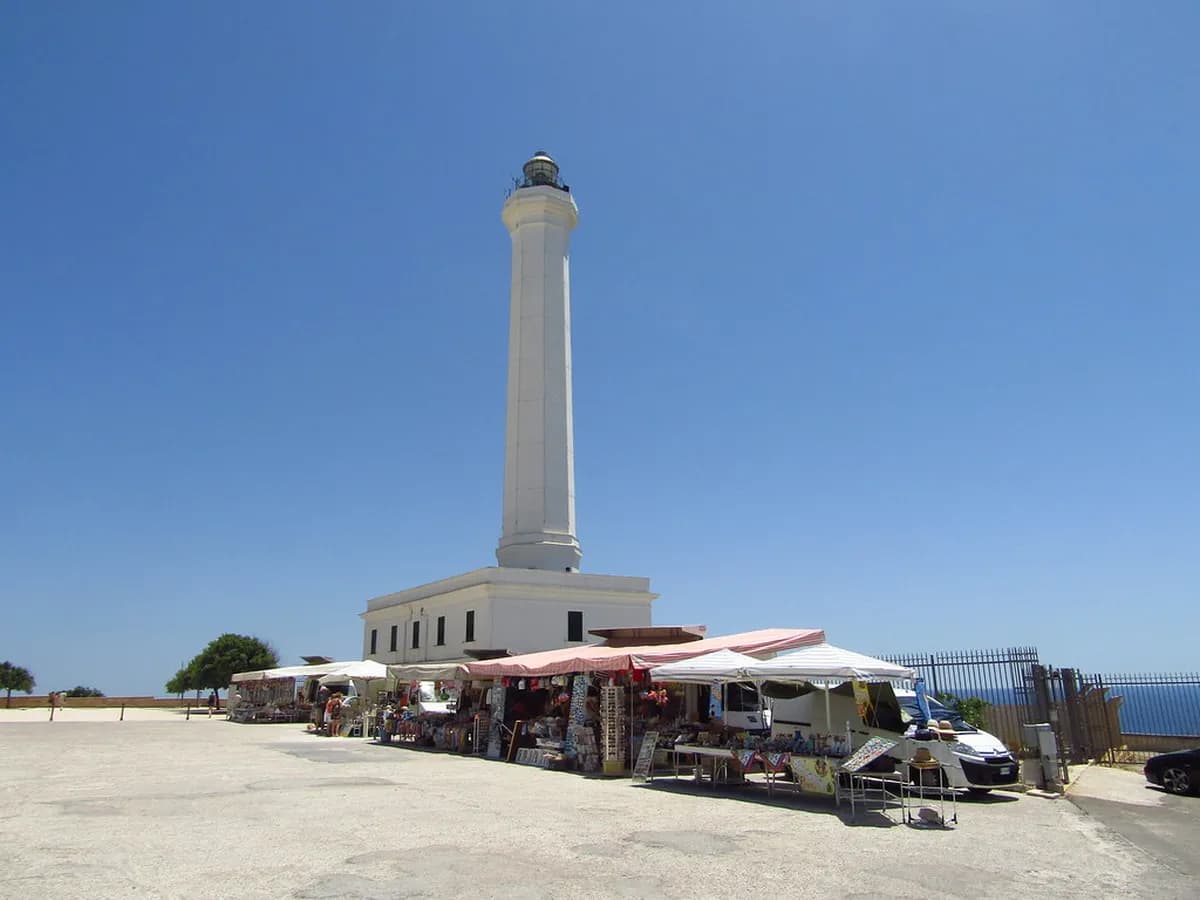
The Faro di Santa Maria di Leuca is one of the tallest lighthouses in Italy and the second tallest in Europe. It rises 47 metres above the ground and sits at Punta Meliso at 102 metres above sea level — high enough that on a clear day you can see the Greek island of Corfu and the mountain ridges marking the Albanian border. The light itself has a range of over 40 kilometres at sea, a critical marker for shipping lanes between the Adriatic and the Ionian. Inside, a spiral staircase of 254 steps winds to the circular terrace at the top; the climb is moderately demanding but the panorama is the reward.
Access to the lighthouse interior is available on specific open days, which vary by season; in 2026 the lighthouse authority has expanded access to include several weekends outside the peak summer window, but numbers are strictly capped. Check the current schedule at the lighthouse gate or via the Castrignano del Capo municipality website before you visit. From the base of the lighthouse you can walk a short footpath to the edge of Punta Meliso, the exact geographic point where the two seas touch, making this the logical place to observe the colour-change phenomenon in the water below before you head back to the harbor.
The Meeting Point of the Ionian and Adriatic Seas
The single most Googled fact about Santa Maria di Leuca is the meeting of the two seas — and it lives up to the hype. At Punta Meliso, the cape's easternmost tip, the Adriatic Sea (to the east and north) and the Ionian Sea (to the west and south) converge in a visible boundary. On calm days the line shows as a colour contrast — the Adriatic tends to run a deeper sapphire blue while the Ionian shifts toward a clearer turquoise. In choppy conditions you can see the two swells moving in different directions, creating a chaotic chop at the meeting point that local fishermen have navigated for centuries.
Punta Ristola, a further headland on the western Ionian side, offers a second vantage point. From here the contrast is sometimes even sharper because you are looking across the boundary rather than standing on top of it. The name "Leuca" itself comes from the Greek leukos, meaning white or bright — a reference to the white limestone cliffs that ancient Greek sailors used as a landmark when approaching from the east, confirming they had safely rounded the heel. Both Punta Meliso and Punta Ristola are accessible on foot from the marina in under 20 minutes and make excellent stops for photography in late afternoon light.
Boat Tours and the Coastal Sea Caves
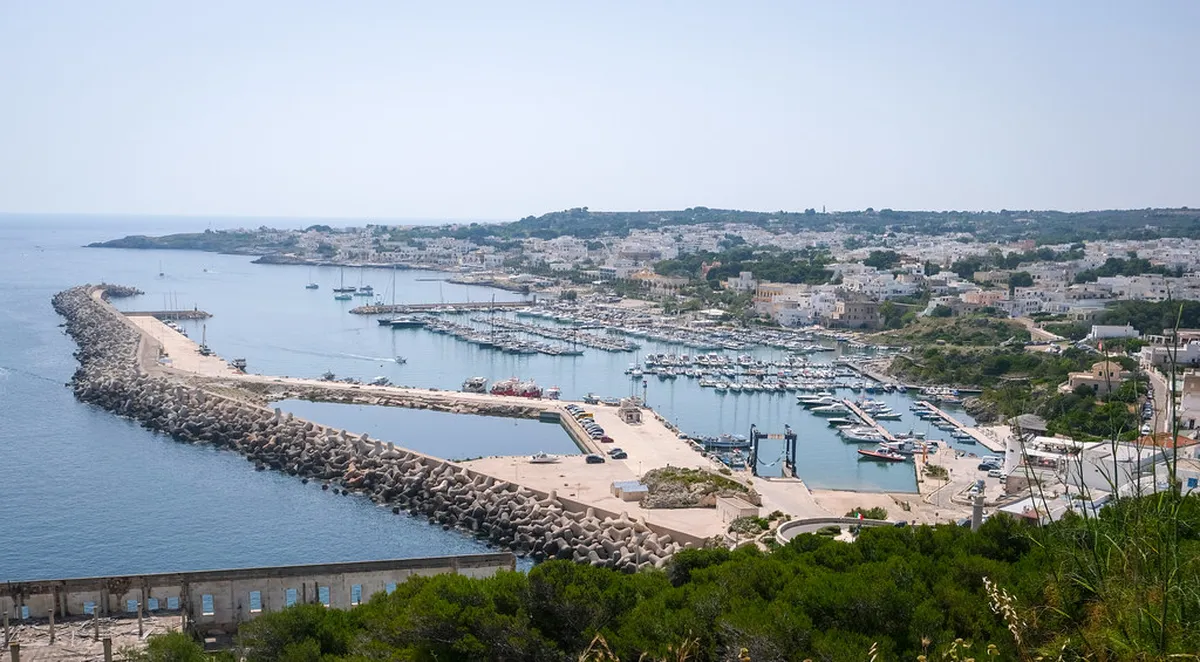
The limestone cliffs between Punta Meliso and Punta Ristola conceal one of the most impressive cave systems in southern Italy, and the only practical way to see them is by boat. Excursion operators depart from the port of Marina di Leuca throughout the day from June to September, typically offering two-hour and three-hour circuits. A standard two-hour tour costs €25–€30 per person and covers the main sea caves on the Ionian side. A full three-hour loop reaching Punta Ristola and the Adriatic-side caves costs €35–€40 per person; a private full-day sailboat charter with lunch on board runs around €80 per person. Book at least 48 hours ahead in July and August — the most popular operators sell out daily.
The caves worth knowing by name before you board: Grotta del Diavolo (Devil's Grotto) is named for the rumbling sounds caused by surging water and air — legend attributed these to demons; Grotta del Presepe ("Nativity Scene") has stalactite formations that resemble a nativity tableau; Grotta Porcinara spans three distinct chambers and bears ancient incisions referencing Jupiter and mythological figures; Grotta del Soffio (Grotto of the Breath) shoots a jet of compressed air from a submerged tunnel. All were inhabited in the Neolithic era and form part of the Otranto Coastal Park – Santa Maria di Leuca and Tricase Forest, a protected zone covering both the marine and architectural heritage of this coast.
The Historic Art Nouveau Villas of the Seafront
The Cristoforo Colombo Promenade that runs along Marina di Leuca is lined with a remarkable collection of Art Nouveau villas built by wealthy Pugliese families during the late 19th and early 20th centuries. Many were designed with eclectic Moorish flourishes added to the Liberty-style facades — pointed arches, ornate ironwork, and polychrome tilework that would look more at home in Tunis than in an Italian fishing village. The result is a seafront that feels architecturally unique even by Italian standards, and entirely unlike anything else in Salento.
The villas suffered badly during World War II — they were requisitioned to house refugees and displaced persons, and their decorative metal balustrades and railings were melted down for armaments. Many were later restored with varying degrees of fidelity, but several retain their original interiors and open to the public for guided visits during the month of May each year as part of a regional heritage programme. Even from the street the facades are well worth photographing, particularly in the soft light of late afternoon. The evening walk along the promenade from the port to Punta Ristola — roughly 2 km each way — is the best way to take them all in at a relaxed pace, finishing with a drink at one of the outdoor bars facing the Ionian.
Best Time to Visit: Seasonal Advice
One day is sufficient to cover all the main highlights if you structure it well. The question is really about which version of Leuca you want to experience. From late June through August the town transforms into a busy seaside resort: boats leave every hour, every restaurant is open, and the promenade buzzes until midnight. It is vibrant and festive, but boat tours book out and parking fills up before 10:00. Early September is the sweet spot — the sea is still warm, crowds thin noticeably after the Italian school year begins on the first of the month, and accommodation prices drop sharply.
Outside the summer season (roughly October through May), Santa Maria di Leuca becomes a near ghost town. Most seafront restaurants, bars, and boat operators close completely, and the Salento in Bus Line 107 does not run at all. The Basilica remains open year-round for pilgrims, and the lighthouse can be visited on pre-booked open days, but the cave excursions and the lively promenade atmosphere simply do not exist in winter. If you are visiting Lecce off-season and considering a day trip here, weigh this carefully — the drive is rewarding for the coastal scenery and the dramatic clifftop setting, but plan to bring your own picnic. For a day trip from Lecce, aim for the shoulder months of late May, June, or September to get the best of both worlds.
Book in Advance: Essential Leuca Reservations
Boat tours are the most popular activity in the area. I recommend booking these at least two days in advance. The Barbarhouse Leuca guide has useful notes on current operators and seasonal availability.
Boat cave tours cost €25–€40 per person and fill up quickly in July–August. Book at least 48 hours ahead. The lighthouse is 47 meters tall and requires a separate reservation; the 284 steps are steep but reward you with views where two seas meet.
Lighthouse climbs are limited and often require a reservation. Check the local calendar for open days and time slots. The views from the top are worth the effort.
If you plan to dine at seafront restaurants, call ahead. The best spots with sea views fill up by noon. A quick phone call ensures you have a table.
Add an Extra Day: Salento Extensions
If you have more time, visit Otranto on your way. It is one of the best day trips from Lecce available. The drive between the two towns is very scenic.
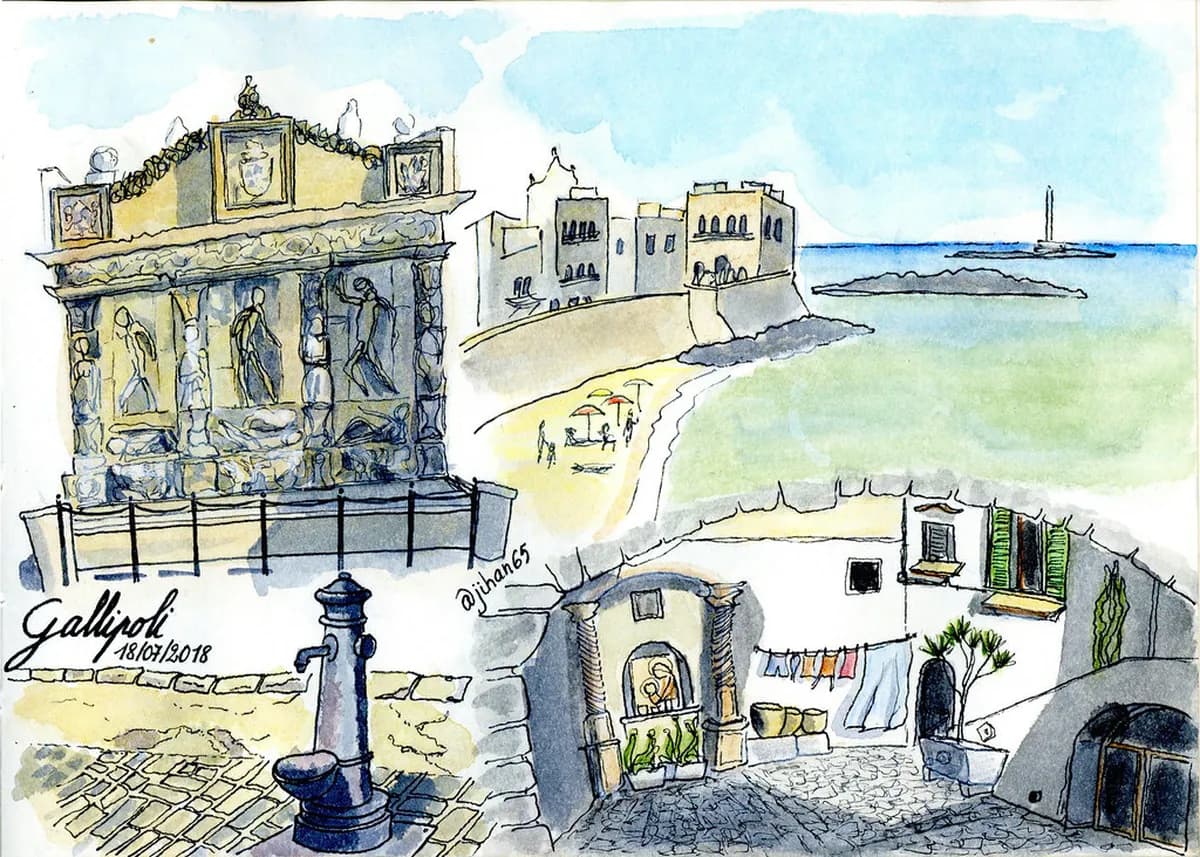
Gallipoli is another fantastic option for an extra day trip. You can easily reach Gallipoli from Lecce by train. It offers a lively contrast to the quiet Leuca.
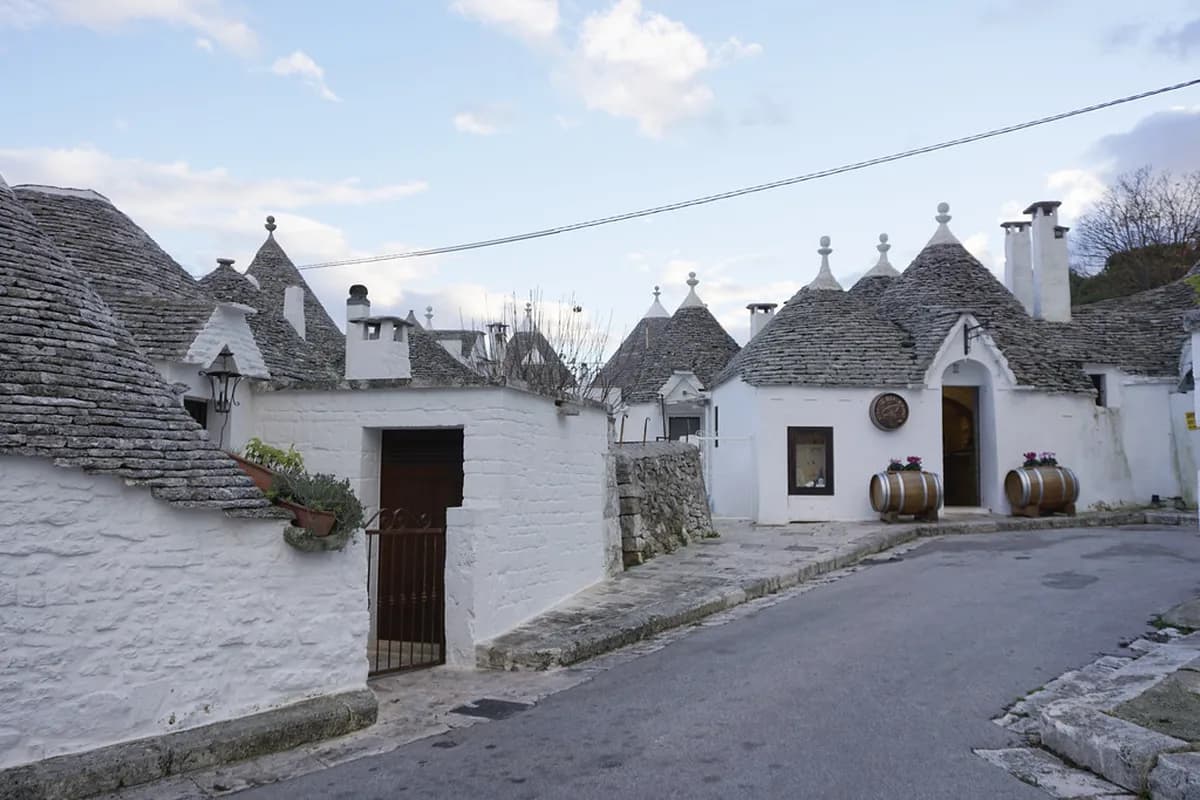
Consider exploring the smaller white towns like Ostuni as well. You can find more info on Ostuni from Lecce travel online. Each town has a unique charm and history.
Best Base: Where to Stay in Salento
Lecce is the best base for exploring the whole region. It offers the most transport connections and dining options. You can find more travel tips on my blog here.
Staying in Leuca itself is great for a quiet retreat. The Art Nouveau villas offer a unique and historic atmosphere. It is a peaceful choice for those who love the sea.
Check for hotels with private parking if you are driving. Lecce's city center has many restricted traffic zones (ZTL). Choosing a hotel just outside the walls saves a lot of stress.
Frequently Asked Questions
What are the seas encountered in Santa Maria di Leuca?
The Adriatic and Ionian seas meet at this point. You can often see a color change in the water. This phenomenon occurs at the base of Punta Meliso near the lighthouse.
How many steps are there in Santa Maria di Leuca?
There are 284 steps connecting the harbor to the Basilica. They flank the monumental staircase and the seasonal waterfall. Climbing them provides beautiful views of the marina below.
How high is the lighthouse of Santa Maria di Leuca?
The lighthouse stands 47 meters tall above the ground. Its light is visible for over 40 kilometers at sea. It is one of the most important lighthouses in Italy today.
Santa Maria di Leuca is a magical destination for travelers. The blend of history, sea, and architecture is truly unique. I hope this guide helps you plan your perfect trip.
Remember to check boat schedules and weather before you go. The southern tip of Italy is waiting for your discovery. Enjoy every moment at the end of the world.
Related on Italy Wander: 13 Best Salento Beaches and Logistics from Lecce (2026).
You might also like
Continue reading
More guides you'll find useful