Lecce Baroque Architecture Guide Travel Guide
Plan lecce baroque architecture guide with top picks, neighborhood context, timing tips, and practical booking advice for a smoother trip.
On this page
Lecce Baroque Architecture Guide
Lecce stands as a golden masterpiece in the heart of Italy's sunny Puglia region.
This city is often called the Florence of the South due to its incredible wealth of ornate stone buildings.
Travelers come from all over the world to witness the unique style known as Leccese Baroque.
Our lecce baroque architecture guide will help you navigate these historic streets and discover the most beautiful landmarks.
Must-See Lecce Attractions
The city center feels like an open-air museum where every corner reveals a new carved masterpiece. For first-time visitors, three sites are genuinely non-negotiable: the Basilica di Santa Croce for sheer ornamental ambition, Piazza del Duomo for the full theatrical effect of an enclosed Baroque square, and the Roman Amphitheatre to anchor the city's deeper historical layers.
Starting your journey at the Basilica of Santa Croce is essential for any visitor.
The facade features a stunning array of animals, plants, and mythological figures carved into local limestone.
Construction spanned nearly a century (1549–1646) under several different designers, which explains the mix of styles: Gabriele Riccardi handled the lower facade and adjacent monastery (Palazzo dei Celestini), while Cesare Penna completed the upper section and Francesco Antonio Zimbalo added portals and the altar. It represents the undisputed peak of artistic expression in the region and is widely considered the pinnacle of the Barocco Leccese.
A short walk east brings you to Piazza Sant'Oronzo, the city's main public square. At its center stands a Roman column bearing a statue of the city's patron saint, while the partially excavated Roman Amphitheatre occupies the southern edge — viewable for free from street level and best appreciated in the morning before tour groups arrive.
- Basilica of Santa Croce
- Type: Baroque Cathedral
- Best for: Intricate facades
- Cost: 9 Euro (Combined ticket)
- Time: 45 minutes
- Piazza del Duomo
- Type: Enclosed Square
- Best for: Evening views
- Cost: Free entry to square
- Time: 30 minutes
- Roman Amphitheatre
- Type: Ancient Ruins
- Best for: History buffs
- Cost: Viewable from street
- Time: 20 minutes
Museums, Art, and Culture in Lecce
Lecce offers more than just beautiful facades; its museums tell deep stories of the past.
The Faggiano Museum is a private home that revealed layers of history during a simple plumbing repair.
You can see Roman, Messapian, and medieval remains all within one small building.
This site is perfect for those who enjoy uncovering the hidden layers of ancient urban life.
Parks, Gardens, and Outdoor Spots in Lecce
When the golden stone becomes too bright, the Villa Comunale provides a refreshing green escape.
These public gardens are located just a short walk from the main shopping district.
Locals often gather here under the shade of ancient trees to enjoy a quiet afternoon.
The park features statues of famous Italian figures and well-kept walking paths for a relaxing stroll.
Family-Friendly and Budget-Friendly Options in Lecce
Exploring the city does not have to be expensive for families or solo travelers.
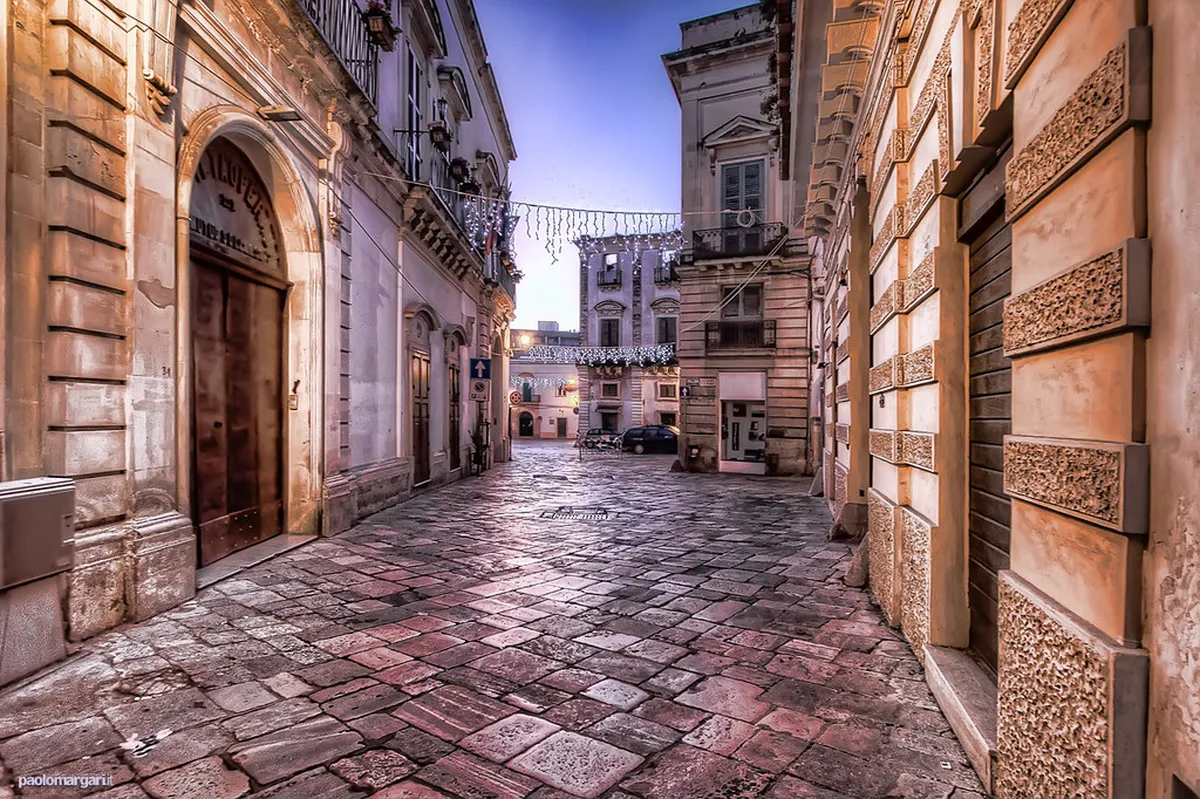
Many of the best free things to do in Lecce involve simply walking the historic lanes.
Kids will enjoy spotting the funny faces and stone monsters hidden on the balconies of old palaces.
Pack a picnic and head to the Roman ruins for a history lesson that costs nothing at all.
How to Plan a Smooth Lecce Attractions Day
Planning your day requires understanding the local rhythm of life in southern Italy.
Most shops and some smaller churches close in the afternoon for a long break called riposo.
Try to visit the major sites early in the morning or late in the afternoon for better light.
Photography is best during the golden hour when the limestone glows with a warm orange hue.
Pietra Leccese is incredibly soft when first quarried, allowing artisans to carve intricate details easily. After exposure to air, it hardens and turns honey-gold. Many shops and small churches close 1:00 PM to 5:00 PM for riposo—plan your tour accordingly.
Guide to Baroque Lecce
The secret behind the city's beauty is the soft, honey-colored limestone found in the surrounding fields.
According to Beautifulpuglia.com, this stone is incredibly easy to carve when first quarried, and masons traditionally soaked finished work in whole milk to harden the surface and reduce porosity.
It hardens over time, allowing the intricate designs to survive for hundreds of years.
This material gave rise to a style that is far more decorative than the Baroque found in Rome — some historians argue the underlying structures remain too medieval and stolid to qualify as "true" Baroque, yet the density and inventiveness of the surface ornament more than compensates.
Lecce sits at the heart of Italy's Salento peninsula, the deep heel of the boot, and the entire historic center is effectively a single open-air gallery of the Barocco Leccese. The pedestrian centro storico follows a medieval street plan, so even major landmarks appear and vanish as you turn corners — part of the delight of exploring on foot. Two contrasting squares anchor the center: the open, mixed-era Piazza Sant'Oronzo, and the tightly enclosed, entirely Baroque Piazza del Duomo. Between them runs Via Vittorio Emanuele II, the city's informal spine.
To maximize your visit, consider the LeccEcclesiae combined ticket (€11 in 2026), which covers the Duomo, Basilica di Santa Croce, San Matteo, Santa Chiara, the Antico Seminario, and the Diocesan Museum. Tickets can be purchased online, at the main office in Piazza del Duomo 5, or at the Santa Croce ticket office. Sites operate 09:00–21:00 April through September and 09:00–18:00 October through March.
Chiesa dei Santi Niccolò e Cataldo and the Cimitero di Lecce
A short walk outside the city walls leads to one of the most interesting religious sites.
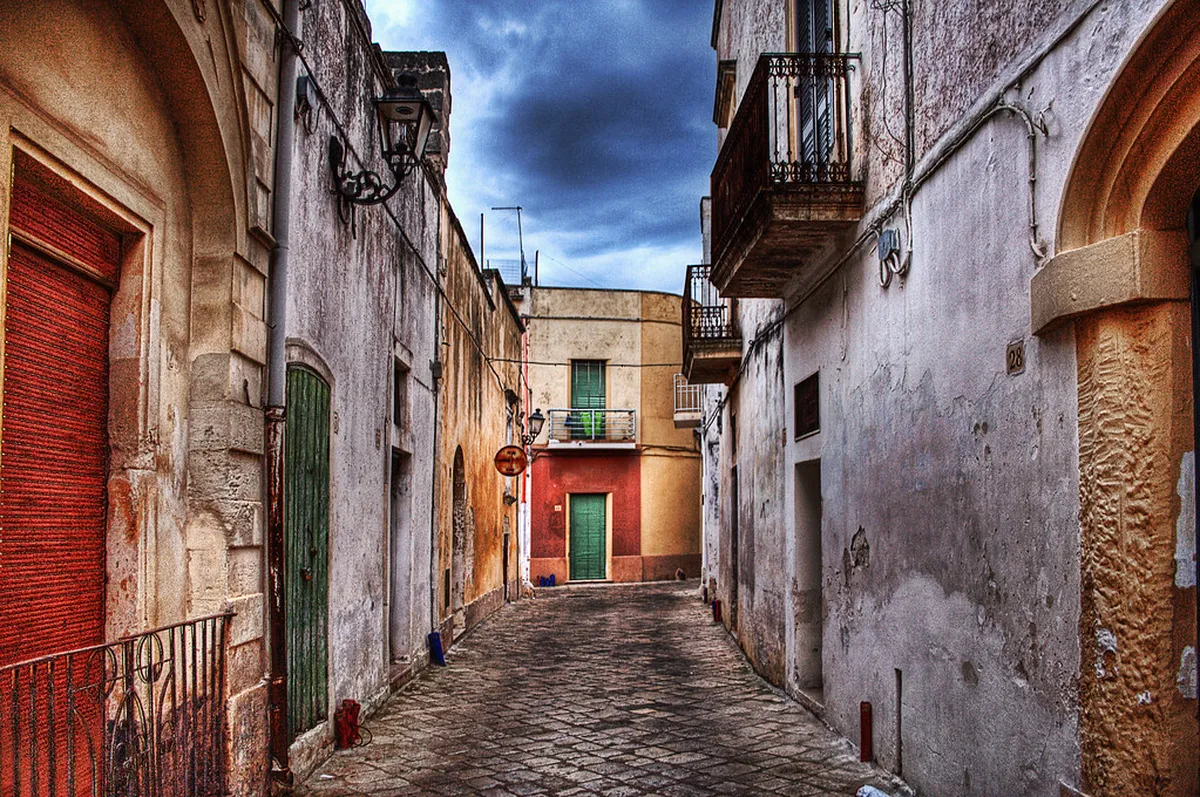
The Church of Saints Niccolò and Cataldo combines medieval Romanesque architecture with a Baroque facade.
Right next to the church, the Monumental Cemetery offers a peaceful and artistic atmosphere.
Many of the tombs are small architectural wonders that mimic the grand palaces of the city center.
Art and Artisans in the Capital of the Baroque
The artistic spirit of Lecce is kept alive by modern artisans practicing ancient crafts. The city formally recognizes eight traditional handicraft disciplines that trace their roots to the height of the Baroque era.
Cartapesta (paper mache) is the most visible. Poor craftsmen of the 17th century used paper pulp and glue to create religious statues that convincingly mimicked expensive marble — you can still visit workshops in the centro storico today and watch artists mold these lightweight masterpieces by hand. Lecce stone carving remains equally active: craftsmen cut the soft Pietra Leccese into decorative objects ranging from capitals and corbels to small souvenirs, using the same techniques employed on the cathedral facades.
Beyond these two headliners, look out for traditional wrought-iron and copper work (once used for church fittings and domestic tools), terracotta pottery, olive-wood furniture and marquetry, and intricate lace embroidery featuring rosette and bird patterns. The currulu — a steel-tipped spinning top still used in local festivals — is an unexpectedly charming craft tradition to watch being made. Most artisan workshops are concentrated along Via degli Ammirati and in the lanes behind Piazza Sant'Oronzo; many welcome visitors without a prior appointment during morning hours (09:00–13:00).
Palazzos and Other Baroque Buildings
Walking down Via Palmieri reveals the private side of the city's architectural wealth. The Baroque style eventually spread beyond Lecce's churches as local nobility incorporated elaborate carvings and dynamic shapes into their family palazzos, blending the local ornamental tradition with typical Spanish elements such as wrought-iron balconies and heavy wooden entrance gates.
Nearly all of these grand homes remain privately owned, but their lively facades are fully accessible from the street. Palazzo Marrese and Palazzo Palmieri both face Piazzetta Falconieri and offer some of the best examples of refined double exteriors. The Palazzo Guarini on Via Vittorio Emanuele II features unusually curved Baroque windows. Palazzo Celestini, directly adjacent to the Basilica di Santa Croce, is a prime example of civic Baroque design with its rhythmic window patterns — it now houses municipal offices but the exterior is always open to view.
Look for telamons (carved stone figures used as structural supports) on the balconies and doorframes of buildings along Via Augusto Imperatore and the narrow lanes connecting it. These supporting figures — often depicted as straining atlas figures or crowned with elaborate capitals — are a signature element of the Barocco Leccese that you won't find in the same density anywhere else in Italy. Keep an eye out for lecce hidden gems like small courtyards tucked behind heavy wooden doors, some with private gardens that can be glimpsed through iron gates.
A Brief History of Lecce
Lecce has been an important cultural hub since the times of the Roman Empire, when it served as a prosperous farming settlement. Roman traces survive in the remnants of an amphitheatre and a smaller teatro. The collapse of the Western Empire left the region exposed to raids from the sea, and most inhabitants moved inland — the area remained largely isolated for the next thousand years as Byzantines, Normans, and various European powers passed through.
The Spanish gained control around the 15th century, and a visit from Emperor Charles V resulted in massive new city walls, a castle, and official recognition of Lecce as the capital of Puglia. This infrastructure investment set the stage for what followed.
The real transformation came in the second half of the 16th century through the end of the 17th, when a wave of Counter-Reformation Catholic orders arrived in the city. As noted by Britannica.com, the funding and competition between these orders triggered the Baroque building boom that defined the urban landscape we see today. Religious congregations — Theatines, Carmelites, Dominicans — competed with one another via church commissions, inaugurating the Barocco Leccese as a distinct style. Most architects in Lecce encountered broader Baroque developments through two-dimensional drawings rather than firsthand travel, which accounts for the city's highly idiosyncratic and hyper-decorative interpretation of the style.
Duomo di Lecce
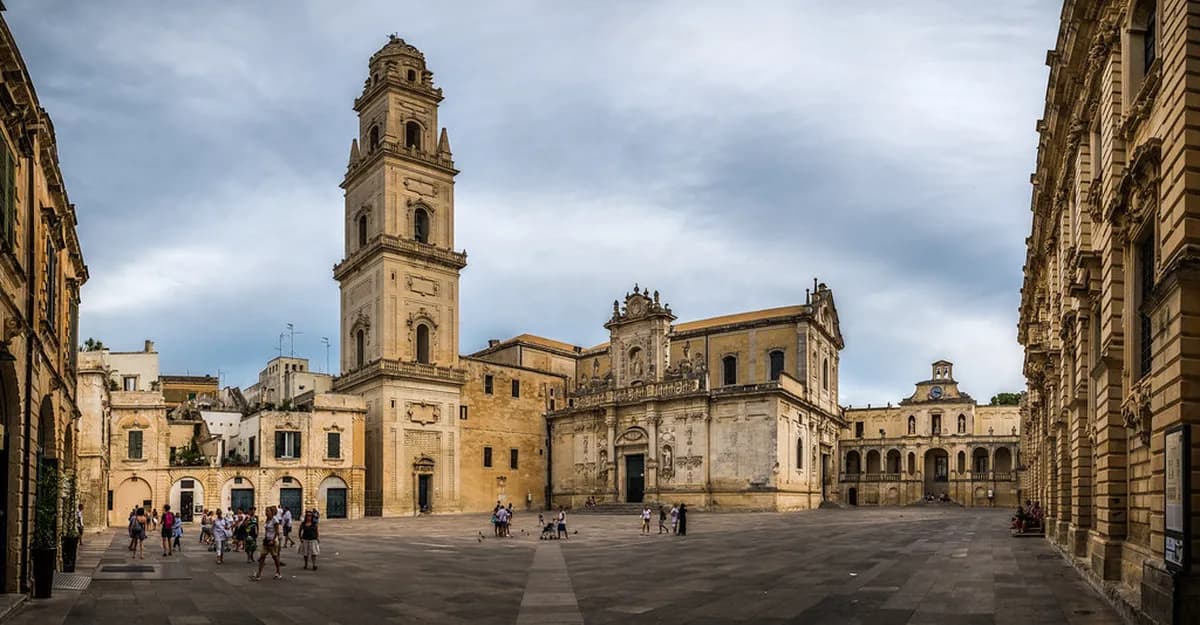
The Piazza del Duomo is the single most atmospheric space in all of Lecce and arguably the finest enclosed Baroque square in southern Italy. Unlike Rome's great piazzas with their sweeping colonnades, Lecce's cathedral square works through compression: high, ornate walls on three sides create a sense of being inside an outdoor room, with the elaborate facades competing for attention at every turn.
Normans began the first Duomo in 1114, but its medieval bell tower collapsed in the early 17th century. This triggered a commission for the city's most celebrated architect, Giuseppe Zimbalo — nicknamed Lo Zingarello ("The Little Gypsy") — to redesign both structures. The Baroque cathedral was built between 1659 and 1670, and the bell tower from 1661 to 1682. Zimbalo made an unconventional choice: rather than placing the grandest portal on the main facade, he positioned a spectacular secondary entrance on the cathedral's side to frame the view from the piazza entrance — a pure Baroque move designed to orchestrate awe. Development of the surrounding Bishop's Palace and Seminary continued for another century, resulting in the harmonious ensemble visible today.
The bell tower lift (€12 in 2026, timed slots available online or at the ticket office) reaches a platform that on clear days offers views across to the Adriatic. The twisted tortili columns inside the cathedral are a highlight: popularized by Bernini's Baldacchino in St Peter's, these spiral forms create a sense of dynamic movement while symbolically referencing columns supposedly brought from Jerusalem's Temple of Solomon.
The Baroque Style in Lecce
Baroque architecture emerged during the Catholic Church's Counter-Reformation building campaign of the late 16th and 17th centuries. The style's hallmarks — overwhelming displays of art and ornament, theatrical use of space, and the deliberate fusion of architecture, sculpture, and painting — were designed to inspire awe and reinforce the Church's power at a time of religious crisis. In Rome, architects like Francesco Borromini achieved this with swooping curves and dynamic structural forms that seemed to move.
Lecce's version took a different path. The city's craftsmen had access to Pietra Leccese, a local limestone so soft when freshly quarried that it could be carved almost like wood, allowing an extraordinary density of surface decoration. Even Sicily's wilder Baroque churches cannot match the sheer ebullience of carvings here: legions of putti spiraling up columns, fruit cascading across entire facades, and a bestiary of animals, mythological figures, and medieval monsters embedded in every available surface.
This is why many architectural historians describe the Barocco Leccese as "spectacular new icing on the same square cake" — the underlying structural forms remain relatively stolid and medieval, while the surfaces explode with ornamental invention. Whether it qualifies as "true" Baroque is an academic debate; for travelers, the effect is overwhelming and entirely unique. No other city in Italy, or indeed the world, produces the same visual experience.
Frequently Asked Questions
Which lecce baroque architecture guide options fit first-time visitors?
First-time visitors should start with the Piazza del Duomo and Santa Croce. These sites offer the most concentrated examples of the city's unique style. They are easy to find and provide a great introduction to the local history and art.
How much time should you plan for a lecce baroque architecture guide?
You should plan at least two full days to see the main architectural highlights. This allows time for the afternoon riposo when many sites close. A slower pace lets you appreciate the fine details of the stone carvings without rushing through the heat.
What should travelers avoid when planning a Lecce trip?
Avoid visiting major churches during Sunday morning mass unless you intend to worship. It is also wise to skip the midday sun during the summer months. Many travelers forget that the city essentially shuts down between 2:00 PM and 5:00 PM every day.
Is Lecce's Baroque architecture worth including on a short itinerary?
Yes, even a half-day trip allows you to see the Roman Amphitheatre and the main cathedral. The historic center is compact and very walkable for those on a tight schedule. It provides a distinct contrast to the coastal towns found elsewhere in Puglia.
Lecce remains one of Italy's most visually rewarding cities for those who love art and history.
The combination of soft golden stone and expert craftsmanship creates an atmosphere like no other.
Whether you are exploring grand cathedrals or quiet side streets, the Baroque beauty is everywhere.
Use this guide to ensure you don't miss any of the stunning details that make Lecce so special.
For the bigger picture, see our 12 Best Things to Do in Lecce Travel Guide (2026) guide — or dive into Basilica di Santa Croce Lecce Guide and Piazza Del Duomo Lecce Guide.
You might also like


Continue reading
More guides you'll find useful