Basilica di Santa Croce Lecce Guide: Baroque Masterpiece
Plan your visit to the Basilica di Santa Croce in Lecce with our expert guide. Includes Chiese Lecce ticket info, architectural highlights, and local dining tips.
On this page
Basilica di Santa Croce Lecce Guide
The Basilica di Santa Croce serves as the crowning jewel of the historic center in Lecce. Its facade showcases the incredible skill of local artisans who worked with soft limestone. Use this guide as your Lecce planning cheatsheet for a smooth cultural experience.
Must-See Basilica Attractions
The exterior facade is the most celebrated feature of this massive Baroque masterpiece. Look closely at the upper level to see the detailed rose window surrounded by intricate carvings. You will find figures of griffins, lions, and cherubs supporting the heavy stone balconies.
The central portal displays a rich collection of floral motifs and allegorical figures. These carvings represent the victory of the Christian faith over pagan traditions. Every inch of the Leccese Baroque stone tells a story from the seventeenth century.
Inside the church, the coffered wooden ceiling provides a stunning contrast to the white stone walls. The high altar features a complex design that draws your eyes toward the heavens. Visitors often spend several minutes admiring the side chapels dedicated to various saints.
Museums, Art, and Culture in Basilica
The Basilica di Santa Croce functions as far more than a place of worship — it is the defining monument of the Leccese Baroque movement that swept Puglia between the late sixteenth and early eighteenth centuries. Unlike the grander Baroque of Rome, which relied on imported marble and foreign masters, the Leccese school grew from a single extraordinary local resource: Pietra Leccese, a soft golden limestone so workable that craftsmen could carve it almost as easily as wood. The interior houses paintings from the late Renaissance period alongside sculpted altarpieces that push the stone to its expressive limits.
Pay special attention to the altar of Saint Francis of Paola on the left nave. This area contains twelve bas-reliefs depicting scenes from the life of the saint — each panel a masterclass in shallow relief carving unique to Salento workshops. These works demonstrate just how much detail the local craftsmen could coax from a single block of Pietra Leccese.
The adjacent former Celestines' Convent adds another layer of cultural depth. Its long Renaissance facade contrasts with the basilica's ornate surface and now serves as the regional government building. Walking its length after visiting the basilica gives you a sense of how ecclesiastical and civic power once shared the same urban stage in Lecce.
Parks, Gardens, and Outdoor Spots in Basilica
After touring the interior, you might want to enjoy some fresh air nearby. The Villa Comunale is the most popular public park located just a short walk away. This green space offers shaded paths and benches for a relaxing break.
Local families often gather here to enjoy the quiet atmosphere and beautiful fountains. It provides a perfect escape from the narrow streets of the old town. You can find more things to do in Lecce by exploring these public spaces.
The surrounding piazza also offers several spots to admire the basilica from a distance. Early morning light provides the best conditions for capturing the stone's texture. Golden hour in the late afternoon makes the facade glow with a deep orange light.
Family-Friendly and Budget-Friendly Options in Basilica
The basilica facade is genuinely engaging for children: give them a simple challenge to count the griffin heads or spot the lions holding up the balcony before you enter. This turns a cultural visit into a scavenger hunt that keeps younger travelers focused and curious. The hunt alone can occupy a family for twenty minutes outside before you even step through the door.
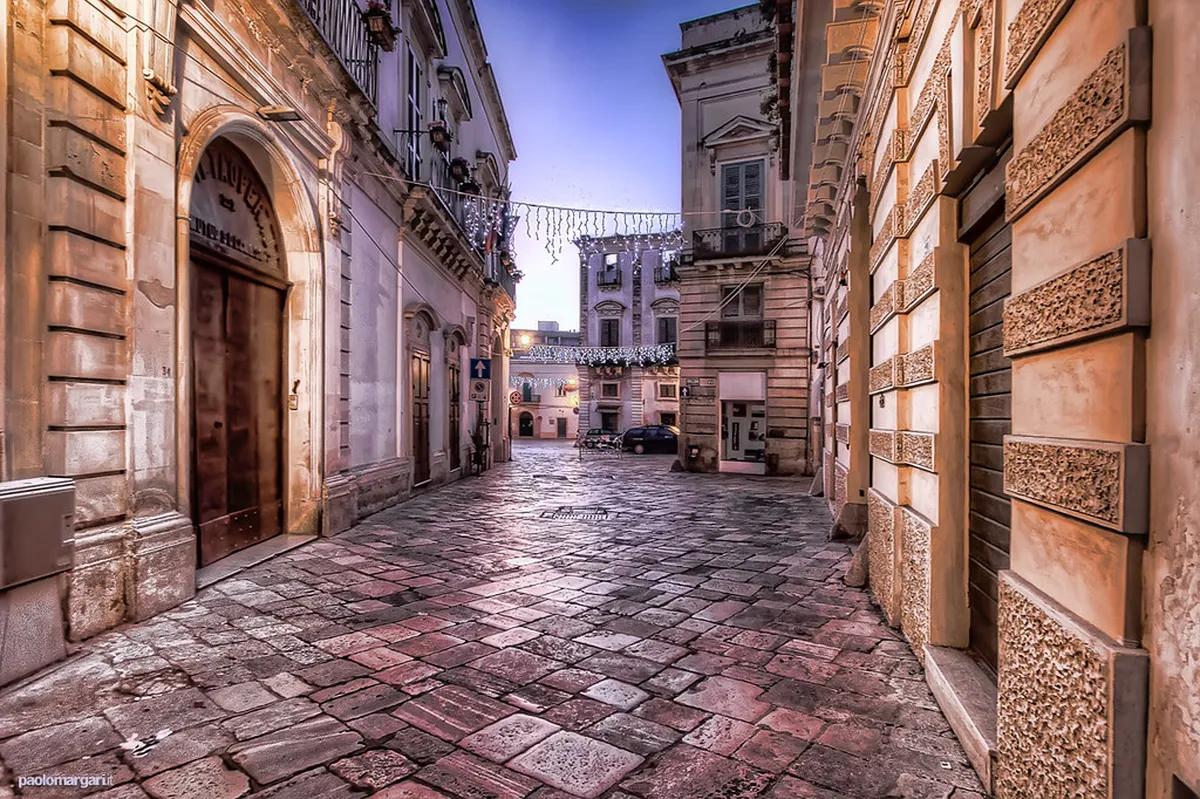
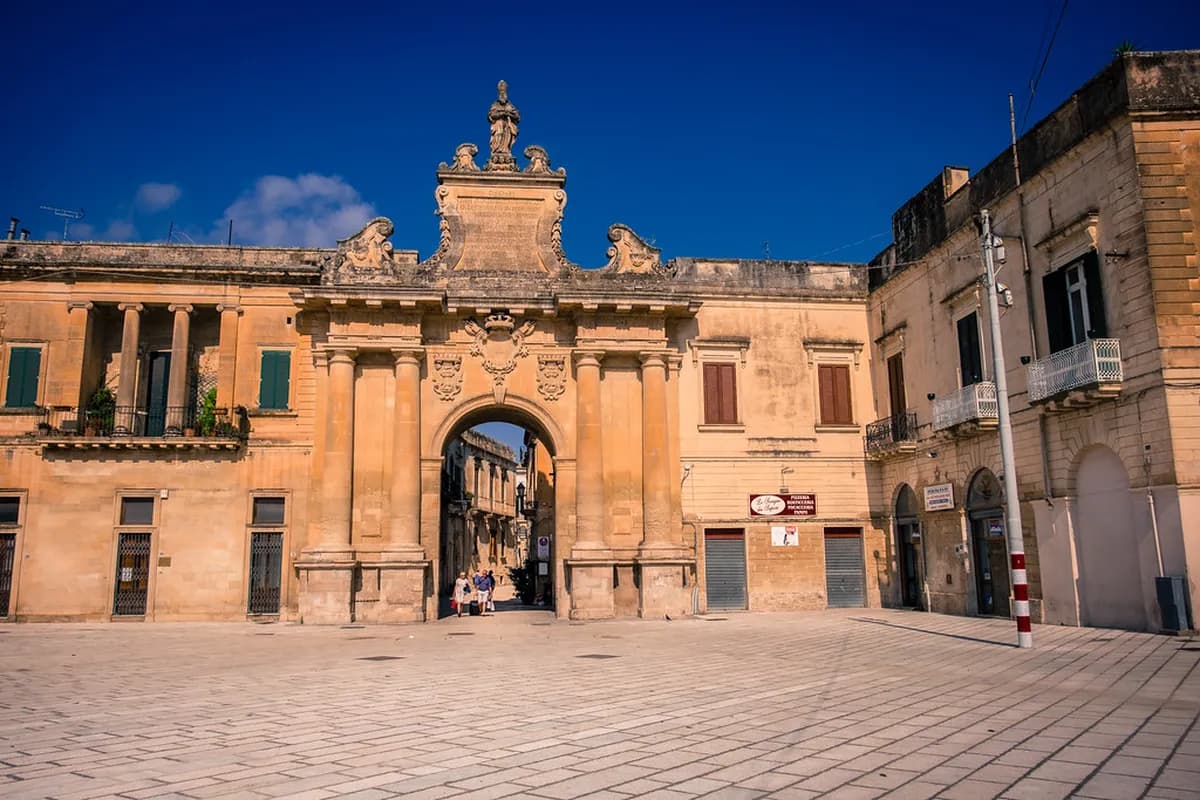
The smartest budget move is the LeccEcclesiae combined ticket (€11 in 2026), which covers the Basilica di Santa Croce, Lecce Cathedral, the Church of Santa Chiara, the Church of San Matteo, the Ancient Seminary, and the Museum of Sacred Art (MuDAS). Compared to buying individual entries, the pass essentially gives you two or three sites for free. If you want to add the cathedral tower climb — worth it for views stretching toward the Adriatic — upgrade to the €21 pass. Both passes are valid for three days, so there's no pressure to rush through everything in a single afternoon. You can find many free things to do in Lecce as well: the Roman Amphitheatre in Piazza Sant'Oronzo, the three historic city gates, and simply wandering the pedestrianized centro storico cost nothing at all.
Tickets can be purchased online at the Chiese Lecce Official Tickets page or in person at the basilica entrance or the Infopoint in Piazza del Duomo 5. Note that reduced-price tickets for students and seniors are only available in person on site, not online.
How to Plan a Smooth Basilica di Santa Croce Lecce Guide Day
This basilica di santa croce lecce guide helps you navigate the busy peak season with ease. Try to arrive at the basilica right when it opens in the morning. This strategy allows you to appreciate the quiet interior before the midday rush.
You must follow the modest dress code required for all sacred sites in Italy. Ensure your shoulders and knees are covered before entering the building. You can find more details on the Chiese Lecce Official Tickets website.
Shoulders and knees must be covered—no tank tops or short skirts. Arrive right at opening (9:00 AM) to avoid midday tour groups, and carry a light scarf for quick coverage during hot summer months.
Most visitors wonder how long to spend in Lecce to see all the major sights. If you enjoy photography, allow an extra twenty minutes for the exterior facade. Combining this visit with the Roman Amphitheatre makes for a perfect morning.
Why is Lecce nicknamed “the Florence of the South”?
The comparison is architectural, not merely flattering. Florence became the epicentre of the Italian Renaissance in the fifteenth and sixteenth centuries, creating an entire visual language based on classical proportion, humanist painting, and marble. Lecce did something parallel but entirely different a century later: it became the laboratory of a hyper-decorative Baroque style that exists nowhere else in Italy — one powered not by imported stone or Roman patronage but by a single local material called Pietra Leccese.
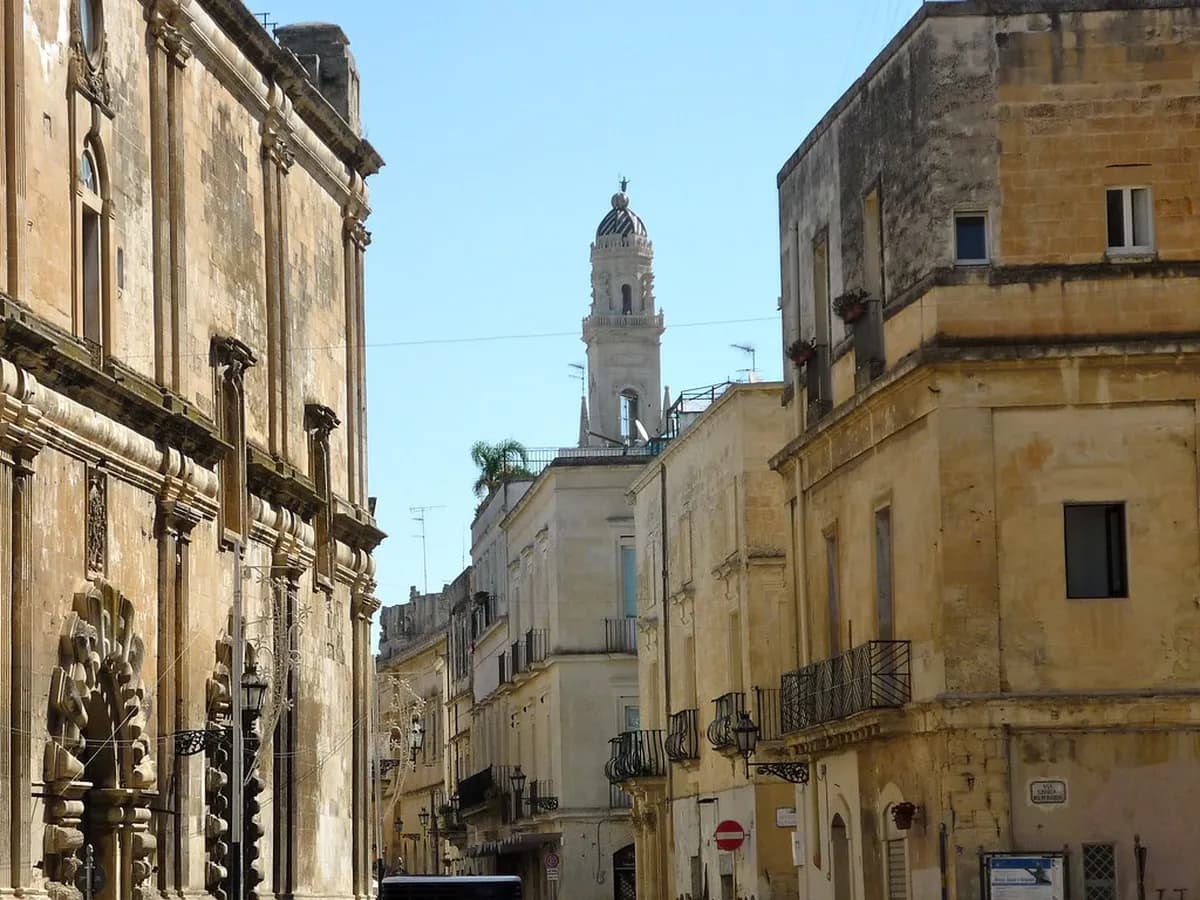
Pietra Leccese is a warm, honey-coloured limestone quarried from the Salento plain. When freshly extracted it is soft enough to carve with a blade, yet over decades it hardens and acquires its characteristic golden patina — the glow you notice on every facade at sunset. Because the stone was cheap and endlessly workable, even the owners of private palazzi could afford elaborate portals, masks, and foliate balconies. This meant the Baroque aesthetic saturated not just the grand churches but the entire urban fabric. Wandering from the Basilica di Santa Croce to the Piazza del Duomo, you move through a city where every building is essentially a carved sculpture.
Florence's Renaissance drew on Greek and Roman models for restraint and symmetry. Lecce's Baroque deliberately broke those rules: figures twist, foliage spills over cornices, and almost nothing sits in perfect alignment — a trick of the eye designed to hold your attention as you pass. Art historians call it Leccese Baroque, and it has no direct equivalent anywhere else on the Italian peninsula. That singularity is what earns Lecce the southern comparison.
Chiese Lecce Ticket Pass Explained
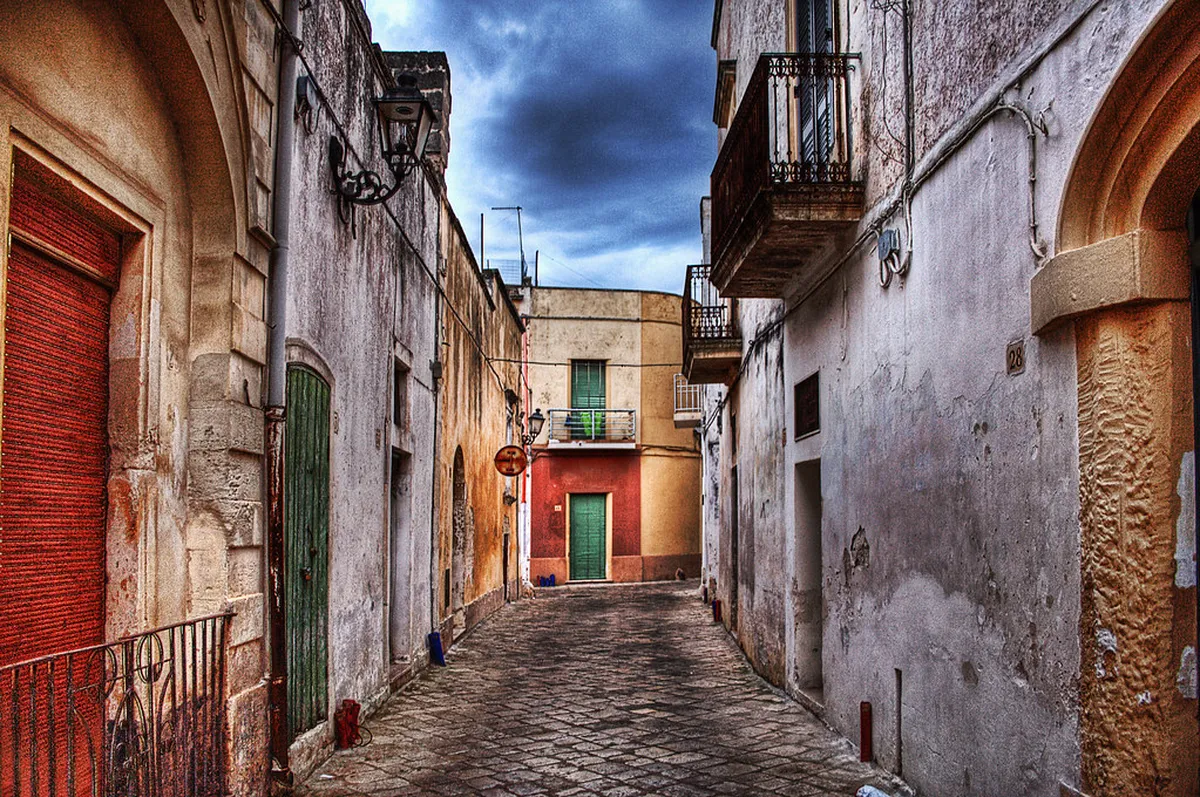
The LeccEcclesiae project manages a unified ticketing system for Lecce's most important religious and cultural monuments. For most visitors, the combined pass is the obvious choice — buying individual tickets adds up quickly and removes the freedom to revisit sites at different times of day. All passes are valid for three days from first use, so you can spread your visits across a long weekend without feeling rushed.
| Ticket Option | 2026 Price | Valid | What's Included |
|---|---|---|---|
| LeccEcclesiae Standard | €11 | 3 days | Basilica di Santa Croce, Lecce Cathedral, Santa Chiara, San Matteo, Ancient Seminary + MuDAS |
| LeccEcclesiae + Tower | €21 | 3 days | Everything above plus cathedral tower climb (Adriatic views on clear days) |
| Basilica Terrace Tour | €12 | Single entry (afternoons only) | Guided access to the basilica rooftop terrace — not included in any pass |
| Friday Light & Music Event | €15 | Friday evenings only | Artistic installation combining light and music inside the basilica |
| Single Church Entry | ~€6 | One-time | One participating church only — poor value if visiting more than two sites |
Tickets can be bought online at Chiese Lecce Official Tickets or in person at the basilica entrance or the Infopoint in Piazza del Duomo 5. Reduced prices for students, seniors, and children under 12 are only available on site. The Chiese Lecce Guided Tours run each afternoon for €20 per person and cover all the major Baroque churches with an expert local guide.
One practical tip: if you buy online, screenshot your ticket immediately. The URL-format ticket that the system emails can expire before you arrive at a site — a known quirk reported by multiple visitors in 2025 and 2026.
My Favorite Hidden Gems in Puglia
While the basilica is a major draw, the surrounding region offers many secrets. Consider taking a short drive to the coastal town of Otranto for the day. You will find a stunning cathedral with a famous mosaic floor there.
The town of Gallipoli is another excellent choice for those who love the sea. Its old town sits on a limestone island connected by a bridge. You can discover more Lecce hidden gems by planning a Salento coast day trip.
Matera is also reachable for a longer day trip from the Salento area. This ancient city of caves provides a striking contrast to the Baroque elegance of Lecce. Both destinations offer unique insights into the diverse history of southern Italy.
Where to eat and drink in Lecce
No visit to the basilica is complete without tasting a local Pasticciotto Leccese. This shortcrust pastry is filled with rich lemon custard and served warm. Caffè Alvino in the nearby square is a legendary spot for this treat.
During the hot summer months, try a Caffè in ghiaccio con latte di mandorla. This iced coffee with sweet almond milk is a refreshing regional specialty. It provides the perfect energy boost after a long morning of sightseeing.
For dinner, look for traditional trattorias that serve Ciceri e Tria, a local pasta dish. This recipe features chickpeas and a mix of boiled and fried pasta. Local wines from the Salento region pair perfectly with these hearty flavors.
Where to stay in Lecce
Staying inside the historic centre is worth the premium. Lecce's centro storico is largely pedestrianized, and with monuments on every block, walking to and from your accommodation is itself part of the experience. After the day-trippers leave on the early evening trains, the old town takes on a different quality — quieter streets, locals at aperitivo, and the Pietra Leccese facades lit a deep amber. You lose that entirely if you stay outside the walls.
Within the old town, the micro-neighbourhood around Basilica di Santa Croce and Via Libertini is the most atmospheric and the most convenient for this guide's sights — but also the liveliest at night. Expect music from nearby bars until midnight in summer. If you prefer quiet, the streets between the Chiesa del Carmine and Sant'Angelo are only a five-minute walk from the basilica yet noticeably calmer and dimly lit after 22:00. The area just outside Porta Napoli offers a middle ground: local bakeries and university-crowd bars within reach, but at a quieter pitch than the tourist core.
Lecce is easily reached by direct Frecciarossa train from Roma Termini in around 5.5 hours (tickets from ~€25 booked in advance) and from Bari in roughly 1.5 hours. From Brindisi airport — the nearest international hub — a regional train covers the distance in 20–30 minutes for around €3.50. The train station sits about 15 minutes on foot from the historic centre, a straightforward walk that most travelers handle without a taxi. Check an expert Lecce Walking Tour with Paolo for neighbourhood-level tips from someone who knows every alley.
Photography Tips: Capturing the Facade
The basilica facade is one of the most photographed surfaces in southern Italy, and timing matters enormously. The building faces roughly west, which means morning light (08:00–10:00) grazes the carved reliefs from the side and throws every griffin, cherub, and foliate scroll into deep shadow-and-highlight relief. This is the single best time to capture the facade's depth. Midday light is flat and washes out the texture entirely — avoid it for detail shots.
The much-celebrated Pietra Leccese glow appears in late afternoon, roughly from 17:00 in winter to 19:00 in summer, when low sun strikes the stone and the entire facade turns from cream-white to burnt gold. This is the moment locals call the "magic hour" in Lecce, and it is genuinely different from what you see on any other limestone in Italy. The stone responds to warm wavelengths more intensely than marble because of its slightly porous, granular surface — worth the wait even if you have to come back a second time.
For composition, step back to the pavement on the opposite side of Via Umberto I so the full height fits in frame without extreme distortion. A wide-angle lens at 24mm or a phone portrait mode works well here. If you want close detail shots of the rose window or the upper-tier carvings, a zoom lens or the telephoto mode on a recent phone gives you enough reach without entering the church. Early morning also means almost no foot traffic, which removes the challenge of waiting for people to clear from the foreground.
Frequently Asked Questions
How much do Chiese Lecce tickets cost for the Basilica?
A single entry ticket for the basilica costs six Euros for most adult visitors. However, you should consider the nine-Euro combined pass for better overall value. This pass includes entry to the Cathedral and other major Baroque churches throughout the historic city center.
What is the dress code for visiting churches in Lecce?
Visitors must wear clothing that covers both their shoulders and their knees when entering sacred sites. Avoid wearing tank tops or short skirts to ensure you are granted entry by the staff. Many travelers carry a light scarf to cover up quickly during the hot summer months.
Is the Basilica di Santa Croce worth visiting on a short Puglia itinerary?
Yes, the basilica is a mandatory stop for anyone interested in Italian art and architecture. Its unique facade is unlike any other church in the country and represents the peak of the Baroque era. You can easily see the main highlights in under one hour during a morning walk.
The Basilica di Santa Croce is an essential stop for any traveler visiting the Salento region. Its golden stone and intricate carvings leave a lasting impression on everyone who visits. Explore more tips on our Italy travel blog to plan your perfect trip.
Related on Italy Wander: Piazza Del Duomo Lecce Guide.
You might also like


Continue reading
More guides you'll find useful