Piazza Del Duomo Lecce Guide: 10 Things to Know
Discover the secrets of Piazza del Duomo Lecce. Our guide covers the "false facade," the LeccEcclesiae ticket, history, and tips for the perfect golden hour photo.
On this page
Piazza Del Duomo Lecce Guide: 10 Things to Know Before You Go
Entering this sacred space feels like walking into a private limestone theater hidden from the modern world. The square remains one of the few completely enclosed religious centers found in southern Italy today. Its single entrance at the corner of Via Giuseppe Libertini creates a dramatic reveal for every visitor.
This comprehensive piazza del duomo lecce guide explores the intricate carvings and hidden mysteries of the city. Lecce often surprises travelers with its warm golden stone and theatrical architectural designs. Understanding the history of these buildings helps you appreciate the deep cultural roots of the Salento region.
Planning a visit in 2026 allows you to experience the vibrant local festivals and restored historical sites. Most travelers start their journey here before exploring the wider treasures of the Puglia coastline. Prepare to discover why this square is considered the crown jewel of the southern Italian Baroque movement.
The Unique Enclosure of Piazza del Duomo Lecce
Local architects designed this space to provide a sense of security and overwhelming religious authority. The high walls of the surrounding buildings block out the noise of the busy historic center. This isolation allows the intricate details of the Barocco Leccese style to truly shine.
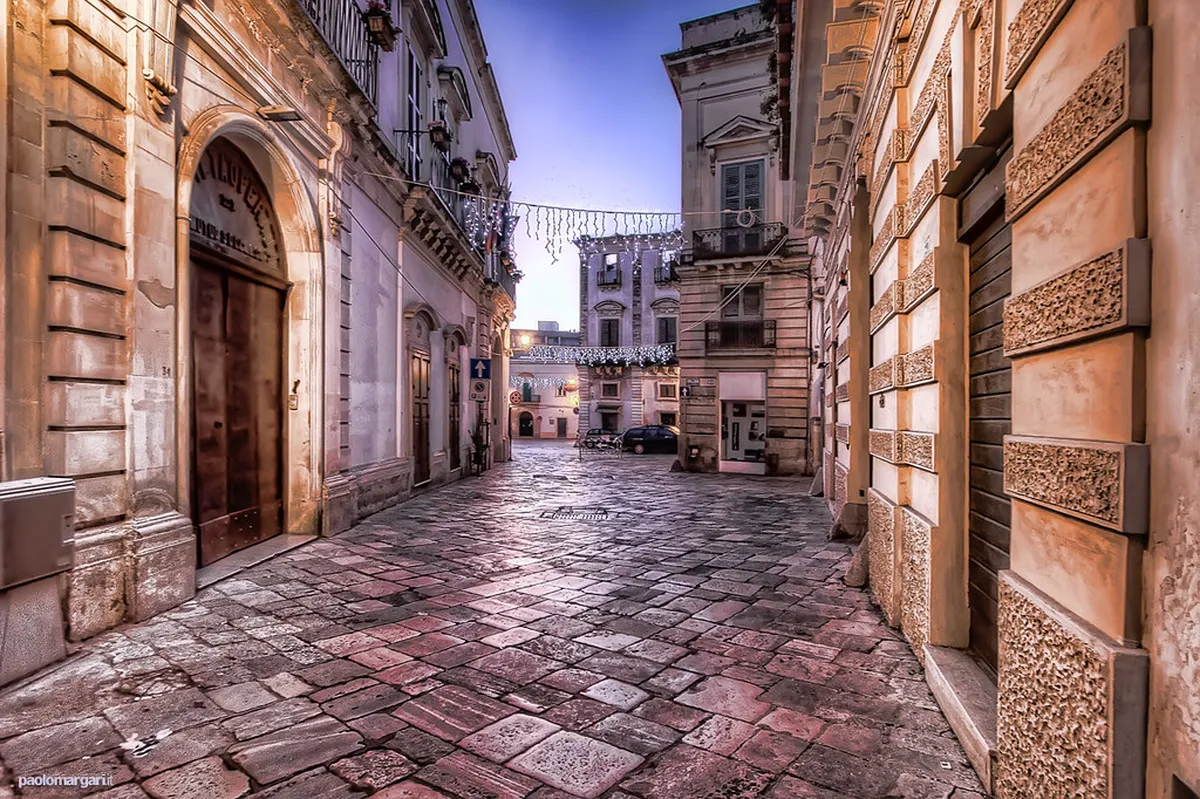
Finding the entrance requires a short walk from the bustling shops near the main city gates. Most travelers use Google Maps: Piazza del Duomo to navigate the winding streets of the old town. Once inside, the vastness of the square provides a sharp contrast to the narrow alleys nearby.
The square functions as a massive courtyard for the most important religious buildings in the city. You will see the Cathedral, the Bell Tower, and the Bishop's Palace all sharing this elegant space. This layout makes it easy to admire multiple masterpieces without walking long distances between them.
- The Cathedral of Maria Santissima Assunta
- Type: Main church
- Style: Baroque
- Feature: False facade
- Access: Ticket required
- The Five-Story Bell Tower
- Height: 70 meters
- Architect: Giuseppe Zimbalo
- Views: Panoramic city
- Built: 1661-1682
The History Behind the Cathedral’s Centuries of Stone
The original structure dates back to 1144 when the city was under Norman rule. Over the centuries, the building underwent several changes before its massive 17th-century transformation. Architect Giuseppe Zimbalo led the reconstruction that gave the square its current Baroque appearance.
Artists used a local limestone known as Pietra Leccese for almost every building in the square. This stone is famous for being very soft and easy to carve when first extracted. After exposure to the air, it hardens and takes on a beautiful honey-colored hue.
The durability of this stone has allowed the delicate carvings to survive for hundreds of years. You can see the skill of the local masons in the tiny floral patterns and expressive statues. These details tell the story of a city that transformed simple rock into a lasting artistic legacy.
During your visit, notice how the stone changes color depending on the position of the sun. It can look pale cream in the morning and deep orange as the day ends. This natural light show is one of the many free things to do in Lecce that visitors enjoy.
The Architectural Mystery of the "False Facade"
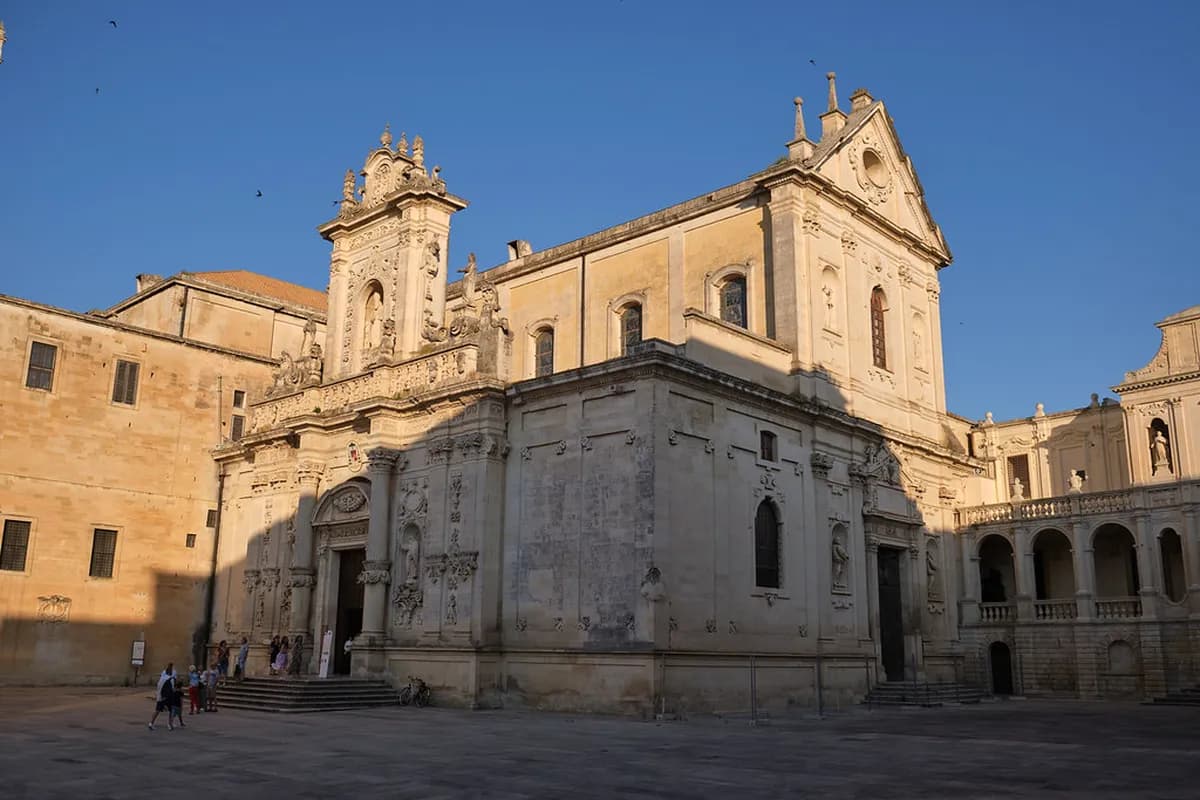
The Cathedral features a stunning "false facade" that serves as a grand welcoming gesture for newcomers. Architect Giuseppe Zimbalo realized the actual front of the church was positioned poorly for those entering the square. He built a second, more decorative entrance to ensure the building looked magnificent from every angle.
You can identify the false facade by its heavy ornamentation and the statues of Saint Oronzo and Saint Giusto. This side of the church faces the main entrance of the piazza rather than the street. The real entrance sits on the narrow side of the building facing the Bishop's Palace.
This theatrical design choice reflects the playful and dramatic nature of the Baroque movement in Puglia. Many visitors mistake this decorative wall for the primary entrance because of its incredible artistic detail. Understanding this mystery adds a layer of appreciation for the creative genius of the 17th century.
Take a moment to compare the two sides of the church during your tour. The false facade is much more ornate and features complex columns and deep carvings. It was designed specifically to impress visitors the moment they stepped into the square.
The Grandeur of the Bishop’s Palace and Seminary
The Palazzo Vescovile, or Bishop's Palace, stands as a symbol of religious power on the square's edge. Its long loggia features beautiful arches that look particularly striking when illuminated at night. This building has served as the residence for the city's bishops for several centuries.
Next to the palace sits the Seminary, which houses a peaceful courtyard and a famous stone well. The well is a masterpiece of Baroque carving, featuring intricate decorations that look like delicate lace. Visitors can enter this space to see the Sacred Art Museum and the historic library.
Purchasing the LeccEcclesiae ticket is the best way to see the interiors of these grand buildings. This pass covers the Cathedral, the Crypt, the Seminary, and the museum for a single price. You can find more information about these costs on the Official Tickets: Chiesa Lecce website.
Spending time in the Seminary courtyard offers a quiet break from the sun during the hot Puglia afternoons. The thick stone walls keep the interior cool and provide a serene environment for reflection. It is a highlight often missed by tourists who only look at the Cathedral exterior.
How to Reach the Square and Navigate the Historic Centre
Most visitors enter the historic center through one of the three ancient gates that still stand today. Porta Napoli is the most popular choice for those arriving from the main parking areas outside the walls. From there, a ten-minute walk through narrow streets leads directly to the Cathedral square.
The historic center is largely a pedestrian zone, making it very easy to explore on foot. You should wear comfortable shoes as the old paving stones can be uneven in some areas. Navigating the winding alleys is part of the charm of discovering lecce hidden gems along the way.
If you are staying outside the old town, look for parking near the Obelisk for the easiest access. Avoid driving into the narrow streets because many areas are restricted to local residents only. Walking through the city gates provides a wonderful sense of stepping back into history.
- Porta Napoli (The Main Gate)
- Best for: Parking access
- Style: Triumphal arch
- Built: 1548
- Location: North entry
- Porta Rudiae (The Oldest Gate)
- Best for: Local atmosphere
- Style: Baroque statues
- Nearby: University area
- Location: West entry
- Porta San Biagio (The South Gate)
- Best for: Dining nearby
- Style: Elegant stone
- Nearby: Shopping streets
- Location: South entry
The Best Times to Visit for Golden Hour Light
Photographers should plan around two distinct windows. The first and most rewarding is the hour before sunset — roughly 19:00–20:30 in summer — when the Pietra Leccese stone shifts from pale cream to deep amber and the sky behind the Bell Tower turns rose-gold. Position yourself just inside the piazza entrance, on the right-hand side looking toward the Cathedral's false facade, to get the warm stone lit frontally with a clean foreground of empty paving. This angle keeps the loggia of the Bishop's Palace in your frame as a framing device on the left.
The second window is first light, between 07:00 and 09:00, when raking morning shadows emphasize the carved relief on every surface and the square is empty enough to shoot without tourists in frame. Arrive before 08:00 in July and August to guarantee clean compositions. From the far corner of the square diagonally opposite the Cathedral entrance, you get both the Bell Tower and the false facade in a single wide shot with converging paving stones leading the eye inward.
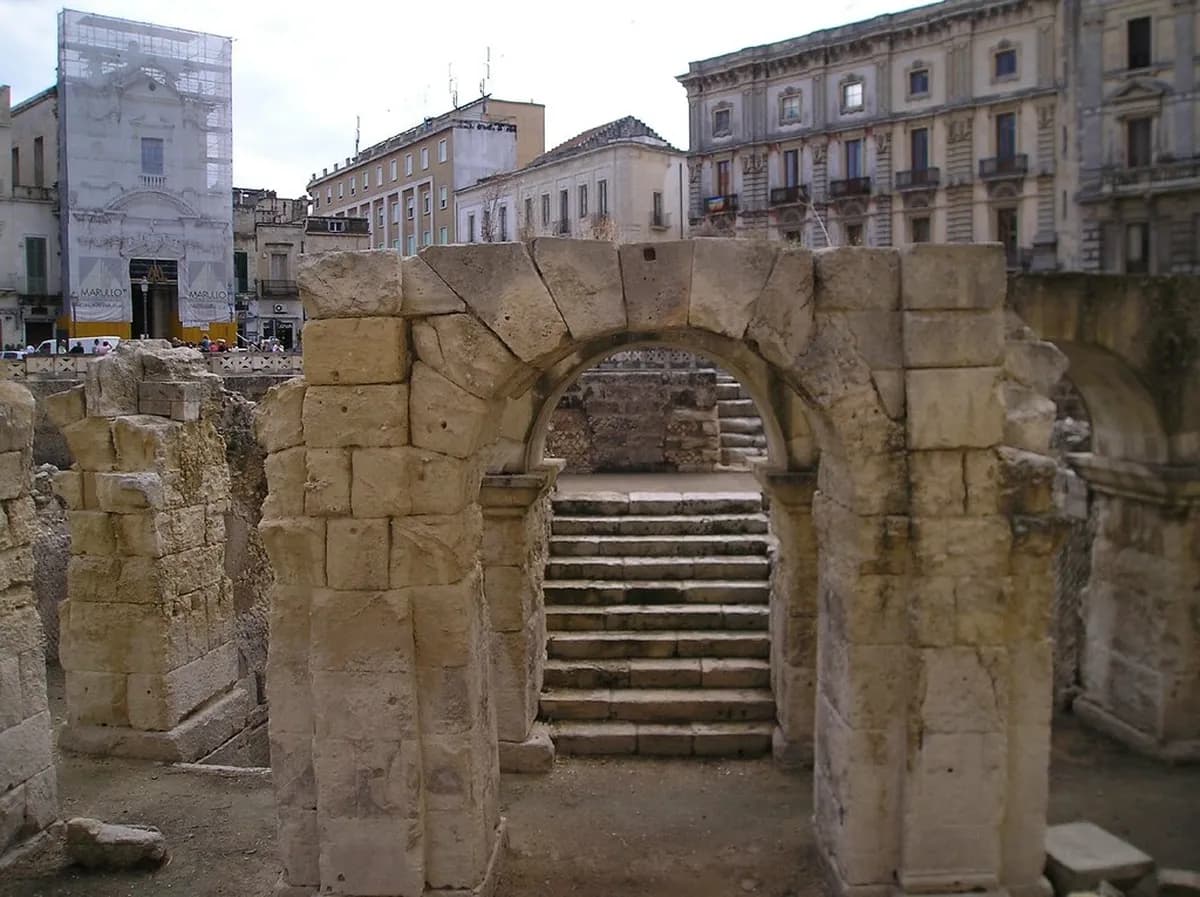
During the summer months, the midday sun can be very intense and the stone reflects a lot of heat. It is often better to find a shaded cafe or visit the nearby roman amphitheatre lecce guide during these hours. Return to the piazza after 18:00 for the most comfortable and scenic experience.
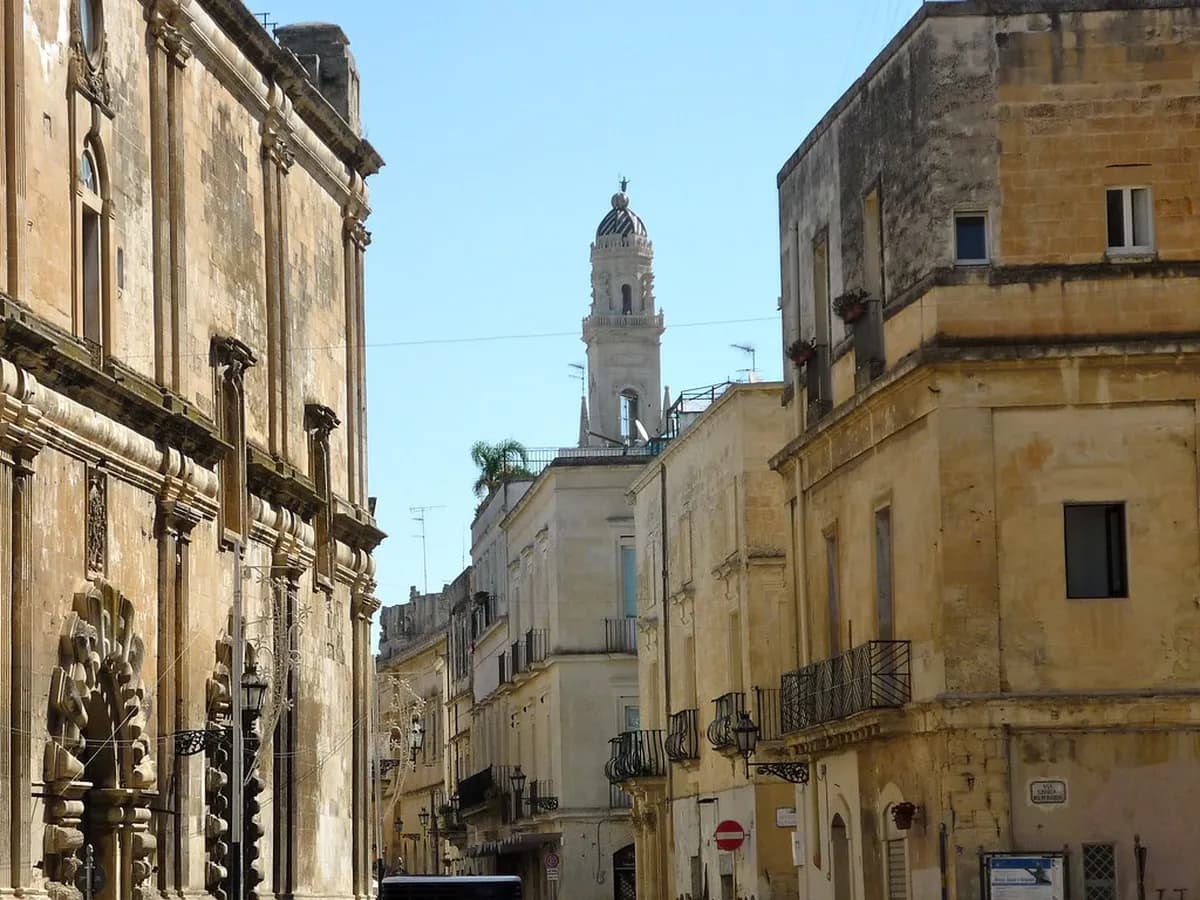
Nighttime in the square offers a completely different atmosphere with dramatic artificial lighting. The shadows highlight the depth of the Baroque sculptures and the arches of the Bishop's Palace. It is a romantic spot for a post-dinner stroll through the historic center, and the illuminated Bell Tower is visible above the roofline from several surrounding streets.
The Cathedral has two facades—the ornate "false facade" faces the square entrance (designed to impress visitors), while the actual main entrance is on the less visible side facing the Bishop's Palace. This architectural trick is unique in Italy.
Where To Stay In Lecce for Easy Access
Staying inside the historic center is the single best decision you can make when visiting the Piazza del Duomo. The square transforms completely between dawn, midday, and night — and having a room nearby means you can step out for each shift of light without planning around transport. Most boutique properties here occupy restored 17th-century palaces, so bare Pietra Leccese walls and vaulted ceilings come as standard.
For a luxury experience, palazzo-style hotels on or near Via Vittorio Emanuele II put you within two minutes of the Cathedral square. Breakfast in a private courtyard overlooking Baroque stone is a common feature in this tier. Prices in peak season (July–August) for this category range from around €180–€350 per night. This area is perfect for travelers who want to explore the things to do in Lecce without needing a car.
Mid-range B&Bs and guesthouses cluster around Via Giuseppe Libertini and the streets between Piazza del Duomo and Piazza Sant'Oronzo. These often cost €80–€140 a night and offer a more personal, family-run atmosphere. Many have small shared rooftop terraces with views over the golden roofline of the old town.
A popular alternative to staying in the city is a masseria — the traditional fortified farmhouses that dot the Salento countryside within 20 to 40 minutes of Lecce. Many have been converted into boutique hotels with pools and garden restaurants, making them ideal if you plan to use Lecce as a day-trip base rather than a full-time home. This suits travelers who want a car-dependent, peaceful base and don't mind driving back after an evening walk. If you prefer more modern amenities, several contemporary hotels just outside the ancient walls offer easier parking and larger rooms at competitive rates. Book well in advance for peak summer months — the best central options sell out by April for July and August stays.
The Meaning Behind the “Florence of the South” Nickname
The comparison has a specific and legitimate basis, not just tourist branding. Florence became the center of Renaissance art in northern and central Italy during the 14th to 16th centuries. Lecce developed its own distinctive school of decorative Baroque — known as Barocco Leccese — during the 17th century in the south. Both periods represent the dominant artistic language of their era, and both cities had the patronage, the civic ambition, and the raw material to carry that language to its extreme.
In Florence, the material was marble and the form was humanism — idealized bodies, perspective, rational geometry. In Lecce, the material was Pietra Leccese and the form was excess — cascading foliage, grimacing masks, writhing putti, and facades so densely carved they seem alive. The softness of the local stone is the key enabler: masons could undercut deeply and achieve lace-like detail that harder marble would simply fracture under. This is why the carving on the Cathedral and the Basilica di Santa Croce looks fundamentally different from anything you see in Rome or Naples. You will notice this most when exploring the things to do in Lecce at sunset, when the stone warms to the exact amber hue that recalls Tuscan pietra serena in late light.
The comparison also works at the urban scale. Both cities are small enough to walk entirely and dense enough that every street conceals a significant monument. Lecce also shares Florence's long tradition of artisan craft — look for papier-mâché workshops (cartapesta) in the alleys near the Cathedral. The technique became Lecce's answer to expensive marble, and the finest pieces require the same precision that made Florence's bronze workshops famous.
- Shared trait: civic patronage drove artistic competition between churches and palaces
- Key difference: Renaissance geometry and proportion vs. Baroque organic excess and theatricality
- Material parallel: Florentine pietra serena (cool grey) vs. Pietra Leccese (warm honey) — both soft enough for fine carving
- Craft legacy: Florentine metalwork and leather vs. Lecce's cartapesta and stonemasonry
Top Day Trips from Lecce into Salento
Lecce serves as the perfect base for exploring the stunning beaches and towns of the Salento peninsula. A short drive east brings you to Otranto, a coastal town famous for its historic castle and turquoise waters. It is a great place to experience the blend of Greek and Italian cultures in Puglia.
Heading west leads you to Gallipoli, which features a beautiful old town located on a small limestone island. This town is famous for its fresh seafood and vibrant nightlife during the summer months. You can easily spend a full day wandering through its narrow streets and visiting the local fish market.
For more travel inspiration and detailed routes, check out the Italy Wander blog for expert tips. Exploring the surrounding countryside reveals ancient olive groves and traditional stone huts called trulli. These day trips provide a complete picture of the diverse beauty found throughout southern Italy.
- Otranto (The Eastern Jewel)
- Distance: 40 minutes
- See: Cathedral mosaic
- Best for: Beach days
- Vibe: Historic coastal
- Gallipoli (The Pearl of the Ionian)
- Distance: 45 minutes
- See: Greek Fountain
- Best for: Seafood dinner
- Vibe: Lively island
- Galatina (The Heart of Salento)
- Distance: 25 minutes
- See: Basilica Orsini
- Best for: Pastry tasting
- Vibe: Quiet Baroque
The LeccEcclesiae Ticket: Is It Worth It?
The LeccEcclesiae combined ticket is the most efficient way to see Piazza del Duomo's interiors without paying separately at every door. In 2026, the basic pass costs €11 and covers six sites: Lecce Cathedral, the underground Crypt, the Basilica di Santa Croce, the Church of Santa Chiara, the Ancient Seminary, and the Museum of Sacred Art (MuDAS). A second tier at €21 adds access to the cathedral tower for panoramic views over the roofline — on a clear day you can see toward the Adriatic coast.
For a one-hour visit focused purely on the square, the basic €11 ticket is worth it if you would otherwise pay €5–€6 for the Cathedral alone. For a half-day or full-day visit, it becomes an easy decision: the Seminary courtyard alone is one of the most peaceful spaces in the city, and Santa Chiara's papier-mâché ceiling is genuinely surprising even to visitors who have seen hundreds of Italian churches. The €21 tower ticket is a harder call — the views are excellent, but the stairway is steep and the platform can be extremely exposed to wind.
Tickets are sold online at the official Chiesa Lecce website and in person at two locations: the Central Ticket Office and Infopoint at Piazza del Duomo 5 (directly in the square), and the ticket office at the Basilica di Santa Croce. A useful tip from regular visitors: buying at the Seminary ticket window avoids the longer queues that form at the Cathedral entrance during peak season. Note that discounted tickets are only sold in person, not online.
- €11 Basic ticket: Cathedral + Crypt + Basilica di Santa Croce + Santa Chiara + Ancient Seminary + MuDAS
- €21 Premium ticket: everything above plus access to the Cathedral bell tower (70 m)
- Buy in person at Piazza del Duomo 5 or at the Basilica di Santa Croce to access reduced rates
- Guided tours of the Baroque churches: €20 per person — bookable at Chiesa Lecce guided tours
Frequently Asked Questions
Is the LeccEcclesiae ticket worth it for one day?
The LeccEcclesiae ticket costs approximately 11 euros and grants access to the Cathedral, Crypt, and several other religious sites. For many travelers, this combined pass offers great value because it includes the stunning Seminary and the Sacred Art Museum. You can purchase these tickets at the Official Tickets: Chiesa Lecce website.
What is the "false facade" of the Lecce Cathedral?
The false facade is a highly decorative wall on the side of the Cathedral that faces the square's entrance. Architect Giuseppe Zimbalo designed it to impress visitors who would otherwise only see a plain wall. It features statues of Saint Oronzo and Saint Giusto and is more ornate than the actual main entrance.
How much time do you need in Piazza del Duomo?
Most visitors spend about one to two hours exploring the square and the interiors of the main buildings. If you plan to visit the Sacred Art Museum and the Bell Tower, allow for at least three hours. This time allows you to appreciate the intricate Baroque carvings without feeling rushed during your tour.
Can you visit the Lecce Cathedral for free?
Entering the square itself is free, but you must pay for a ticket to enter the Cathedral and other buildings. This fee helps maintain the historic structures and provides access to the impressive crypt and museum. Check the official site for any special days when entry might be reduced or free for residents.
Why is Lecce nicknamed “the Florence of the South”?
Lecce earned this nickname due to its incredible wealth of Baroque architecture and artistic heritage. Like Florence, the city is a center for craftsmanship and features a high concentration of historic monuments in a small area. The use of soft local limestone allowed artists to create carvings as detailed as Renaissance marble.
Piazza del Duomo stands as a testament to the artistic ambition and religious devotion of southern Italy. From the mystery of the false facade to the golden glow of the stone, every corner tells a unique story. Visiting this enclosed square is an essential experience for anyone traveling through the beautiful Salento region.
Whether you are a photography enthusiast or a history lover, the square offers endless details to admire. Take your time to explore the surrounding buildings and the hidden treasures found within the Seminary museum. Lecce will leave you with a deep appreciation for the theatrical beauty of the Italian Baroque movement.
You might also like


Continue reading
More guides you'll find useful