Roman Amphitheatre Lecce Guide: 7 Things to Know Before You Go
Plan your visit to the Roman Amphitheatre in Lecce with our guide to tickets, history, the hidden Roman Theatre, and the best Baroque sites nearby.
On this page
Roman Amphitheatre Lecce Guide: 7 Things to Know Before You Go
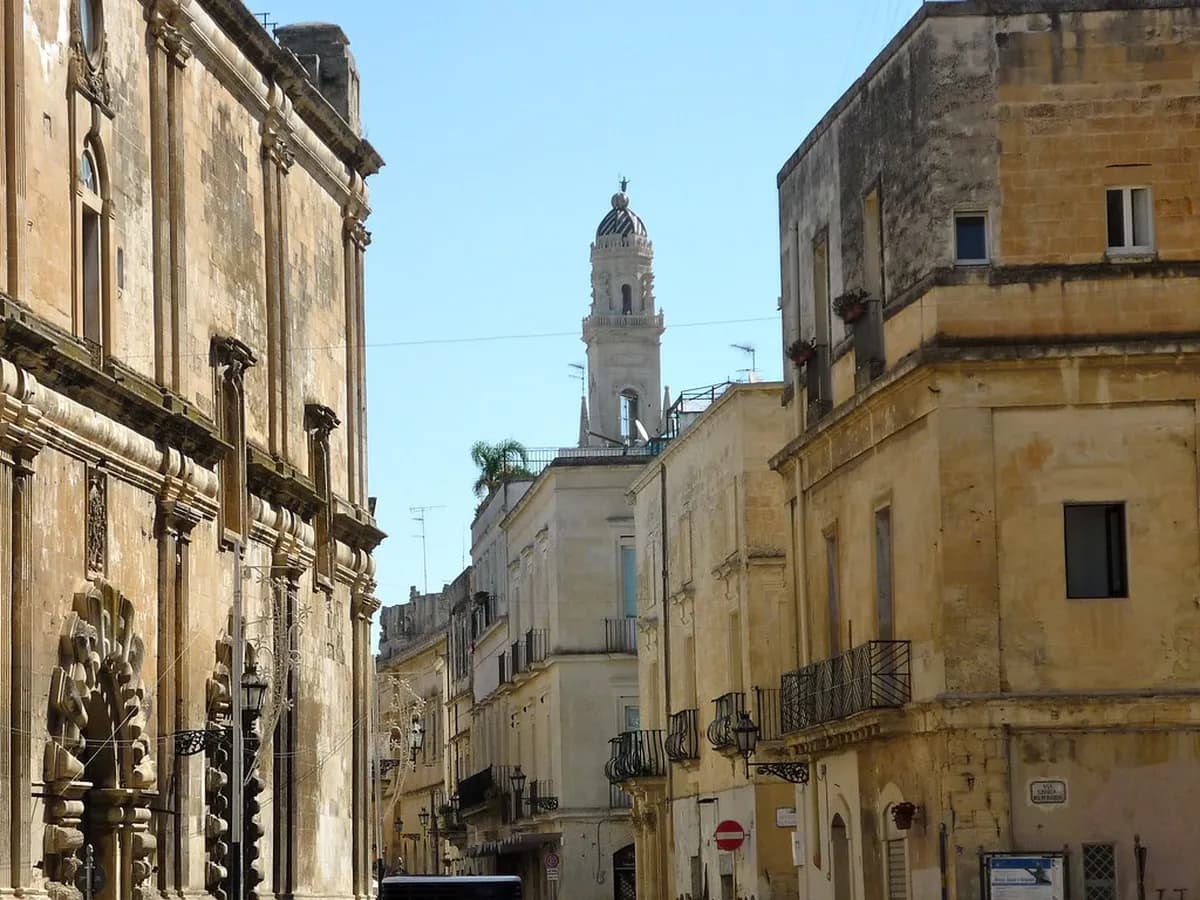
Lecce sits in the heart of Puglia and offers a stunning mix of ancient ruins and golden Baroque architecture. The Roman Amphitheatre remains the most striking landmark in the historic center. You can easily find it while exploring the many things to do in Lecce today.
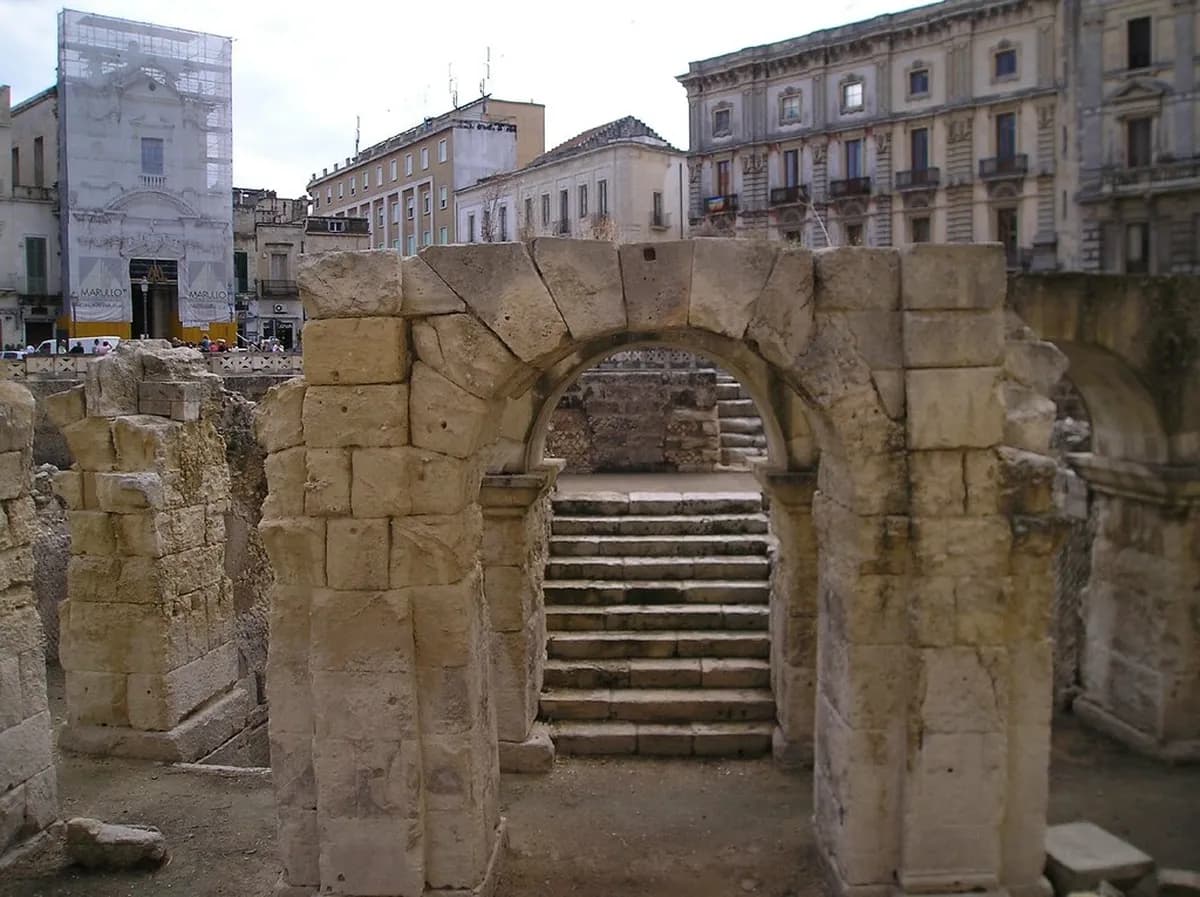
This ancient arena once held thousands of spectators who gathered for gladiator battles and public games. Today, it serves as a powerful reminder of the city's Roman past. Visitors often marvel at how the ruins sit right below the modern street level.
The History and Rediscovery of the Roman Amphitheatre
The Roman Amphitheatre in Lecce dates back to the 2nd century AD during the reign of Emperor Hadrian. It originally featured a massive elliptical shape with two tiers of seating for 25,000 people. Local residents used the site for centuries before it eventually vanished under new buildings.
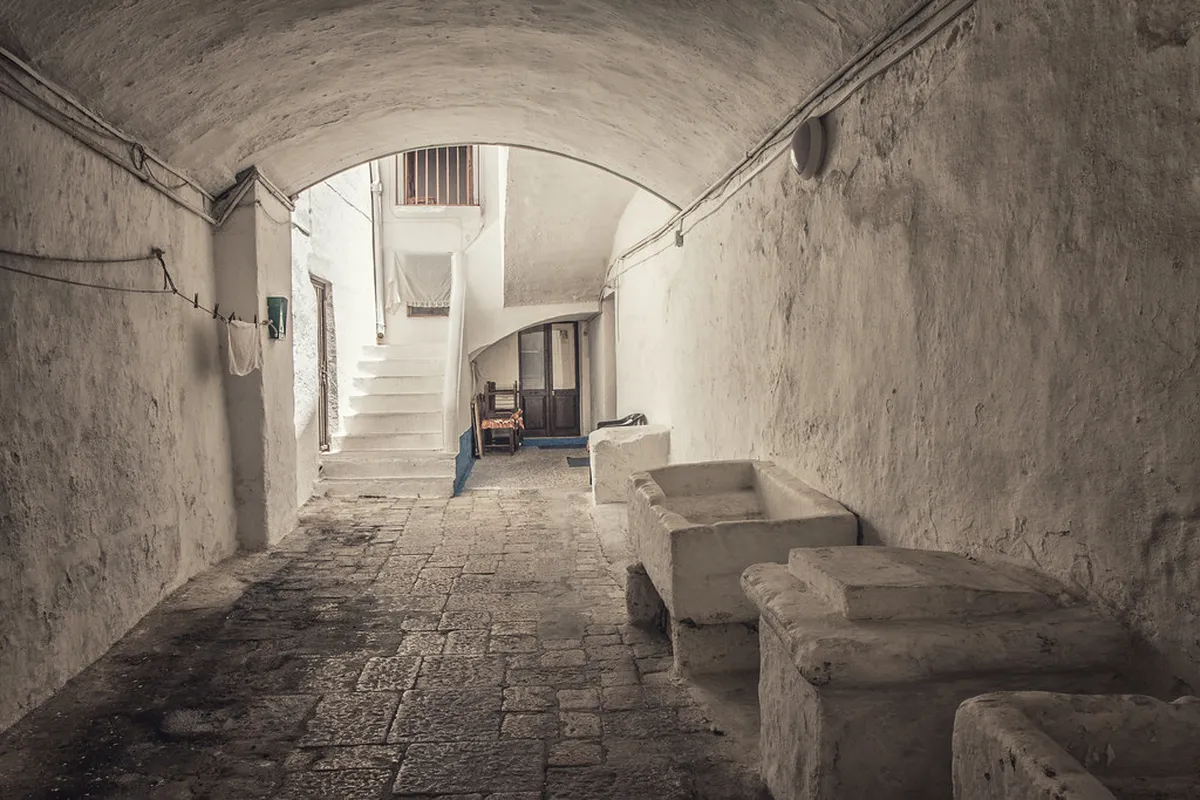
Construction workers rediscovered the site in 1901 while digging foundations for a local bank building. This accidental find led to a massive excavation project that lasted several years. Much of the Lecce Baroque guide history mentions how these ruins changed the city's layout.
Only about half of the amphitheatre is visible to the public today. The other half remains buried beneath the historic buildings and the square above it. Archaeologists decided not to demolish the beautiful structures sitting on top of the ancient ruins.
This unique "half-buried" state creates a fascinating visual contrast between Roman and modern eras. You can see the lower tier of seating and the central arena floor quite clearly. The preservation of the Lecce stone used in its construction is truly remarkable.
Practical Visitor Guide: Location, Hours, and Tickets
You will find the amphitheatre right in the center of Piazza Sant'Oronzo. It is impossible to miss because the ruins sit several meters below the main walking path. Most tourists enjoy the view from the railings surrounding the site for free.
The amphitheatre is fully visible and free to view 24/7 from street level. Only about half the original structure remains visible today—the other half is still buried beneath the historic buildings and square above. Visit early morning (before 9:00 AM) to avoid tour groups.
Viewing the ruins from the street is one of the best free things to do in Lecce. The site is illuminated at night, making it a perfect spot for evening photography. You do not need a ticket just to look down into the arena.
Special tours occasionally allow visitors to walk onto the arena floor during cultural events. Check with the local tourism office for the current 2026 schedule of guided walks. If you need a place to stay nearby, consider Booking.com: Miro B&B for its central location.
Another excellent accommodation option is Booking.com: Dimora Giusti which offers easy access to the square. Remember that the square can get very busy during the summer months. Arriving early in the morning helps you avoid the largest tour groups.
The Heart of Lecce: Piazza Sant'Oronzo and the Column
Piazza Sant'Oronzo is the beating heart of Lecce's historic centre and the natural starting point for any visit to the Roman ruins. The square's focal point is the Column of Saint Oronzo, a nearly 30-metre-tall Roman column dating from the 2nd century AD that was re-erected here in the 17th century. A copper Baroque statue of Saint Oronzo — the city's patron, credited with halting a plague that had killed thousands across Puglia in 1656 — crowns the original Roman shaft, creating a striking fusion of two very different eras in a single monument.
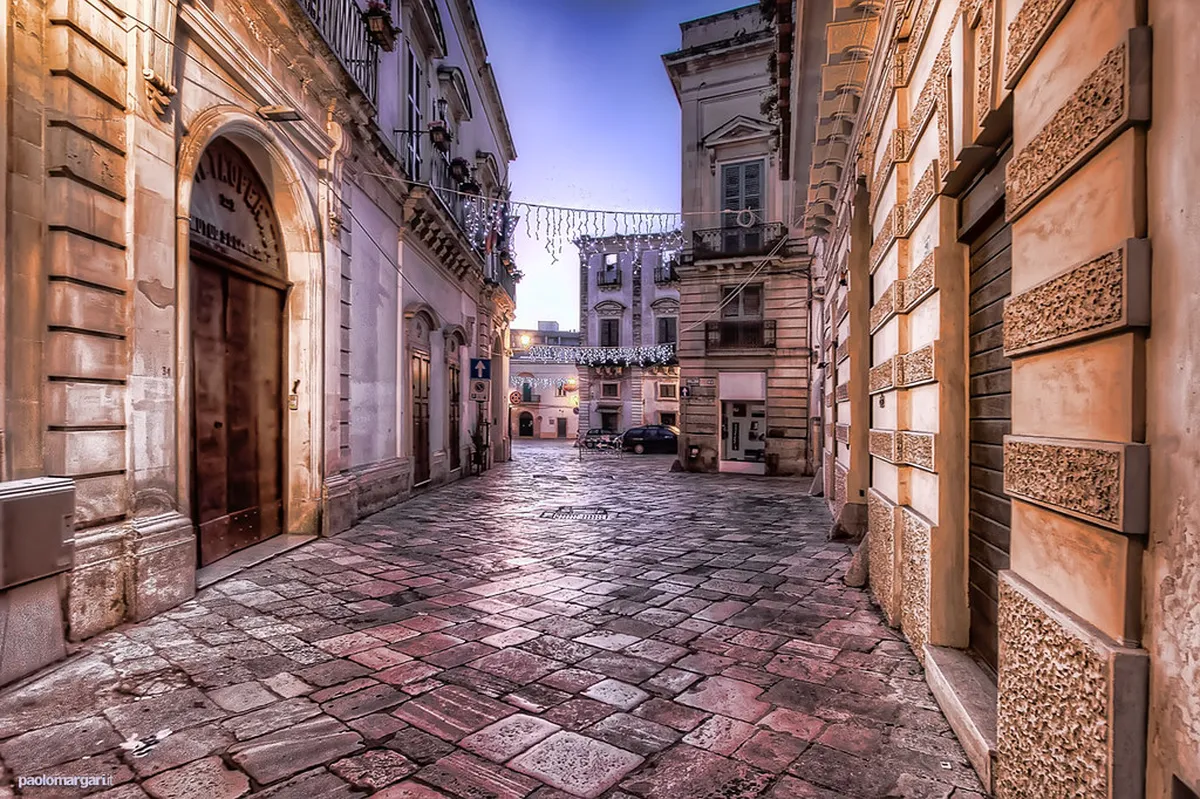
Look down at the centre of the square to find the mosaic of the she-wolf, a symbol of the city's ancient ties to Rome that is easy to miss when the piazza fills with visitors during summer afternoons. The amphitheatre ruins open out directly from the square's eastern edge, so the two sites read almost as one continuous Roman landscape.
On the square's southern edge stands the Sedile, a 16th-century Renaissance palazzo that once served as Lecce's town hall — the chamber where the city's nobles gathered to govern before Baroque became the dominant architectural language. Today it hosts temporary exhibitions, and its sober round-arched facade provides a useful counterpoint to the ornamental excess you will encounter at the Basilica di Santa Croce a few minutes' walk away. The juxtaposition of Roman column, Renaissance civic hall, and the ruined arena in a single piazza makes this square arguably the most layered public space in southern Italy.
The "Other" Ruin: Finding the Lecce Roman Theatre
Most visitors who come to Lecce knowing only about the amphitheatre are surprised to learn that the city also contains a second, equally ancient Roman entertainment structure — the Roman Theatre on Via degli Ammirati, fewer than five minutes' walk from Piazza Sant'Oronzo. It was rediscovered in 1929, almost three decades after the amphitheatre, and opened to the public in 1940 following decades of careful restoration.
The theatre is smaller and far quieter than the main square. Its semi-circular cavea seated roughly 4,000 spectators for theatrical performances and musical recitals rather than the gladiatorial spectacles associated with the amphitheatre. Because it is tucked between Baroque alleyways and you need to know it is there, most casual visitors walk straight past it — which means even on busy summer days you often have it almost to yourself.
Attached to the theatre is the Museum of the Roman Theatre, where marble statues of Greek gods found during excavation are on display. Entry to both the open-air theatre and the museum costs €4 per adult in 2026, and both are open 09:00–13:00 Monday to Saturday. Note that renovation works have intermittently restricted interior access in recent years, so it is worth calling ahead or checking at the tourist office before building it firmly into your morning.
| Feature | Roman Amphitheatre | Roman Theatre |
|---|---|---|
| Built | 2nd century AD (Hadrian) | 2nd century AD |
| Rediscovered | 1901 | 1929 |
| Capacity | ~25,000 spectators | ~4,000 spectators |
| Shape | Elliptical (full circle) | Semi-circular (half circle) |
| Purpose | Gladiatorial games | Theatre & music |
| Location | Piazza Sant'Oronzo (main square) | Via degli Ammirati (backstreets) |
| Entry cost (2026) | Free (street view) | €4 per adult |
| Crowd level | Very busy | Quiet — often empty |
Baroque Masterpieces: Basilica di Santa Croce and the Duomo
After the Roman ruins, the Basilica di Santa Croce is the unmissable next stop — a ten-minute walk from Piazza Sant'Oronzo along the via Umberto I. The facade is one of the most elaborately decorated surfaces in Italy: its construction took nearly a century (1549–1646), which is why you can trace the evolution from restrained Renaissance at the base to exuberant late Baroque at the upper tiers. Roses, whales, dragons, cherubs, and allegorical figures tumble across the stone in a composition that took successive generations of Leccese master carvers to complete. All of it is carved from Pietra Leccese — the same warm golden limestone used in the amphitheatre — a material so soft when freshly quarried that stonemasons could cut it almost like wood, yet hard enough to survive centuries of Mediterranean weather.
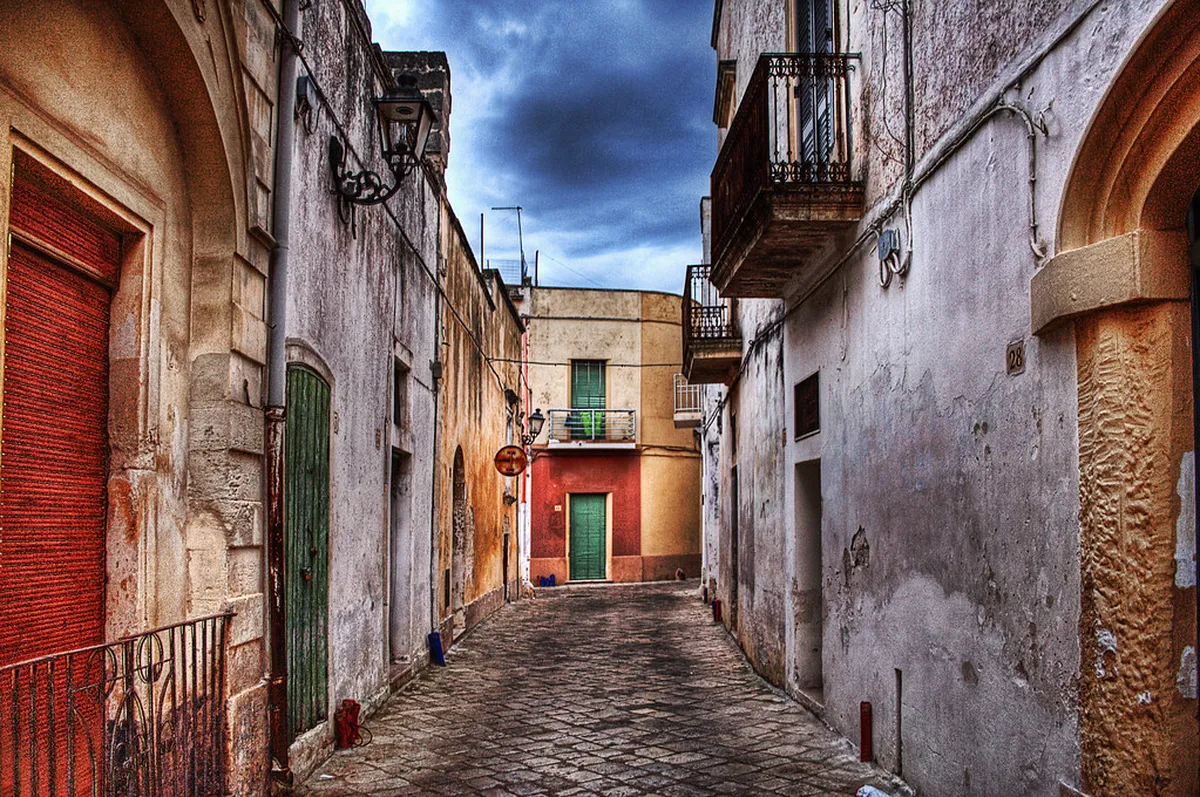
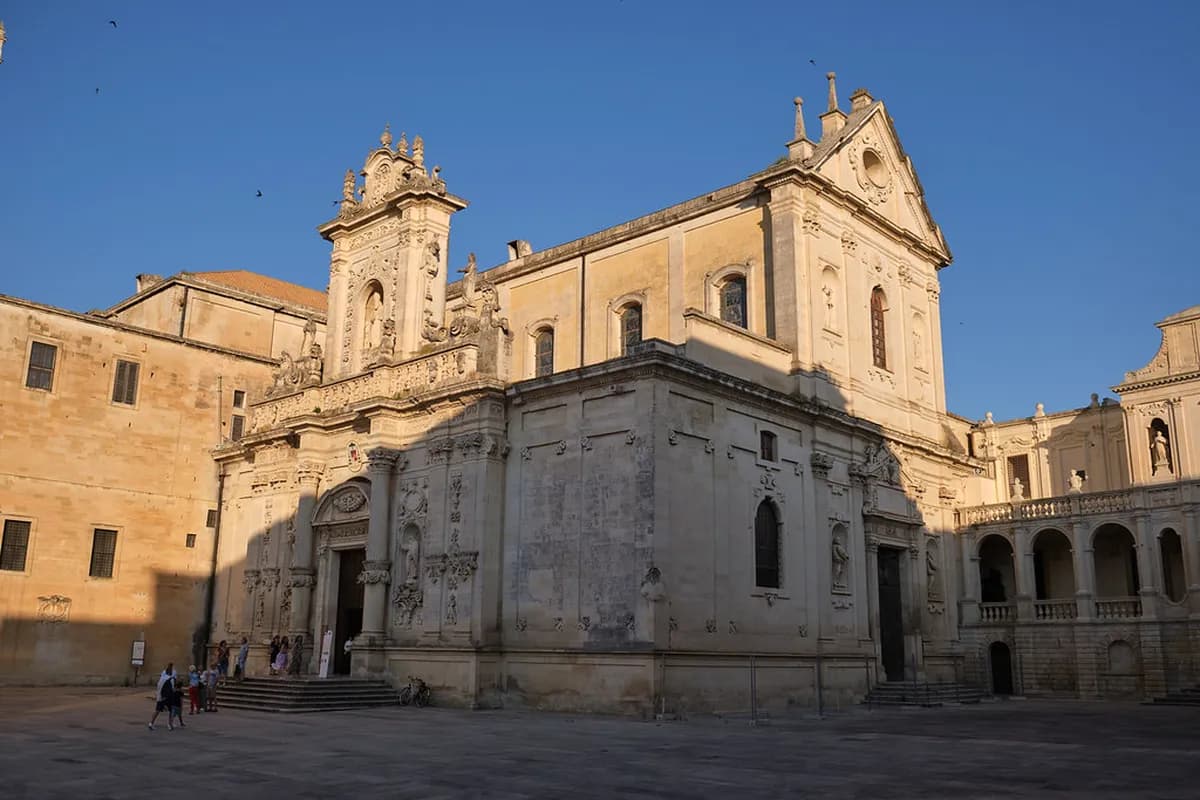
From Santa Croce, follow the narrow streets south to the Piazza del Duomo, one of the finest enclosed squares in Puglia. Unlike Piazza Sant'Oronzo — open and bustling — the Duomo square is almost entirely walled in on three sides, creating a hush that feels theatrical. The Cathedral of Sant'Oronzo, its 70-metre bell tower, the Palazzo del Seminario (built 1694–1709), and the Palazzo Vescovile form a coherent ensemble that rewards slow, quiet contemplation. The interior of the Palazzo del Seminario houses the Diocesan Museum, with sacred art ranging from the medieval period through the 18th century.
Both Santa Croce and the Cathedral are accessible on the LeccEcclesiae combined ticket, which in 2026 gives entry to the city's main Baroque churches and selected interiors for a single discounted fee — a worthwhile investment if you plan to spend more than an afternoon exploring the historic centre. Ticket offices are at the participating churches; staff at the Basilica di Santa Croce entrance can explain the current access list.
Hidden History: Museo Faggiano and the City Gates
One of the most compelling Lecce hidden gems sits on Via Ascanio Grandi, just off Piazza del Duomo: the Museo Faggiano. In 2000, the Faggiano family bought the building intending to open a trattoria and hired workers to fix a leaking sewage pipe. Instead, they accidentally broke through into a layer of medieval cisterns, then a Franciscan chapel floor, then a Roman granary, then Messapian tombs dating to the 5th century BC, and eventually a gold bishop's ring encrusted with an emerald. Knights Templar etchings were found in one passage. The family spent years excavating at their own cost, under the supervision of a government archaeologist, before converting the four-storey shell into Lecce's only independent family-run museum. It is open 09:30–20:00 and entry costs €5 per adult in 2026 — one of the best-value hours you will spend in Puglia.
The excavation's unexpected depth is not just a great story; it perfectly encapsulates why Lecce feels different from other Italian cities. Every time a building owner in the centre digs even a shallow trench, they risk discovering another layer. Locals now joke that nobody wants to do plumbing repairs for fear of what they will find — which partly explains why above-ground Baroque facades have been so carefully preserved.
Beyond the museum, the city gates deserve a slow circuit. Porta Napoli (1548), built to honour Emperor Charles V, is modelled on a Roman triumphal arch and decorated with a distinctly Baroque flourish. The tree-lined avenue that leads to its arch makes it the most photographed of the three surviving gates. Porta Rudiae, the oldest gate, carries statues of Saint Oronzo among its decorations. Porta San Biagio at the southern end of the historic centre is the quietest and, many visitors argue, the most beautiful — especially in morning light with a coffee at the café directly in front of it.
Where to Eat: Pasticciotto and Traditional Salento Cuisine
No visit to the amphitheatre is complete without trying a local pasticciotto. This crumbly shortcrust pastry shell — filled with a silky custard, sometimes lightly spiked with lemon — is best eaten warm, straight from the bakery, alongside an espresso or a caffè leccese (espresso over ice with sweet almond syrup). The best in the city centre is Natale Pasticceria, just off Piazza Sant'Oronzo. A single pasticciotto costs around €1.50–€2.00 in 2026; if you want the legendary original, a day trip to Pasticceria Ascalone in nearby Galatina — the family that invented the pastry in 1745 — is hard to beat.
For a proper lunch or dinner, Lecce's cucina povera tradition offers some of the most honest cooking in southern Italy. Look for ciceri e tria — pasta with chickpeas where part of the pasta is deep-fried to imitate the pork crackling the region's poor farmers could not afford. Orecchiette con cime di rapa (ear-shaped pasta with turnip tops) appears on almost every menu and is better in Puglia than anywhere else. Polpette di melanzane (aubergine meatballs with a convincingly meaty texture) are another local staple.
For the full experience of traditional Salento dining, Alle Due Corti on Via Prato is frequently cited as one of the best restaurants in Puglia. Chef Giorgio De Carlo carries on the cucina povera tradition that his mother Rosalba pioneered here in 1998 — reservations are strongly recommended (+39 0832 242223), and the restaurant is closed on Sundays. Pair your meal with a glass of Primitivo di Manduria or the deeply tannic local Negroamaro: both are grown within an hour of the city and hold up well against the robust flavours of the cuisine.
Lecce Stone: The Material That Built a Baroque City
The golden colour that defines Lecce's skyline — from the amphitheatre seating to the Basilica di Santa Croce's carved facade — comes from a single material: Pietra Leccese, a fine-grained calcarenite limestone quarried from the surrounding Salento countryside. Understanding this stone helps you read the entire city differently.
Freshly quarried Pietra Leccese is soft enough to be cut with hand tools, which is why 17th-century stonemasons could carve the impossibly intricate roses, animals, and human figures that cover the Baroque facades. The material hardens over decades of exposure to air, locking the carvings into their final state. This property made Lecce unique in Italy: the same stone that floored Roman arenas could, six centuries later, be carved into decorative lacework by a single craftsman working with a chisel.
The trade-off is vulnerability to acid rain and urban pollution. Conservators have been working since the 1990s on the most exposed facades, and close inspection of the Basilica di Santa Croce reveals recent repair work where delicate relief sections have been reinforced. The amphitheatre's lower seating tiers show the warm ochre colour at its most natural — rough, slightly porous, and a reminder that what you are looking at in 2026 is almost exactly what Roman labourers cut and laid in the 2nd century AD.
Planning Your Visit: A Practical Walking Route
The Roman Amphitheatre, the Roman Theatre, Museo Faggiano, Basilica di Santa Croce, and Piazza del Duomo all sit within a compact historic centre that can be walked comfortably in two to three hours. Starting early — before 09:00 — gives you the amphitheatre nearly to yourself and soft morning light for photography before the tour groups arrive from Brindisi and Bari.
A logical sequence that avoids backtracking: begin at Piazza Sant'Oronzo (amphitheatre + Column of Saint Oronzo + Sedile), then cut west along Via Augusto Imperatore to the Roman Theatre on Via degli Ammirati. From there, follow Via Marco Basseo north to Basilica di Santa Croce, then double back south along Via Umberto I to reach Piazza del Duomo and the Palazzo del Seminario. The Museo Faggiano on Via Ascanio Grandi is a two-minute detour from the Duomo square and works well as a mid-morning stop before the lunch crowds build. End at Porta Napoli at the northern tip of the centre before heading back to Piazza Sant'Oronzo for a pasticciotto.
The entire circuit covers roughly 2.5 kilometres. Comfortable walking shoes are essential — many streets are paved with irregular stone flags. In July and August, midday temperatures regularly exceed 35°C: schedule the outdoor sites for early morning or late afternoon, and use the museum interiors (Faggiano, MUST Civic Museum, Diocesan Museum) for the 13:00–16:00 heat.
Frequently Asked Questions
Is the Roman Amphitheatre in Lecce free to visit?
Yes, you can view the Roman Amphitheatre for free from the street level in Piazza Sant'Oronzo. Special access to the arena floor usually requires a guided tour or a specific event ticket. For more travel tips, check out our latest posts on Italy Wander.
What is the difference between the Roman Amphitheatre and the Roman Theatre in Lecce?
The amphitheatre is a large elliptical arena used for gladiator battles and sits in the main square. The Roman Theatre is a smaller, semi-circular venue designed for plays and music. Both sites are located within easy walking distance of each other in the historic center.
How much of the Lecce Amphitheatre is still underground?
Approximately half of the original Roman Amphitheatre remains buried beneath the buildings of Piazza Sant'Oronzo. Excavations stopped in the early 20th century to protect the historic structures above. This creates a unique view where ancient ruins meet modern city life.
Can you go inside the Roman Amphitheatre in Lecce?
Public access to the interior is generally restricted to protect the ancient stones. However, the city often hosts concerts and theatrical performances inside the arena during the summer months. These events provide a rare chance to sit where Romans once watched games.
The Roman Amphitheatre is a vital part of any visit to the historic center of Lecce. It offers a unique window into the ancient world while sitting in a vibrant modern square. Make sure to visit both the amphitheatre and the hidden theatre for the full experience.
Lecce continues to surprise visitors with its layers of history and stunning architecture. From Roman ruins to Baroque churches, every corner tells a fascinating story. Plan your trip today to see these incredible sights for yourself.
For the bigger picture, see our 12 Best Things to Do in Lecce Travel Guide (2026) guide — or dive into Basilica di Santa Croce Lecce Guide and Piazza Del Duomo Lecce Guide.
You might also like

Continue reading
More guides you'll find useful