10 Essential Tips for Planning How Many Days in Lecce
Plan how many days in Lecce with our expert guide. Discover the best duration, where to stay, and must-see Baroque gems for a perfect Puglia trip.
On this page
10 Essential Tips for Planning How Many Days in Lecce
Lecce is a city that captures your heart with its warm golden stone and intricate Baroque carvings.
Many travelers wonder exactly how many days in Lecce they need to experience the Florence of the South.
Whether you are planning a quick stop or a long stay, this guide helps you map out your time perfectly.
The city offers a blend of ancient Roman history and vibrant modern life that rewards every type of visitor.
Key Takeaways
- Stay for at least two days to see the main Baroque and Roman sites.
- Park outside the historic walls to avoid ZTL fines and traffic stress.
- Visit the Basilica di Santa Croce during the late afternoon for the best light.
- Try local dishes like Ciceri e Tria for an authentic taste of Salento.
How Many Days in Lecce?
Deciding how many days in Lecce depends entirely on your travel pace and your overall Puglia itinerary.
Most visitors find that two full days provide the perfect balance for exploring the major historic sites.
The historic center is a restricted ZTL traffic zone. Always park outside the walls near the public gardens to avoid automatic camera fines, which can exceed €100.
This timeframe allows you to see the Baroque landmarks without feeling rushed between different squares.
You can also enjoy leisurely meals and soak in the local atmosphere during the evening passeggiata.
| Duration | What you can cover | What you miss | Best for |
|---|---|---|---|
| 1 day | Basilica di Santa Croce, Piazza Del Duomo, Piazza Sant'Oronzo, pasticciotto, walk the Portas | Museo Faggiano, Alle due Corti dinner, Roman Theatre interior, evening passeggiata atmosphere | Day trippers from Brindisi or Gallipoli |
| 2 days | Everything above plus Museo Faggiano, Roman Theatre, dinner at Alle due Corti, aperitivo crawl | Salento coast day trips, Otranto or Gallipoli excursion | Most visitors — the ideal minimum for a first visit |
| 3 days | Full city exploration plus a day trip to the Salento coast, Otranto, or the Valle d'Itria | Very little — you will have seen almost everything | Slow travellers using Lecce as a Salento base |
| 4–5 days | Full base for the heel of Italy: Gallipoli, Otranto, Brindisi, Alberobello, wine tours | Nothing, if regional exploration is your goal | Anyone combining coast, countryside, and city |
If you are choosing between a day trip and an overnight stay, opt for the overnight. The evening atmosphere — the golden light on the stone facades, the passeggiata filling the piazzas, the unhurried dinners — is what makes Lecce genuinely memorable rather than just impressive.
Reasons Lecce is Worth Visiting in 2026
Lecce has moved from a well-kept secret into one of southern Italy's most compelling slow-travel destinations, and 2026 is an ideal year to visit before summer crowds fully arrive. Unlike the more saturated northern circuit — Rome, Florence, Venice — Lecce still offers affordable meals, uncrowded piazzas, and an authentic daily rhythm that feels genuinely lived-in rather than curated for tourists.
The entire historic centre is carved from pietra leccese, a soft golden limestone so characteristic of the region that it earned its own name: Lecce Stone. When sunlight hits the facades in the late afternoon, the city glows like warm honey, transforming even ordinary alleyways into something extraordinary. That quality of light alone justifies the detour from the coast.
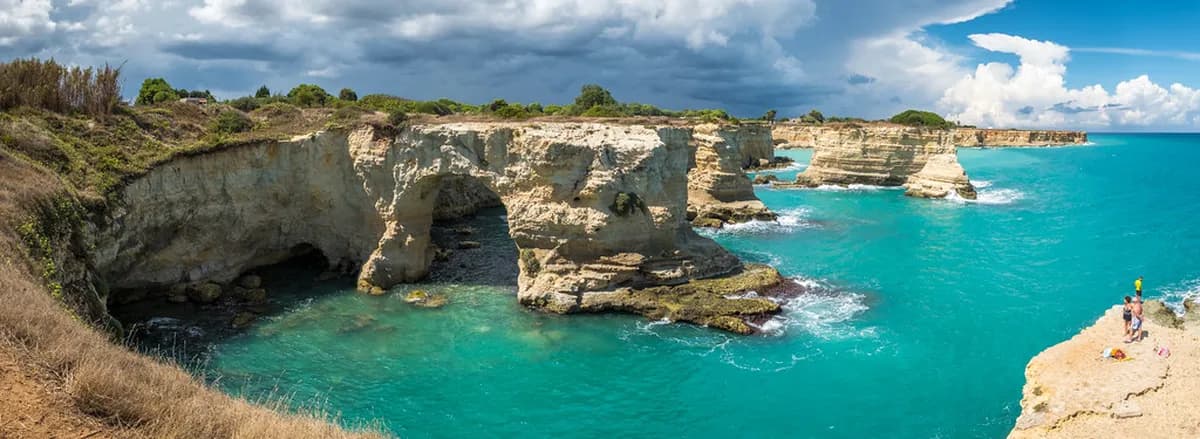
From a practical standpoint, Lecce is also perfectly positioned in the Salento peninsula, placing you within 40 minutes of excellent beaches at Gallipoli and Otranto. It is a university town with a lively aperitivo culture, excellent local wine (Negroamaro and Primitivo reds, crisp rosé), and a food tradition — Cucina Povera — that predates fashionable farm-to-table dining by centuries. If you are building a Puglia itinerary, Lecce deserves more than a single overnight. It serves as an ideal hub for the wider Lecce base for Salento peninsula.
Where to Stay in Lecce
The single best piece of advice for choosing accommodation in Lecce is to stay inside the historic centre. The old town has been extensively restored over the past two decades and walking out of your door into a Baroque alley at 07:00 for a pasticciotto and espresso is an experience that no suburban hotel can replicate. Most boutique properties occupy converted palazzi with original vaulted stone ceilings, internal courtyards, and rooftop terraces.
Not all pockets of the old town feel equally lively at night, however. The area around the Basilica di Santa Croce, Piazza Sant'Oronzo, and Via Libertini buzzes with restaurants and bars after dark. The streets around the church of San Giovanni Evangelista and the Carmine church, while beautiful and safe, go very quiet — fine if you prefer calm, but worth knowing in advance. Around Porta Napoli is a middle ground and is popular with students and younger visitors.
For a budget-conscious stay, guesthouses just outside the city walls on the northern side offer an easy ten-minute walk in, free street parking, and meaningfully lower rates. This is worth considering if you are arriving by car and want to avoid the ZTL fine entirely.
Budget roughly €80–140 per night for a comfortable B&B in the centro storico in shoulder season (April–June, September–October), rising to €160–250 for boutique palazzo-style properties. July and August rates can jump significantly, so booking several weeks ahead is strongly recommended for peak summer.
Admire The Extravagant Basilica di Santa Croce
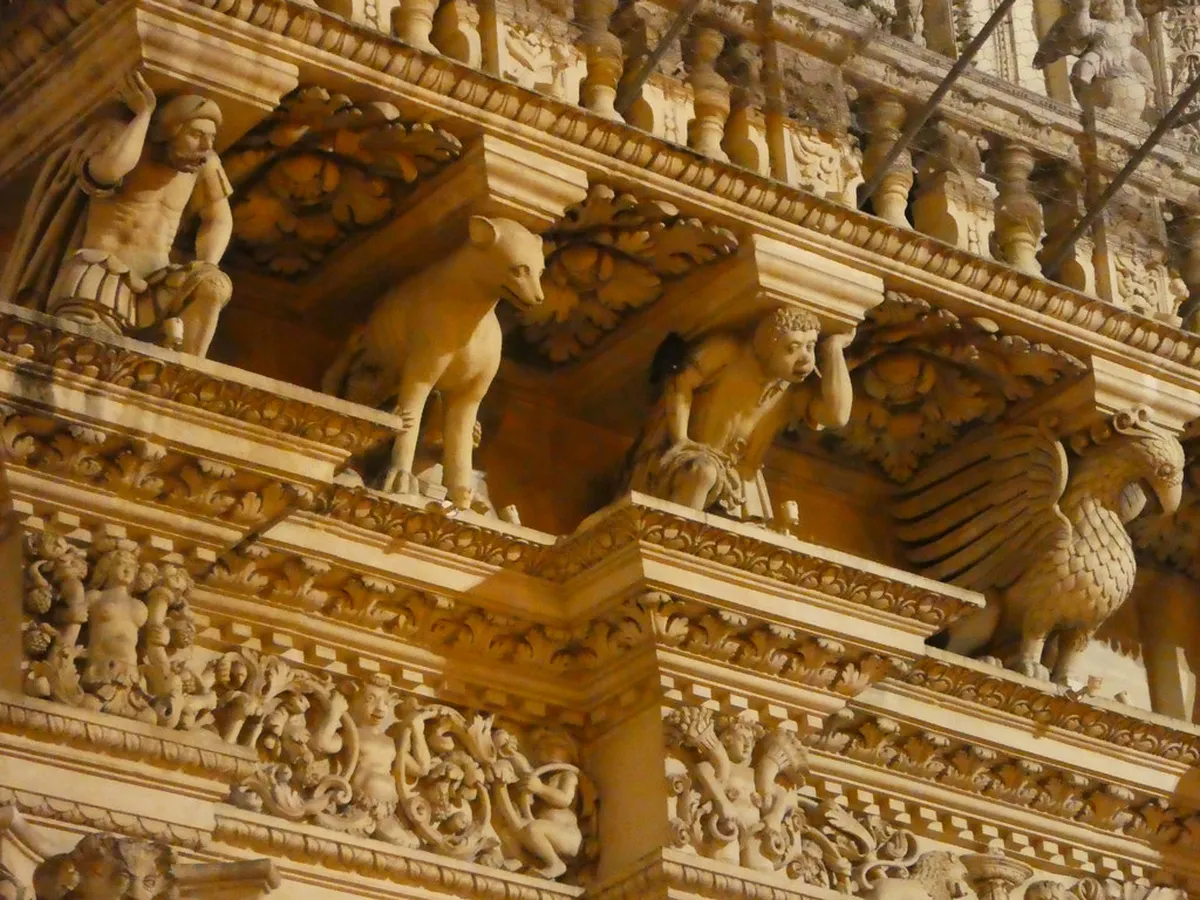
The Basilica di Santa Croce is the crowning achievement of the unique Lecce Baroque style.
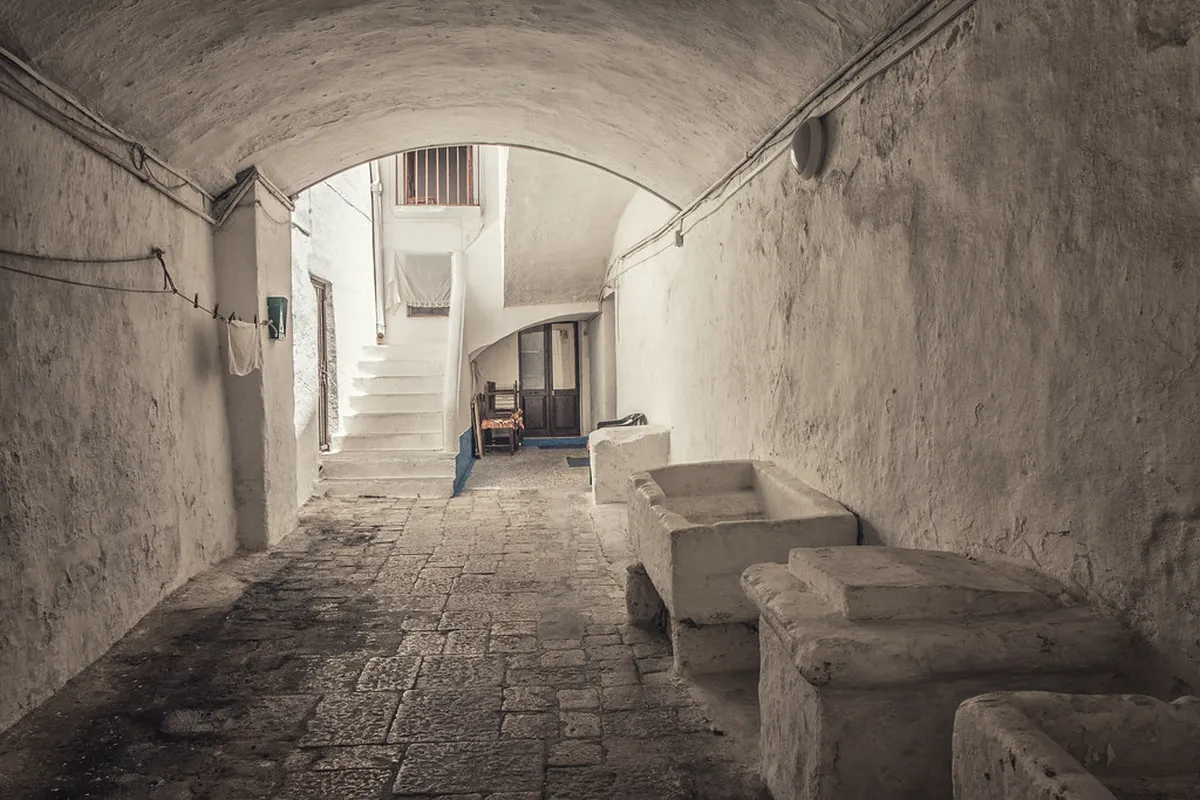
Its facade is covered in intricate carvings of animals, plants, and mythological figures that defy belief.
Buy the LeccEcclesia church pass for €9 to access the Basilica, Cathedral, and four other major churches. Individual tickets cost significantly more and queuing at each site wastes time during your limited days.
The best time for photography is during the late afternoon when the sun hits the golden limestone.
This golden glow makes the complex details of the stone carvings stand out against the blue sky.
Be Amazed In Piazza Del Duomo
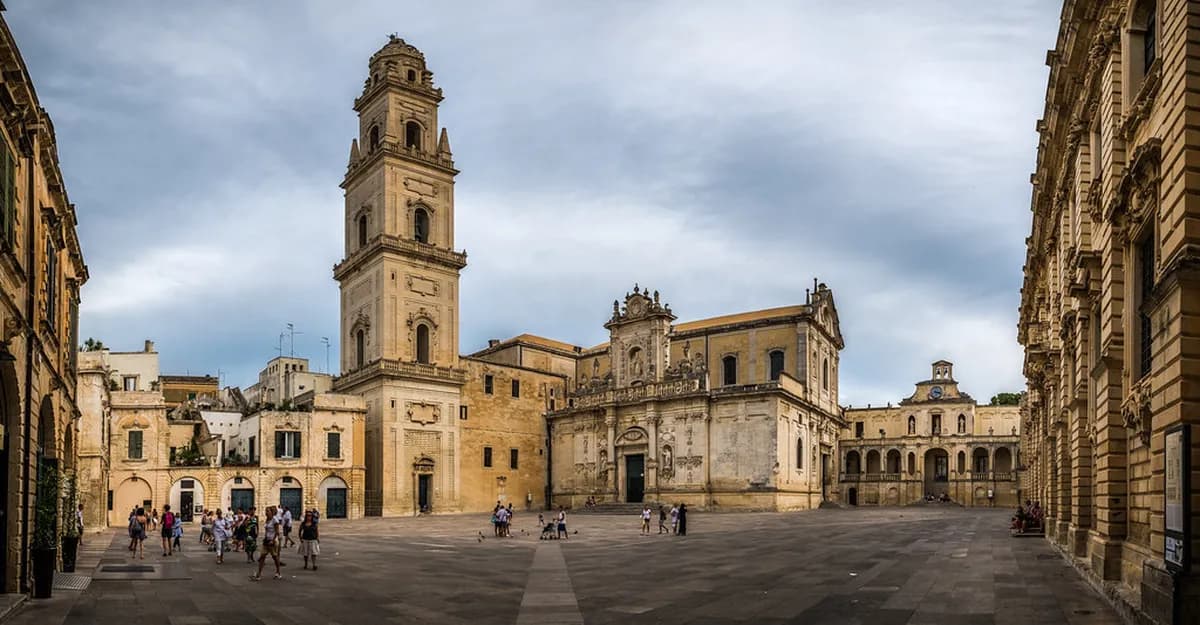
Piazza Del Duomo is one of the few completely enclosed cathedral squares in all of Italy.
This unique layout creates a sense of being in an outdoor theater or a grand stone ballroom.
The acoustics in the square are remarkable because of the tall buildings surrounding the open space.
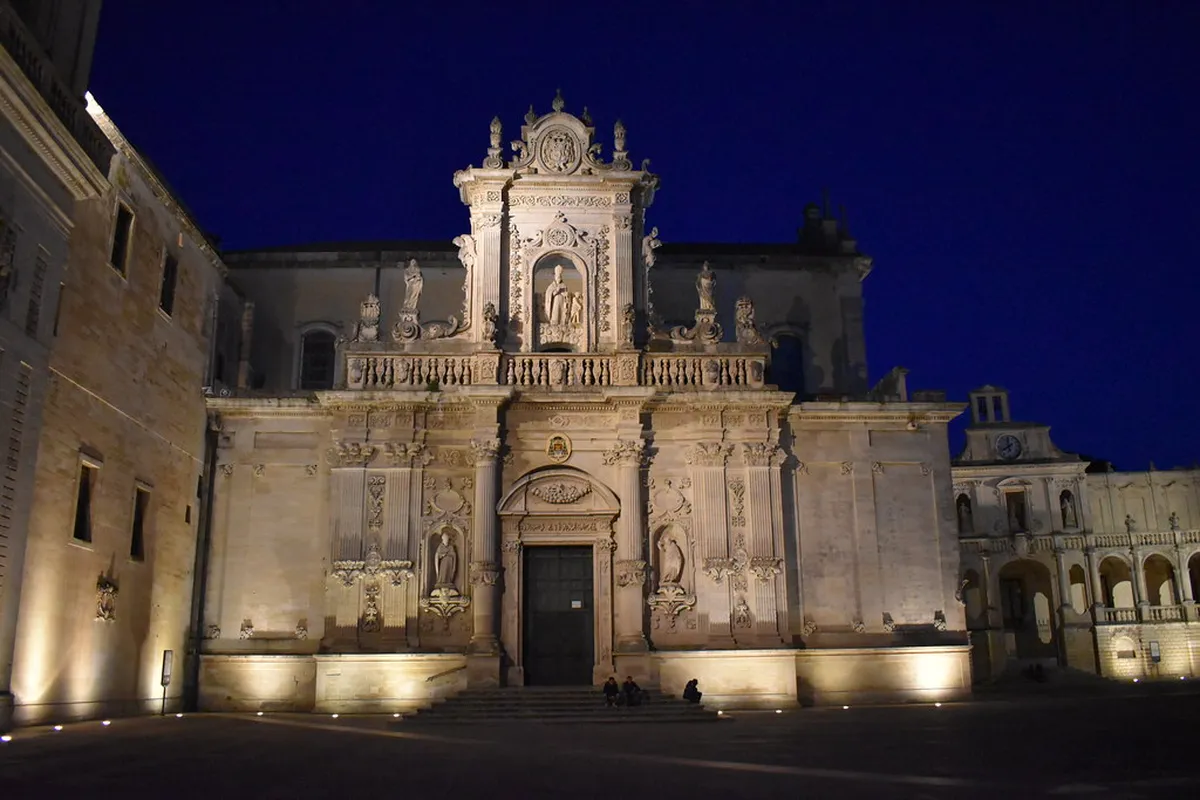
Visiting at night is essential to see the buildings illuminated by a soft and romantic light.
But Don’t Forget About The Roman Theatre
It is easy to overlook the fact that Lecce has not one but two Roman entertainment structures buried among its Baroque streets. The more famous Roman Amphitheatre sits in the open, tourist-heavy Piazza Sant’Oronzo where it receives the bulk of visitor attention. The smaller Roman Theatre — a 4,000-seat, second-century semicircular structure — is tucked away in a back alley of the centro storico and remained hidden until its rediscovery in 1929. Most visitors walk straight past the door.
The key practical difference is crowd levels. At the Amphitheatre you are jostling for photos with tour groups; at the Theatre the atmosphere is calm, almost contemplative. The structure is open Monday to Saturday from 09:00 to 13:00. You can see most of it clearly for free from the street, which is what most visitors do. Paying the €4 entrance fee also gets you into the adjacent Museum of the Roman Theatre, where marble statues of the Greek gods discovered on-site are displayed — worthwhile for history buffs, optional for everyone else. Note that ongoing restoration works may limit interior access; check locally on the day.
Explore Museo Faggiano
Museo Faggiano tells a story that sounds like a movie plot — and it essentially is one. In 2000, the building's owner Luciano Faggiano began digging to fix a leaking sewage pipe beneath what he planned to convert into a trattoria. What followed was not a quick plumbing repair. Beneath the unremarkable facade of a nondescript building in the historic centre, Luciano and his sons discovered a layered archaeological site stretching back to the 5th century: a Roman granary, a Messapian tomb, the remnants of a Franciscan chapel, carvings left by the Knights Templar, and even an emerald-encrusted gold bishop's ring.
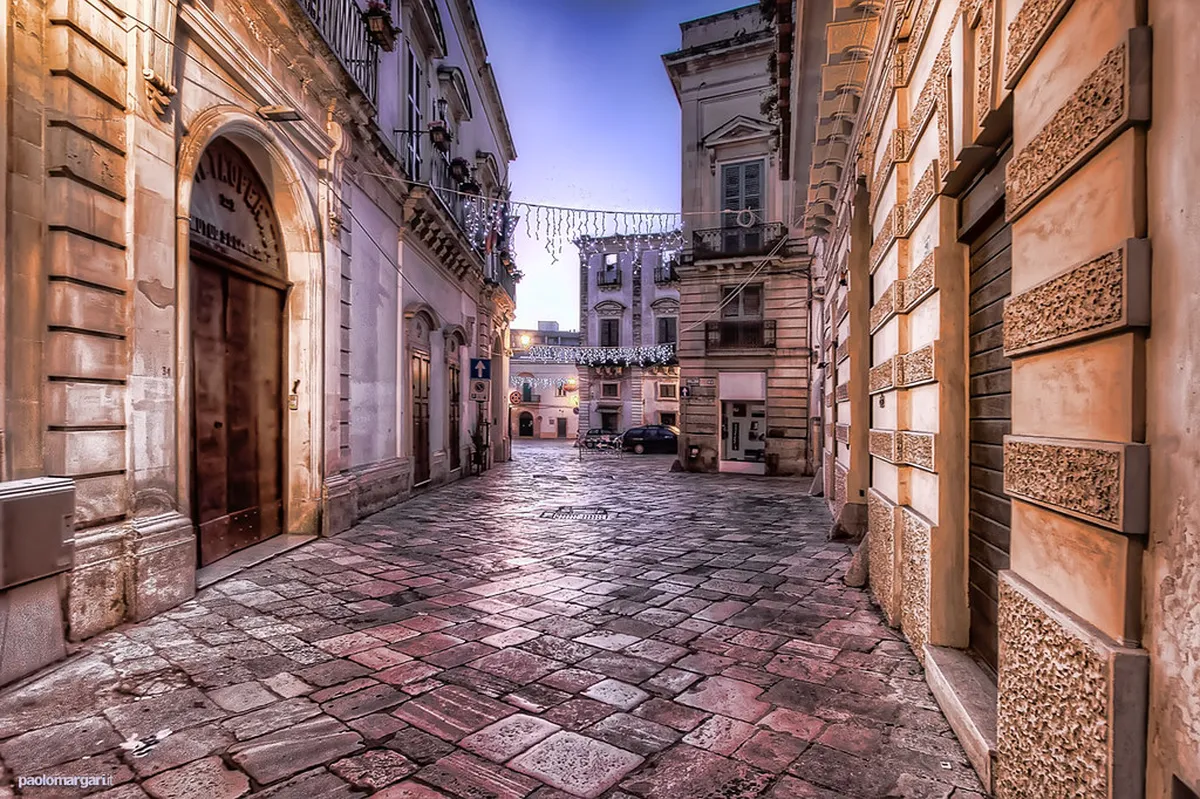
The restaurant never materialised. Instead, the family spent years of back-breaking excavation (mostly at their own cost, under the supervision of a government-appointed archaeologist) before deciding to open the building as Lecce's only independent family-run museum. It is now one of the most surprising stops in the city — simultaneously a history of Puglia's multi-civilisation past and a testament to one family's extraordinary commitment to preserving it.
The museum is open daily from 09:30 to 20:00 and admission costs €5 per adult. Not all staff speak English but multilingual pamphlets are available and there is a set route to follow that makes logical sense of the vertical layers. Allow at least 45 minutes. The deeper levels are dark and slightly claustrophobic — worth knowing if you have a young child or reduced mobility.
Have Dinner At Alle due Corti
Alle due Corti is the most important restaurant reservation in Lecce, opened in 1998 by Rosalba De Carlo, who built her entire menu around the principles of Cucina Povera — the "food of the poor" rooted in the historically very impoverished rural South. In this tradition, meat was scarce and expensive, so cooks improvised with legumes, vegetables, and preservation techniques. The result was a cuisine that predates modern plant-forward cooking by centuries, and one that Rosalba has served in near-original form for nearly three decades.
The restaurant was featured on Anthony Bourdain's Parts Unknown and covered in the New York Times, which means advance reservations are genuinely necessary, particularly in summer. Call ahead on +39 0832-242223 or email info@alleduecorti.com (calling is more reliable for same-day or short-notice bookings). The restaurant opens at 12:40 for lunch and 19:40 for dinner, and is closed on Sundays.
Order the ciceri e tria: pasta with chickpeas where a portion of the noodles are fried to imitate the crunchy texture of pork fat the poor could not afford. Also look for polpette di melanzane (aubergine meatballs) and orecchiette con cime di rapa. Prices are modest for the quality — expect to spend around €25–35 per person including wine. For a fresh seafood alternative, Pescheria con Cottura Lecce is a well-regarded fish counter that cooks what they sell.
Walk Through The Ancient Portas
Lecce was once a walled city, and while most of the fortifications have fallen, three of the original gates survive and together form one of the best self-guided walks in the city. Connecting all three takes roughly 40 minutes on foot and passes through the prettiest residential streets in the centro storico away from the main tourist axis.
Porta Napoli (northern end) is the grandest of the three — a triumphal arch built in 1548 in honour of Emperor Charles V, modelled on a Roman arch but inevitably given a Baroque flourish. The tree-lined avenue leading towards it makes this the most photogenic approach to the old town. Porta Rudiae (western side) is the oldest gate, decorated with saints including the city's protector San Oronzo. Much of the current structure dates from 1703 after the original collapsed. Porta San Biagio (southern end) is the least visited of the three, which makes it the most rewarding — arrive in the morning, collect a cappuccino and cornetto from the café directly in front of it, and enjoy the square in relative peace before the day hots up.
The walking route from Porta Napoli → Porta Rudiae → Porta San Biagio threads through narrow back alleys lined with carved palazzo facades, small neighbourhood churches, and local grocery stalls that give a more honest picture of daily life in Lecce than the main tourist squares.
How to Get to Lecce
Lecce has no airport of its own. The two realistic entry points for international visitors are Brindisi Airport (about 40 minutes away by car or shuttle) and Bari Airport (roughly two hours away). Brindisi is the more convenient option if Lecce is your primary destination in Puglia. Bari makes more sense if you are beginning a longer road trip that starts in the north of the region.
By train: Italy's high-speed Frecciarossa trains run from Roma Termini to Lecce in approximately 5.5 hours with stops in Bari and Brindisi. Trenitalia offers four to six daily departures and tickets start from around €25 booked in advance. The private operator Italo also serves this route. Lecce's station is small but well connected for onward travel within Puglia.
By car: Lecce is two hours south of Bari, 40 minutes from Brindisi, and about 3.5 hours from Naples. Driving gives you the flexibility for day trips to the Salento coast and smaller villages that are poorly served by public transport. The important detail is parking: do not drive into the historic centre. The entire old town is a ZTL (Zona a Traffico Limitato) with automatic camera enforcement, and fines typically exceed €100. Park in the free or low-cost spaces near the public gardens on the western edge of the walls and walk in — it takes about five minutes on foot from the nearest car park to the Basilica di Santa Croce.
For updated advice on regional road trip routes around Puglia, check italywander.com/blog.
Lecce's Papier Mâché Tradition and Local Craft Culture
One aspect of Lecce that many visitors discover by accident is its deep-rooted papier mâché craft tradition. Walk through the old town and you will spot workshops where artisans still hand-craft elaborate statues of saints, carnival figures, and nativity figures using techniques that are inseparable from the Baroque aesthetic of the city. Lecce stone gave the city's architects their medium; papier mâché gave its craftsmen theirs.
The connection between the two is not accidental. Baroque art demanded elaborate ornamentation, and papier mâché was a lightweight, affordable medium that could achieve the same visual complexity as stone carving for smaller decorative objects and church interiors. Today you will find it on shrines, on church ceilings, and in the windows of specialist shops throughout the centro storico.
Shopping for papier mâché in Lecce — whether a small painted figurine or a larger commissioned piece — is one of the more genuinely local souvenirs you can take home from southern Italy. The craft shops are clustered primarily around Via Libertini and the side streets near the Basilica di Santa Croce. Prices for small pieces start from around €10–15; larger artisan-made pieces can run to several hundred euros. If a workshop door is open, it is generally acceptable to step in and watch — the craftsmen are accustomed to curious visitors.
The Lecce Dining Scene Beyond Alle Due Corti
Alle due Corti is the flagship but Lecce's broader food culture is worth exploring across all three meals. Mornings should start with a pasticciotto and an espresso — or better still, a caffè leccese (espresso served over ice with almond syrup) on a warm day. Natale Pasticceria, just off Piazza Sant'Oronzo, is the most visited spot for this local ritual. For the most historically authentic pasticciotto, the original comes from Pasticceria Ascalone in nearby Galatina, a 30-minute drive south.
For lunch, Mezzo Quinto is a casual hole-in-the-wall serving southern Italian street food and small plates at affordable prices — ideal if you want to eat well without interrupting the rhythm of a sightseeing day. Evenings before dinner, join the aperitivo circuit: many bars around the Basilica and the Duomo offer drinks with free nibbles between roughly 18:00 and 20:00, a tradition that blurs pleasantly into dinner around 20:30.
One name worth knowing for context rather than as a recommendation: Bros, a Michelin-starred restaurant in Lecce, became internationally notorious in 2021 after a scathing review described a meal that cost €130 per person but delivered almost nothing edible. The review went viral and remains a cautionary tale about the gap between Michelin prestige and actual value. The restaurant has since reformulated its menu, but it is a useful reminder that Lecce's best eating — including Alle due Corti and its Cucina Povera tradition — is rooted firmly in local authenticity, not fine-dining theatre.
Frequently Asked Questions
How many days in Lecce is enough for a first visit?
Two days is the perfect amount of time for a first visit. This allows you to see the major Baroque landmarks, explore the Roman ruins, and enjoy local Salento cuisine without rushing. You can find more details in our one day in Lecce itinerary guide.
Is Lecce worth a day trip from other Puglia towns?
Yes, Lecce is definitely worth a day trip if you are staying in nearby towns like Brindisi or Gallipoli. You can see the main highlights like the Basilica and Piazza Del Duomo in about six hours. However, staying overnight allows you to experience the magical evening atmosphere.
Where is the best place to stay in Lecce?
The historic center is the best place to stay for atmosphere and proximity to sites. Look for boutique B&Bs near the Basilica di Santa Croce or Piazza Sant'Oronzo. If you have a car, look for hotels just outside the city walls to avoid traffic restrictions.
What is the best time of year to visit Lecce?
Spring and fall are the best times to visit for pleasant walking weather and fewer crowds. May, June, and September offer warm temperatures that are ideal for exploring the stone streets. Summer can be very hot, while winter is quiet but some attractions may have limited hours.
Lecce is a destination that rewards those who take the time to look closely at its details.
Deciding is Lecce worth visiting becomes easy once you see the golden light on the Baroque facades.
Whether you stay for one day or four, the city will leave a lasting impression on your memory.
Start planning your trip today to experience the incredible history and flavors of this southern Italian gem.
Explore More: Planning Your Lecce Trip
Keep planning with these related guides.
You might also like

Continue reading
More guides you'll find useful