10 Pro Tips for Visiting the Vatican
Master your visit to the Vatican with our guide to skipping lines, dressing correctly, booking the right tickets, and seeing the Sistine Chapel without the crowds.
On this page
How to Visit the Vatican: 10 Pro Tips for Your Trip
The Vatican receives roughly 6 million visitors a year, making it one of the most-visited sites on Earth. Getting it wrong — wrong day, wrong time, wrong ticket type — means queuing for hours in the sun and possibly being turned away at the gate for wearing shorts. Getting it right means standing in a near-empty Sistine Chapel before the tour groups arrive.
This guide covers every practical decision you face: when to go, which ticket to buy, how the Sistine Chapel shortcut actually works in 2026, where to eat without getting fleeced, and a few options most visitors never find out about. It pairs well with broader 12 Best Things to Do in Rome planning if you want to fit the Vatican into a multi-day itinerary without losing a full day to logistics.
Best Time to Visit the Vatican
There is no genuinely quiet day at the Vatican, but some days are measurably worse than others. Wednesday is the hardest day to visit because of the weekly Papal Audience, which draws enormous crowds to St. Peter's Square and keeps the basilica closed until around 12:00–13:00. If you plan to visit on a Wednesday, go to the museums first and leave the basilica until the afternoon. Tuesday and Thursday are generally the calmest weekdays.
Saturdays are crowded because Rome fills with weekend visitors from other Italian cities. Sundays are complicated: the Vatican Museums are closed every Sunday except the last Sunday of the month, when entry is free but the crowds are extraordinary. Avoid free Sunday unless it is the only option — the reduced opening hours combined with the volume of visitors make it one of the most stressful experiences the Vatican offers.
For the time of day, the conventional advice is to arrive as early as possible. That is partly right. Tour groups and cruise excursion buses also arrive early, so the museums can feel very crowded by 09:00. A counter-intuitive strategy that works: arrive at 14:00–14:30 when those morning groups are finishing. The last entry is typically at 16:00, which gives you two hours in noticeably thinner crowds. For the basilica, arriving just before the 07:00 opening is the single most effective way to beat the security queue.
By season, November through February (excluding Christmas week and the Epiphany period around 6 January) offers the smallest crowds and cooler temperatures. Summer is the hardest period: the Vatican can hit 30,000 visitors on a single July day. If you are visiting in high season, the night openings on Friday and Saturday evenings (typically May through October, 19:00–22:30) are a genuinely good alternative. Tickets cost the standard €20 / ~$22 and must be booked in advance at the official Vatican Museums website.
How to Buy Tickets and Skip the Line
The official Vatican Museums website sells timed-entry tickets for €20 / ~$22 per adult. This is the cheapest option and the one to try first. The catch is that popular morning slots sell out weeks or months in advance, especially in spring and summer. Check the official site daily if your preferred date looks full — cancellations come back into stock regularly. Book at least 60 days ahead for peak season dates.
Third-party tour platforms sell the same access packaged with a guide, typically for €35–€60 / ~$38–$65. They hold reserved blocks of tickets, which means availability is often better than the official site when you are booking late. The premium is real but so is the benefit: a knowledgeable guide changes the Raphael Rooms and the Gallery of Maps from a blur of colour into a comprehensible story.
| Ticket Option | Price | Notes |
|---|---|---|
| Standard Adult (Official) | €20 / ~$22 | Timed entry, cheapest option; book 60+ days ahead for peak season |
| Guided Tour (Third-party) | €35–€60 / ~$38–$65 | Includes knowledgeable guide, better availability when booking late |
| Early Breakfast Entry | €68 / ~$74 | Includes buffet breakfast, ~30 min in Sistine Chapel before crowds |
| Dome Climb with Elevator | €10 / ~$11 | Elevator to terrace; 231 steps saved; rooftop view of basilica |
| Dome Climb Full (551 steps) | €8 / ~$9 | No elevator; narrow staircase between dome shells; not wheelchair accessible |
| Vatican Necropolis Tour (Scavi) | €15 / ~$16 | Limited to 250 visitors/day in groups of 12; book 4–6 months ahead |
The early breakfast ticket is a premium tier worth understanding before you dismiss it. For around €68 / ~$74 you receive a buffet breakfast at the museums and early entry before the general public. In practical terms this means roughly 30 minutes in the Sistine Chapel with very few other visitors — a genuinely different experience from the same room at 11:00 when it is packed shoulder to shoulder. The premium makes most sense for photography enthusiasts or first-time visitors who want the emotional weight of the chapel without the noise.
Note on the shortcut from the Sistine Chapel to St. Peter's Basilica: as of 2025 and continuing into 2026, you can only use this internal passage if you are on a guided tour that specifically includes the basilica as part of the itinerary. Tours that end at the Sistine Chapel and independent ticket holders must exit the museums from the main entrance and walk approximately 15–20 minutes around the walls to reach the basilica entrance. If being able to take the shortcut matters to you, confirm this is included when booking your tour.
Which to Visit First: Museums or Basilica?
The answer depends almost entirely on your arrival time. If you arrive at 07:00–08:00, visit St. Peter's Basilica first. The security queue moves quickly at opening, the interior is calm, and you can be inside the museums by 09:30 before the first wave of tour groups has cleared the galleries. This order also works logistically because the basilica is free, so there is no ticket timing to manage.
If you arrive at 09:00 or later, go directly to the museums first. The basilica security queue builds steadily through the morning and can exceed a 90-minute wait by 10:30. Doing the museums first and then walking to the basilica in the early afternoon puts you at the basilica when the midday crowds are thinning. This reversal of the conventional order saves most visitors between one and two hours of standing in line.
Whichever order you choose, do not plan any other major site on the same day. A proper visit to the museums alone takes two to three hours at a minimum; adding the basilica, the dome climb, and the Vatican Grottoes makes for a five-to-six-hour day on hard marble floors. Save the Colosseum or any other major ancient site for a separate day.
Navigating the Vatican Museums and Sistine Chapel
The Vatican Museums are not a single building but a connected series of palaces and galleries that grew over five centuries. The collection includes ancient sculpture, Egyptian antiquities, Etruscan artefacts, Renaissance tapestries, the Gallery of Maps, the Raphael Rooms, and finally the Sistine Chapel at the far end. A fast visit covering only the highlights takes about 90 minutes; a thorough visit takes four hours or more. Most visitors underestimate this and feel rushed.
The Sistine Chapel is at the very end of the standard route. You cannot enter it directly from the outside — the only way in is through the museums. If your primary goal is to see Michelangelo's ceiling frescoes, do not linger too long in the earlier galleries on busy days. Move efficiently through the first sections and slow down in the Raphael Rooms, which are in the same building and only a few minutes' walk from the chapel.
Time your museum entry for early morning (before 09:00) or mid-afternoon (14:00–14:30) to avoid the densest crowds. Tour groups cluster in mid-morning, making late-afternoon entry significantly less crowded than most visitors expect.
Silence is required in the Sistine Chapel and is enforced by guards. Photography is also prohibited inside the chapel, though this rule is widely flouted. The crowds are genuinely loud on busy days; if the noise bothers you, the early breakfast entry or a Friday evening opening are the two practical options for experiencing the room in relative quiet. Michelangelo's Last Judgement on the altar wall is as significant as the ceiling and is worth stopping to examine separately.
Visiting St. Peter's Basilica and the Dome Climb
Entry to St. Peter's Basilica is free, but the security line at busy times can reach 90 minutes or more. The most reliable way to avoid this wait is to arrive at or just before 07:00. An alternative is to book a dedicated audio guide with a reserved security queue — this does not skip security entirely but uses a separate, faster lane. If you are on a guided tour that ends in the basilica via the Sistine Chapel shortcut, you will bypass the main queue completely.
Inside the basilica, look for Michelangelo's Pietà immediately on your right as you enter. It sits behind glass following a 1972 attack, but the detail visible from close range is still extraordinary. Bernini's bronze baldachin over the main altar is 29 metres tall and took 11 years to build. The Vatican Grottoes, reached via an entrance near the baldachin, contain the tombs of many popes and are free to visit. The standard route through the grottoes exits the basilica directly, so plan to re-enter the main floor if you have not yet seen everything.
Climbing the dome is worth doing if your schedule allows. An elevator takes you to the first terrace (231 steps saved) for €10 / ~$11. From the terrace you continue up a further 320 steps via a narrow staircase that curves between the inner and outer shells of the dome — the walls tilt inward as you ascend, which is genuinely disorienting. The cost without the elevator is €8 / ~$9 for the full 551 steps. People with vertigo or claustrophobia should consider skipping this section; the terrace elevator stop gives a good view of the basilica interior and is accessible to wheelchair users and those with limited mobility.
Vatican Dress Code and What to Bring
The Vatican enforces a strict dress code for both the museums and the basilica. Shoulders must be covered, knees must be covered, and midriffs must not be exposed. Guards turn people away at the entrance without exceptions. Vendors near the gates sell cheap sarongs and disposable cover-ups for around €3–€5, but buying one in advance is far cheaper. The U.S. Embassy to the Holy See confirms these requirements apply to all events on Vatican grounds, including Papal events in St. Peter's Square.
Guards enforce the dress code rigorously and will deny entry without exception. If you are unsure whether your clothing meets the requirements, buy a lightweight cover-up (€3–€5 at gates) or bring a scarf in advance. Do not rely on emergency purchases at the entrance — they are overpriced and may not fit well.
Large backpacks and long umbrellas must be deposited at the free cloakroom near the museum entrance. Collecting items at the end of the day can take up to 20 minutes during peak hours. Carry a compact cross-body bag with only your essentials: ticket, ID, phone, water, and any medications. Water bottles are permitted if they are plastic rather than glass or metal; there are drinking fountains inside the complex if you need to refill.
Comfortable shoes are not optional — the museums alone involve walking roughly five kilometres on hard stone and marble floors, and that is before you add the dome. Foot pain is one of the most common reasons visitors cut their visit short. Bring a portable power bank; phone batteries die quickly from photography and navigating the large complex on maps apps.
The Vatican Necropolis: The Booking Most Visitors Miss
Beneath St. Peter's Basilica lies the Vatican Necropolis, a first-century burial ground where St. Peter is believed to be interred. This is not the same as the Vatican Grottoes above it, which are the more recent papal tombs. The Necropolis is a genuine archaeological site, and the tour — locally called the "scavi" (excavations) — takes you along the ancient Roman burial street to a small chamber traditionally identified as St. Peter's tomb.
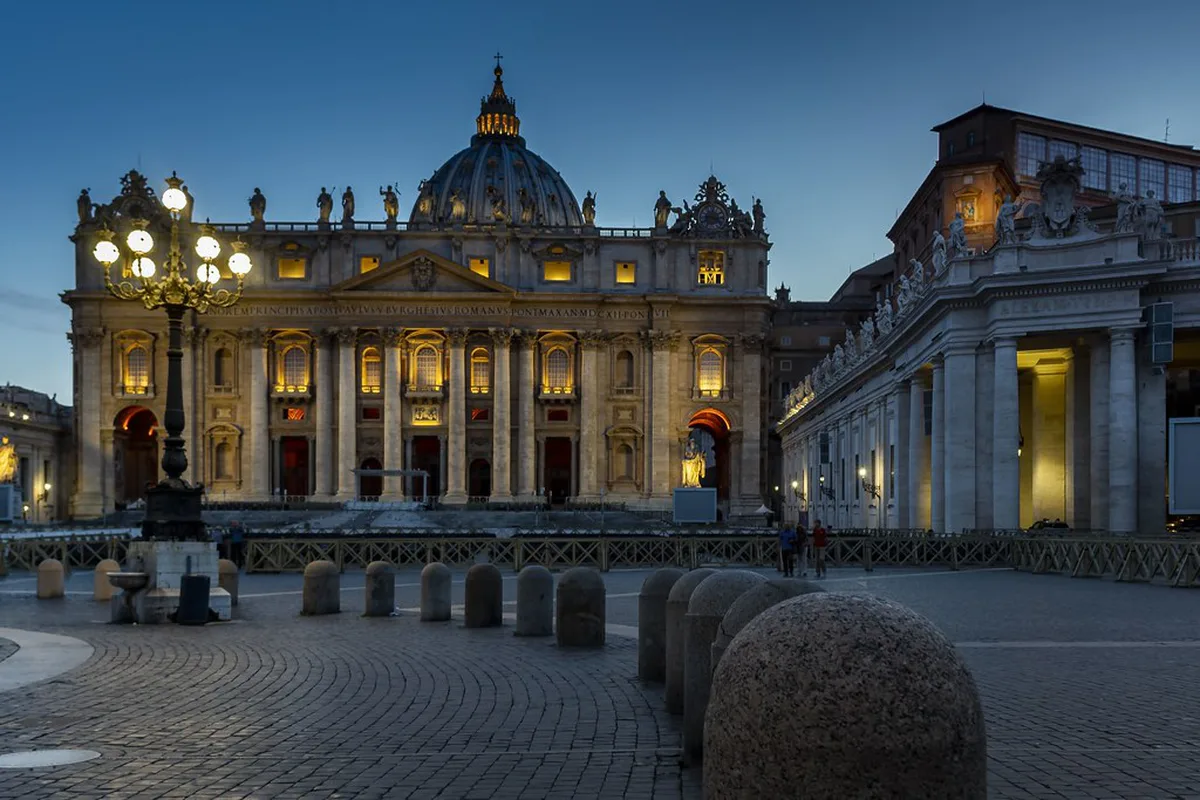
Access is strictly controlled. The Vatican admits a maximum of 250 visitors per day in guided groups of 12, and the tours run in multiple languages including English. You must book directly through the Vatican Excavation Office well in advance — demand consistently outstrips supply, and prime dates in spring and summer can be booked out four to six months ahead. The cost is around €15 / ~$16 per person. Photography is not permitted inside.
For visitors with a specific interest in early Christian history or pilgrimage, this is among the most significant experiences Rome offers. It is not widely known outside specialist travel circles, which means the atmosphere is intimate compared to anything else at the Vatican. If you have flexibility in your travel dates, book the scavi first and plan the rest of your Vatican visit around it.
Accessibility at the Vatican
The Vatican has invested in accessibility infrastructure, but the ancient buildings impose real limits. At the Vatican Museums, an elevator near the main entrance provides access to the upper gallery levels. Wheelchairs are available on loan at no charge from the cloakroom area, and the main route through the galleries to the Sistine Chapel is accessible. The Sistine Chapel itself is on one level and reachable without steps on the standard accessible route.
At St. Peter's Basilica, a ramp and lift near the northern security entrance serve visitors who cannot use stairs. For the dome, the elevator takes visitors to the first terrace (the rooftop of the basilica), which offers a view into the basilica interior and across the square. The upper section of the dome climb from the terrace to the lantern is step-only and very narrow; it is not accessible by wheelchair and is impractical for visitors with significant mobility limitations.
For the Vatican Gardens, tours that include the gardens use accessible paths for the main route. The scavi (Vatican Necropolis) involves uneven ancient ground and is not accessible for wheelchairs. If accessibility is a primary concern, contact the Vatican Museums accessibility office directly before booking, as conditions and available support can vary by day and tour type. The official Vatican Museums website includes an accessibility section with current details.
Where to Eat Near the Vatican
The restaurants within 100 metres of the museum entrance are almost universally overpriced and mediocre. The tourist-trap density around Viale Vaticano and the immediate approach to the museums is among the highest in Rome. Walk at least four blocks into the Prati neighbourhood — northeast of the Vatican walls — and prices fall sharply while quality improves.
Prati is a genuine residential neighbourhood, not a tourist zone, and its streets around Via Cola di Rienzo and the surrounding blocks have good mid-range options for pasta, pizza al taglio (sold by weight, typically €4–€8 for a filling portion), and coffee at proper Roman prices (€1.20–€1.50 for a stand-up espresso). If you need to eat before the museums open, the area has several bars serving cornetto and coffee from 07:00.
For a quick re-fuel mid-visit, the Vatican Museums cafeteria inside the complex is functional and reasonably priced by tourist-area standards — sandwiches around €5–€7 and coffee at €2–€3. It is crowded at midday but moves quickly. Most visitors skip it and walk to Prati for lunch, which is the better choice if you have time. Pair your food stop with a look at 18 Best Free Things to Do in Rome: A Budget Guide nearby if you want to fill the afternoon after the Vatican without spending more on entry fees.
How to Get to the Vatican
The quickest public transport option from central Rome is Metro Line A to Ottaviano–San Pietro station. The walk from the metro exit to the Vatican Museums entrance on Viale Vaticano is about 10 minutes. A single metro ticket costs €1.50 / ~$1.65 and is valid for 100 minutes on any combination of metro and bus. From Termini station the journey takes roughly 10 minutes on the metro.
Bus line 40 and bus line 64 run from Termini to near the Vatican and are useful alternatives when the metro is crowded or on strike. Bus line 23 runs from Trastevere along the Tiber and stops on Lungotevere Vaticano, a short walk from St. Peter's Square. Taxis are reliable but traffic near the Vatican walls is heavy in the morning; allow extra time if you have a timed ticket. Cycling is possible — there are bike-share docking stations in Prati — but the area around the museums is congested and not ideal for those unfamiliar with Roman traffic.
Papal Audience and Events
The Pope holds a general audience most Wednesdays at 09:30 in St. Peter's Square (in warmer months) or in the Paul VI Audience Hall adjacent to the basilica (in colder months or rain). Tickets are free and available through the Prefecture of the Pontifical Household. Demand is high; request tickets at least two weeks in advance. To get a decent position in St. Peter's Square, plan to arrive by 08:00.
The audience runs approximately 09:30–12:00 and involves the Pope greeting delegations and pilgrimage groups from around the world, with brief addresses in multiple languages. For visitors who primarily want to see the Pope rather than the museums, this is the most accessible route. Note that the basilica remains closed until the audience concludes, which is worth factoring into your wider Vatican schedule.
The Sunday Angelus at 12:00 is a shorter event in which the Pope appears at his window in the Apostolic Palace overlooking St. Peter's Square. No ticket is required and it lasts about 15 minutes. This is the lowest-friction way to see the Pope if your Vatican visit happens to fall on a Sunday when the museums are closed anyway.
Frequently Asked Questions
Can you enter the Vatican for free?
Entry to St. Peter's Basilica and the square is free for all visitors. However, the Vatican Museums and Sistine Chapel require a paid ticket. Expect to pay €20 / ~$22 for standard adult museum entry.
Is there a dress code for the Vatican?
Yes, the Vatican enforces a strict dress code for all visitors. You must cover your shoulders and knees to enter the museums and basilica. Staff will strictly deny entry to anyone wearing revealing clothing.
How far in advance should I book Vatican tickets?
You should book your tickets at least 60 days in advance during peak season. Official tickets often sell out within hours of being released online. Last-minute visitors usually have to pay for expensive guided tours.
Visiting the Vatican is a profound experience that combines world-class art with deep religious history. By following these tips, you can navigate the complex logistics with confidence and ease. Remember to book early and respect the local customs to ensure a memorable trip. Your journey through the heart of Rome will be much richer with a little bit of preparation.
You might also like
Continue reading
More guides you'll find useful