Rome Neighborhoods Guide: 10 Best Areas (2026)
Discover the best areas to stay in Rome with our local guide. Compare Monti, Trastevere, and Prati with maps, transport tips, and local insights.
On this page
10 Best Rome Neighborhoods to Explore and Stay (2026)
Rome is a city of distinct villages, each with its own coat of arms, cobblestone character, and daily rhythm. Your chosen neighborhood shapes the entire trip — from the monuments you can walk to before breakfast to the authenticity of the wine bar you stumble into at midnight. This guide cuts through the noise and shows you exactly where to base yourself, what each district genuinely trades off, and how to move between them without burning time on the Metro.
Most travelers default to the area around Termini Station for convenience. It is rarely the best choice. The 10 Best Neighborhoods and Tips for Staying in Rome are scattered across a relatively compact historic core, and choosing carefully will save you money, noise, and tourist-menu dinners. I have organized the guide below from the most central to the more local, so you can calibrate based on your trip length and priorities.
Rome's Layout: Understanding the Rioni and Municipii
Rome is organized into 22 historic districts called Rioni, each with roots in the ancient Roman administrative system. Almost all of them sit within the third-century Aurelian Walls, which still stand in large sections across the eastern side of the city. Municipio I is the central administrative district containing the vast majority of the iconic monuments visitors come to see — this is where you want to be based for a first trip.
The Tiber River acts as the city's natural dividing line. On the east bank you find the historic core: Monti, Esquilino, Centro Storico, and Testaccio. On the west bank lie Trastevere, Prati, and Borgo — distinct in character but still within easy reach. Prati and Trastevere both sit just outside the Aurelian Walls yet remain within the "city center" bubble that makes sense for tourist logistics.
Municipio II covers the northern residential districts and tends to be less relevant for short stays. Most visitors can safely ignore everything beyond the Grande Raccordo Anulare ring road unless they are specifically seeking quieter, residential Rome. All neighborhoods in this guide are walkable or one Metro stop from the main things to do in Rome. Understanding this layout first prevents the classic mistake of booking a "central" hotel that turns out to be 40 minutes by foot from any landmark you care about.
Monti: Hip, Central, and Steps from the Colosseum
Monti is Rome's oldest Rione and its most recommended base for first-time visitors. The neighborhood rises on three small hills just north of the Colosseum and Forum, which means your commute to the city's most famous ruins is a 15-minute downhill walk. The streets are cobbled, mostly pedestrianized, and lined with ivy-covered buildings and independent boutiques that stay open until around 20:00.
The heart of local life is Piazza della Madonna dei Monti, where a 16th-century fountain draws students, UN workers, and elderly Romans for evening aperitivo from around 18:30. The atmosphere is bohemian but not rough — think wine by the fountain, not rowdy pub crawls. Dinner in the piazza costs roughly €15–30 per person for a full meal with wine at a mid-range trattoria.
For transport, Metro Line B stops at Cavour, right in the middle of the neighborhood, connecting you to Termini in one stop and to the rest of the city beyond. The main practical trade-off: Monti is not flat. Walking its streets is rewarding but tiring, and the area gets noticeably noisy on Friday and Saturday nights around the piazza. If you need a silent night's sleep, stay on the quieter northern edge of the Rione rather than directly beside the fountain.
Book accommodations on Via dei Serpenti or the northern streets of Monti if you are a light sleeper. The vibrant piazza atmosphere is perfect for evening aperitivos but the noise carries until 01:00 on weekends. Earplugs or a white-noise machine are practical additions to any Monti stay.
Prati: Elegant Boulevards and Vatican Views
Prati sits just north of Castel Sant'Angelo on the west bank of the Tiber and offers a completely different Rome from the ancient core. The neighborhood was developed in the mid-1800s along a rational grid plan — wide, tree-lined boulevards, Art Nouveau palazzi, and organized sidewalks you genuinely do not find anywhere else in the old city. It is Rome's lawyer district, and the suited regulars eating at neighborhood trattorias keep prices honest and tourist menus rare.
For Vatican access, no neighborhood beats Prati. From most hotels here you can walk to St. Peter's Square in under 10 minutes, meaning you can be inside the Basilica by 07:00 — before the main crowds arrive from the Metro. Shopping runs along Via Cola di Rienzo, where stores follow standard 10:00–20:00 hours. A mid-range dinner costs €20–40 per person. The area is well served by three Metro Line A stops: Cipro, Ottaviano, and Lepanto.
The honest drawback is distance. Prati is a 30–40 minute walk from the Pantheon or Campo de' Fiori, which means daily sightseeing in the historic core will require either the Metro or a bus. It is also noticeably modern and tidy in a way that some travelers find lacking in Roman grittiness. Families with strollers and older travelers benefit most from the flat grid and wide pavements. Night owls will find it quiet — which is either a selling point or a problem depending on your itinerary.
Prati vs. Borgo: The Distinction Most Visitors Miss
Borgo and Prati are often confused, and booking in the wrong one is a genuinely common mistake. Borgo is a narrow micro-neighborhood — essentially a single historic street corridor running from Castel Sant'Angelo directly to the gates of Vatican City. It is atmospheric and historically significant as the path Popes used to flee via the Passetto di Borgo, the elevated escape passage built into the city wall. But it is also deeply tourist-saturated, with coffee prices that reflect the proximity to the Vatican walls.
Prati, by contrast, is a full residential and commercial district covering roughly 15 square blocks north of Borgo. Despite sharing a Metro stop (Ottaviano serves both), Prati has local restaurants, a weekly market at Mercato Trionfale, and streets where Romans actually live and shop. If you book in "Borgo" expecting local Roman atmosphere, you will be disappointed. If you book in Prati and need to be at the Vatican every morning, the 10-minute walk through Borgo is a pleasant daily route rather than a commute.
The practical rule: stay in Prati for comfort and authenticity, walk through Borgo for its historical drama and early-morning access to the Basilica. The Passetto di Borgo can be viewed from street level at no cost and the Castel Sant'Angelo museum (Mausoleum of Hadrian) sits at the boundary between the two — entrance costs €16 in 2026 and includes rooftop views across both districts.
Centro Storico: The Heart of the Baroque Center
The historic center contains the Pantheon, Piazza Navona, Campo de' Fiori, the Trevi Fountain, and the Spanish Steps within a roughly 20-minute walk of each other. No neighborhood puts you closer to this concentration of monuments. Staying here means stepping outside your hotel into one of the most beautiful urban environments in Europe before you have even opened Google Maps.
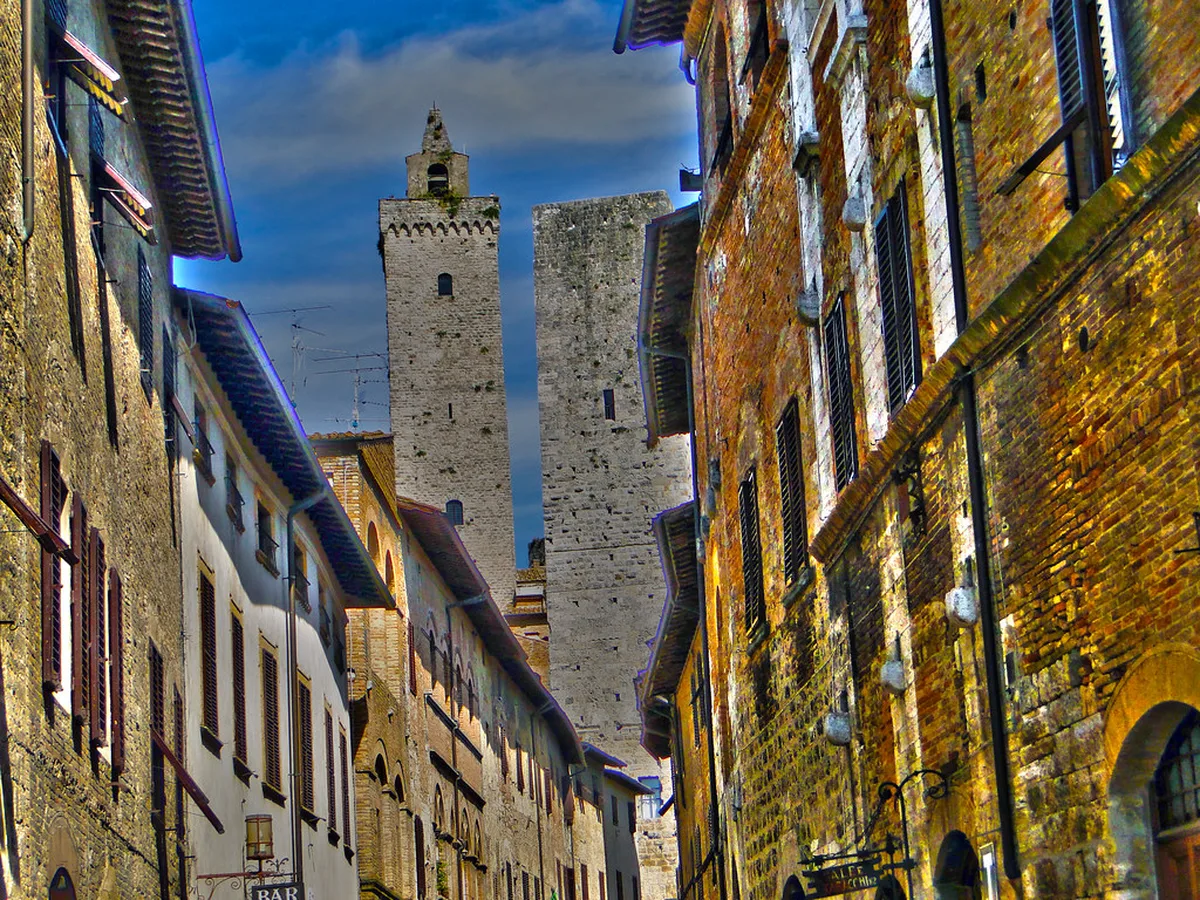
The trade-off is significant. The Centro Storico is densely overcrowded, aggressively expensive, and — critically — has almost no Metro access. You are relying on buses or taxis to reach the Colosseum, Vatican, or any southern neighborhood. Restaurant menus within direct sight of the Pantheon charge a premium of roughly 30–50% over equivalent food two blocks into the side streets. The outdoor market at Campo de' Fiori runs Monday to Saturday 07:00–14:00 and is worth one early morning visit, but the area around it fills with noisy tour groups by 10:00.
The Centro Storico works best for visitors who have already seen Rome once and want to spend most of their time on foot in the baroque city rather than commuting between landmarks. For first-timers with a packed sightseeing list, the convenience is real but the price premium and noise make Monti the smarter base.
Trastevere: Medieval Streets and Nightlife
Trastevere sits on the west bank of the Tiber south of Prati, and its medieval maze of narrow alleys and ochre-painted houses gives it the most cinematic streetscape in Rome. The neighborhood runs on two speeds: quiet and photogenic before noon, then increasingly busy from 18:00 as restaurants fill and the piazzas begin to pulse with crowds that peak around 22:00–23:00 on weekends. A pizza and beer dinner here costs €12–22 per person at a typical trattoria.
Transport options are limited. There is no Metro stop in Trastevere. You reach it by taking Tram 8 from Piazza Venezia, buses, or walking 20 minutes across Ponte Sisto from the Centro Storico. The Janiculum Hill (Gianicolo) at the neighborhood's western edge offers a free panoramic view of the entire city and is reachable by a 15-minute uphill walk from the main piazza — it is one of the best viewpoints in Rome and almost never mentioned in tourist guides.
The single biggest practical warning: Trastevere is extremely noisy at night. On Saturday nights, thousands of visitors pack into its small footprint and the sound carries up into residential buildings until 02:00. If you value sleep, stay in Monti or Prati and visit Trastevere for dinner instead. If you want to be inside the energy, book a hotel on the quieter western edge of the Rione, away from the main Piazza di Santa Maria in Trastevere.
Aventino: A Quiet, Elegant Hilltop Escape
The Aventine Hill is the most peaceful district in central Rome — wealthy, green, and largely unknown to the casual tourist. Its most visited attraction is the Orange Garden (Giardino degli Aranci), which is free, open dawn to dusk, and gives a postcard view of St. Peter's Dome framed by umbrella pines. The famous Knights of Malta Keyhole at the Priory of the Knights of Malta offers a perfectly aligned view of the Basilica dome along an avenue of hedges — the queue is typically short before 10:00 and the experience is free.
The neighborhood has very limited dining and virtually no nightlife. This is a feature for some visitors and a significant drawback for others. Expect one or two quiet trattorias and a handful of neighborhood bars that close by 22:00. Accommodation here is more expensive than in nearby Testaccio because of the exclusivity and the gardens. The Circo Massimo Metro station on Line B is a 10-minute uphill walk, which connects the Aventino to both the Colosseum (one stop north) and Testaccio (a short walk south).
Testaccio: The Culinary Soul of Rome
Testaccio is the neighborhood that serious food travelers pick above all others. Its identity was literally built by food workers: in the early 20th century the district housed the largest abattoir in Europe, and the slaughterhouse workers were sometimes paid in offal — il quinto quarto, the "fifth quarter" of the animal. This practical reality generated some of Rome's most iconic dishes: coda alla vaccinara (oxtail stew braised with celery and tomato), rigatoni alla pajata (pasta with suckling calf intestines), and trippa alla romana. You cannot eat these dishes with the same authenticity anywhere else in the city, because this is where they were invented.
The Mattatoio slaughterhouse building now hosts art exhibitions and food festivals and is worth a walk-through visit. Monte Testaccio — a 35-metre-high mound made entirely of discarded Roman amphora shards, now dotted with bars carved into its base — is one of the most genuinely unusual sites in Rome. The local market at Via Aldo Manuzio 66b runs Monday through Saturday 07:00–15:30 and is where neighborhood residents actually shop, not a tourist market. A full lunch at a local trattoria here costs €12–20.
This is one of the nine enchanting Rome neighborhoods cited by food-focused SERP competitors for good reason. Metro Line B stops at Piramide, a five-minute walk from the market. The neighborhood is best suited to repeat visitors, food-focused travelers, or anyone who wants local Roman life without the bohemian premium of Monti or the tourist saturation of Trastevere.
Garbatella: Authentic Local Life and Architecture
Garbatella was built in the 1920s as a garden suburb for working-class families relocating to Rome from rural Italy. The planners intentionally designed its buildings to evoke the small villages those workers were leaving behind — mixing Baroque, Renaissance, and Rationalist details to create a deliberately timeless atmosphere. The result is one of the most visually surprising neighborhoods in the city, where most tourists never venture.
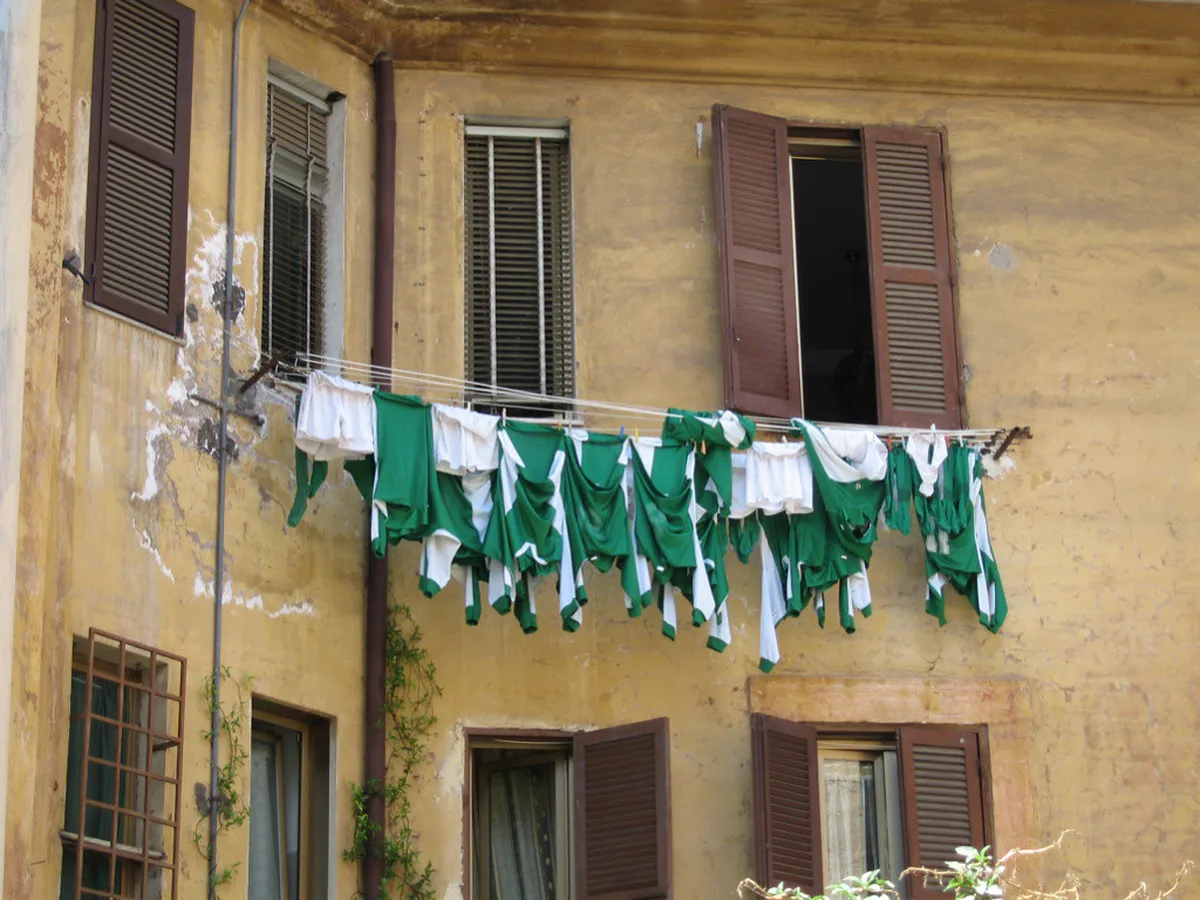
The neighborhood is organized into lotti — clusters of apartment buildings arranged around shared communal courtyards and gardens. Walking into these internal spaces gives you a genuine sense of how Roman community life actually functions away from the tourist areas. Local trattorias here are inexpensive by Roman standards, with lunch averaging €10–18. Most businesses observe the traditional afternoon break (pausa) from roughly 13:30 to 16:00.
Garbatella station on Metro Line B is the direct access point, placing the neighborhood about 20 minutes from the Colosseum by Metro. This commute is the main trade-off for staying here — it is not a base for efficient sightseeing of the historic core. It works best as a day trip from a more central base, or as a deliberate choice for travelers on longer stays who want a slow, residential Roman experience at prices roughly 30–40% lower than Monti or Centro Storico.
San Lorenzo: The Gritty, Creative Student District
San Lorenzo sits directly east of Termini Station, roughly a 15-minute walk from the platforms. The presence of La Sapienza — Italy's largest university — defines the neighborhood's personality: street art on almost every surface, independent bookshops, cheap cocktail bars, and a profoundly anti-establishment energy dating back to its WWII bombing and its post-war role as a left-wing stronghold.
This is the best budget option in the near-center. Large pizzas typically cost under €10, and bar prices are noticeably lower than in tourist-facing areas. The Basilica di San Lorenzo fuori le Mura is a genuinely undervisited early-Christian church with a Cosmatesque floor and simple, striking architecture. The Verano cemetery next door is one of the most beautiful and least-known green spaces in Rome. The neighborhood stays active late into the night, particularly Thursday through Saturday during the academic year.
San Lorenzo is not for everyone. The area lacks the visual polish of Monti or Trastevere and is not recommended for travelers who want a picturesque streetscape. But for solo travelers or couples under 35 who want to drink with locals rather than tourists, it offers something genuinely different from the manicured charm of the center.
Esquilino: Multicultural Hub and Transport Center
Esquilino is Rome's most diverse neighborhood, radiating out from the enormous Piazza Vittorio Emanuele II. The area immediately around Termini Station is dense with budget hotels, and accommodation here runs roughly €80–150 per night for a mid-range option, significantly cheaper than comparable rooms in Monti or the Centro Storico. Both Metro Line A and Line B intersect at Termini, making Esquilino the best-connected transport hub in the city.
The Mercato Centrale inside Termini Station is a legitimate food hall (not a tourist trap) open daily 07:00–24:00, with stalls run by well-known Roman producers. The Basilica di Santa Maria Maggiore, five minutes' walk from the station, has one of the finest mosaic cycles in Rome and is rarely crowded before 09:00. The neighborhood's multicultural character — large Chinese, South Asian, and North African communities have been established here for decades — gives Esquilino a food scene that the more tourist-facing districts cannot match for value.
The trade-off is atmosphere. The immediate blocks around Termini are busy and not particularly charming. Accommodation quality varies dramatically street by street. For budget travelers who prioritize transport connections and will be spending most of their time moving between landmarks, Esquilino makes logistical sense. For everyone else, it is a place to arrive and depart from rather than a place to linger.
Sampietrini Survival Guide: Navigating Rome's Cobblestones
The small black basalt stones that pave most of Rome's historic streets — the sampietrini — are one of the city's defining visual features and also one of its most underestimated practical challenges. Every experienced Rome visitor has a cobblestone story. The stones are rounded on top, set irregularly, and develop a glassy surface when wet. In rain, any leather-soled shoe becomes a slip hazard. Wheeled luggage is almost unusable on them without serious effort.
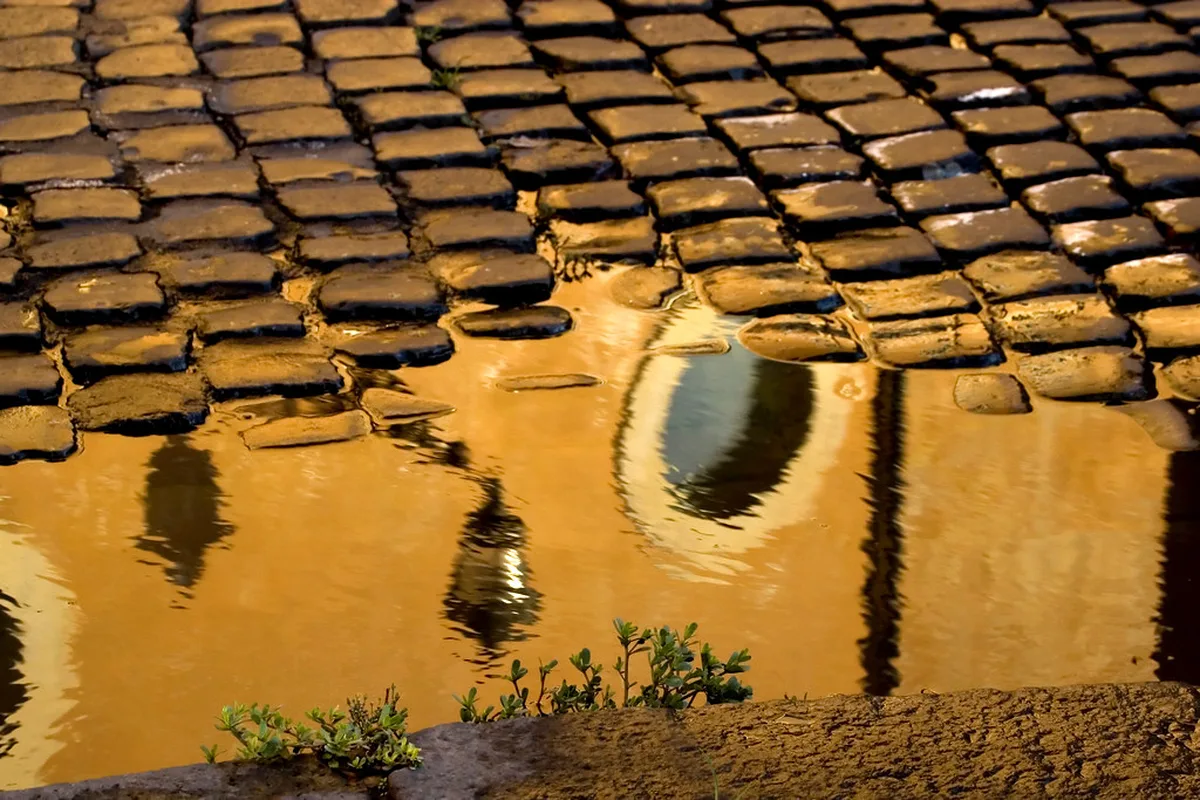
The most useful preparation: wear rubber-soled, closed-toe shoes with a low profile. Trainers with a flat sole outperform hiking boots with deep tread, which catch on the irregular gaps. Sandals are comfortable in dry weather but dangerous when a summer thunderstorm hits without warning. Thin-soled ballet flats, common among tourists trying to dress smartly, cause foot fatigue within 90 minutes on the stones and provide no grip. Pack one pair of comfortable walking shoes and leave the fashion choices for restaurants where you are sitting down.
Neighborhoods vary considerably in pavement quality. Prati has largely smooth modern surfaces on its main boulevards. Garbatella and Aventino have a mix of sampietrini and asphalt. The Centro Storico, Trastevere, and Monti are the most intensely cobbled, particularly on the small alleys. If you are traveling with a stroller or wheelchair, plan your routes through these areas carefully — the main pedestrian routes on wider streets are more manageable than the scenic back alleys that photos tend to show.
Is Trastevere Better Than Monti for Nightlife?
Deciding between Trastevere and Monti often comes down to your tolerance for noise and crowds. Trastevere offers a high-energy environment with hundreds of bars and restaurants packed into a small medieval footprint. In contrast, the Monti neighborhood provides a more curated, artisan-focused evening experience centered on wine bars and small plates.
Monti is ideal for travelers who enjoy wine bars and small plates in a slightly more sophisticated setting. Trastevere is the better choice if you want to hop between lively pubs and street food stalls until 02:00. Both areas are safe, but Trastevere can feel overwhelming on Saturday nights when thousands of people descend on the main piazza.
If you prefer a quiet night's sleep, stay in Monti and take Tram 8 or a taxi to Trastevere for one late dinner. The walk between the two takes about 25 minutes via the Imperial Forum ruins. Ultimately, the two neighborhoods represent the best of Rome's social scene for different energy levels — Trastevere for immersion, Monti for a curated evening that ends on your own terms.
Rome Neighborhood Decision Matrix: Choosing Your Base
For first-time visitors with a standard 4–5 day itinerary, Monti is the default recommendation. It puts the Colosseum 15 minutes away on foot, the Centro Storico 20 minutes away, and the Termini transport hub one Metro stop away. Centro Storico is justified for visitors whose priority is atmosphere over logistics and who have already seen the major monuments on a previous trip.
Families benefit most from Prati's flat grid and wide pavements. Budget travelers get the most from Esquilino or San Lorenzo, where accommodation and food costs run 25–40% lower than in the central Rioni. Foodies should choose Testaccio without hesitation. Quiet-seekers and those who want to feel like they live in Rome rather than visiting it should look at Garbatella or Aventino, accepting the Metro commute as the price of that peace.
When selecting your base, apply the Local's Trade-off test: every neighborhood gives you one thing and takes away another. Trastevere gives you atmosphere but takes your sleep. Centro Storico gives you walking access but takes your budget. Garbatella gives you authenticity but takes your convenience. Knowing the trade-off in advance prevents the most common source of visitor disappointment — expecting a neighborhood to deliver something it was never designed to provide.
| Neighborhood | Character | Best for |
|---|---|---|
| Monti | Bohemian, trendy, artisan-focused | First-time visitors, history lovers |
| Prati | Elegant, modern, wide boulevards | Vatican access, families, comfort |
| Trastevere | Medieval, vibrant, high-energy nightlife | Nightlife seekers, atmosphere |
| Centro Storico | Historic monuments, baroque beauty | Atmospheric walks, previous visitors |
| Testaccio | Authentic, culinary-focused, local | Food travelers, genuine Roman experience |
| Aventino | Peaceful, elegant, exclusive gardens | Quiet seekers, those wanting peace |
| Esquilino | Multicultural, diverse, budget-friendly | Budget travelers, food diversity |
| Garbatella | Residential, architectural, authentic | Longer stays, local lifestyle |
Rome Planning Cheatsheet: Transport and Logistics
Rome has two Metro lines. Line A (orange) runs northwest–southeast through the center, stopping at Ottaviano and Lepanto for Prati, Spagna for the Spanish Steps, Barberini for the Trevi Fountain, and Repubblica for Termini. Line B (blue) runs north–south, serving Cavour for Monti, Colosseo for the Colosseum, Circo Massimo for Aventino, Piramide for Testaccio, and Garbatella. A single-journey ticket costs €1.50 in 2026. A 24-hour pass costs €7.00, the 48-hour pass €12.50, and the 72-hour pass €18.00.
Trastevere has no Metro stop. Use Tram 8 from Piazza Venezia (roughly 15 minutes) or walk across Ponte Sisto from the Centro Storico (20 minutes). The Centro Storico itself has no Metro access — buses 40, 64, and 23 serve the area, running approximately every 10 minutes during the day. Always validate your ticket before boarding; controllers check frequently and the fine is €100.
Key walking times between major hubs: Monti to Colosseum is 15 minutes downhill. Pantheon to Trastevere is 20 minutes via Ponte Sisto. Prati to St. Peter's is 10 minutes. Termini to San Lorenzo is 15 minutes. Testaccio to Aventino is 10 minutes uphill. Rome is compact enough that most central sightseeing days require only one or two Metro journeys — the rest is on foot, which is both more efficient and more rewarding than waiting for buses in tourist-heavy areas. When staying at 10 Best Neighborhoods for Where to Stay in Rome, always verify the nearest Metro stop before booking.
Always validate your Metro or bus ticket immediately upon boarding by pressing it against the yellow validators mounted on poles and vehicle walls. An unvalidated ticket is treated as unused, and controllers conduct random checks with a €100 on-the-spot fine. This is one of the few rigid rules Roman transit strictly enforces.
Frequently Asked Questions
Which Rome neighborhood is best for first-time visitors?
Monti is the best choice for first-time visitors because it is central and walkable. You stay within steps of the Colosseum and enjoy a trendy atmosphere with excellent dining options. It offers a perfect balance of history and modern local life.
Is it better to stay in Trastevere or Prati?
Choose Trastevere if you want a charming, medieval atmosphere with vibrant nightlife and many bars. Opt for Prati if you prefer elegant, wide boulevards and quiet nights near the Vatican. Prati is generally better for families and high-end shopping.
How do I get around Rome neighborhoods using public transport?
The Metro Line A and B are the most efficient ways to travel between distant districts. For central areas like Trastevere or the historic core, use the extensive tram and bus network. Always remember to validate your ticket before boarding to avoid fines.
Rome is a city of distinct villages, each offering a different perspective on the Eternal City's long and layered history. Whether you choose the artisan vibes of Monti or the culinary depths of Testaccio, your neighborhood will become your home base for a 2026 adventure that no amount of tourist itineraries can replicate.
Remember to pack rubber-soled shoes for the sampietrini and an open heart for the local Roman hospitality you will encounter in every district. For more help planning your trip, explore our guides on 10 Best Places to Eat in Rome and other essential travel tips.
You might also like
Continue reading
More guides you'll find useful