11 Best Day Trips from Rome (2026)
Discover the 11 best day trips from Rome, from the ruins of Pompeii to the beaches of Sperlonga. Includes travel times, train tips, and local food advice.
On this page
11 Best Day Trips from Rome and Expert Planning Tips
After visiting the Italian capital six times over the last decade, I have learned that the city's true magic often lies just beyond its ancient walls. While the Colosseum is breathtaking, the surrounding Lazio and Umbria regions offer a quiet contrast to the bustling city center. I scouted these routes again in spring 2025 to verify that the transport links and opening hours remain current for 2026.
Choosing the right excursion depends entirely on your interests, whether you crave volcanic lakes, Renaissance art, or pristine Mediterranean beaches. You should consider the Best Time To Visit Rome: Seasonal Guide & Weather Tips when planning these trips, as some gardens have very limited seasonal openings. If you are still working out How Many Days in Rome? 10 Essential Planning Tips & Itineraries you need, adding two extra days for excursions is a wise investment.
| Destination | Travel time from Rome | Highlight |
|---|---|---|
| Tivoli | 50 minutes by train | Villa Adriana and Villa d'Este UNESCO sites with fountains |
| Ostia Antica | 40 minutes by urban train | Ancient port city with intact apartment blocks and theatre |
| Florence | 90 minutes by high-speed train | Renaissance art, Uffizi Gallery, Michelangelo's David |
| Pompeii | 70–80 minutes by train + 35 minutes regional | Volcanic eruption ruins preserved in ash |
| Orvieto | 60–75 minutes by train | Gothic Duomo with gold mosaics, Etruscan tunnels |
| Sperlonga | 90 minutes by train | Whitewashed coastal town with clean beaches |
| Castelli Romani | 30 minutes by train to Frascati | Hilltop wine villages, Frascati DOC white wine |
| Castel Gandolfo | 25 minutes by train | Papal summer residence with Lake Albano views |
Tivoli: Villa Adriana and Villa d'Este
Just 29 km east of Rome, Tivoli holds two UNESCO World Heritage Sites that reward a full day. Villa Adriana — Hadrian's vast imperial estate — sprawls across hectares of parkland filled with pools, mosaic floors, and colonnade ruins. Plan at least two to three hours here; there is little shade, so bring sunscreen and a hat for summer visits.
Villa d'Este, the Renaissance palace of Cardinal Ippolito II d'Este, is the cooler afternoon option. Its terraced gardens contain over 500 fountains, including the famous Fontana dell'Ovato. Tickets run approximately €12–€15 for each villa and are available online; booking a day or two ahead avoids queues at the gate.
The best sequence is Villa Adriana at opening (09:00) and Villa d'Este in the afternoon heat. Trains depart from Roma Tiburtina every twenty to thirty minutes; the journey takes about fifty minutes and costs around €3.20. From Tivoli station, take the regional CAT bus to each villa.
Book villa tickets online one or two days ahead to avoid queues. The Tivoli station CAT bus is included in many Rome tourist passes, so check your transport card before buying a separate ticket.
Ostia Antica: Rome's Ancient Port City
Ostia Antica is consistently underrated by first-time visitors who default to Pompeii. The site preserves remarkably intact apartment blocks, taverns with intact painted menus, a functioning-era theatre, and public baths — all without the crowds or the two-hour travel time. Entry is approximately €18 per adult, and the park is open Tuesday through Sunday from 09:00 to sunset.
Getting there is one of the easiest logistics on this list. Take the Roma-Lido urban line from Roma Porta San Paolo station (adjacent to Piramide metro stop on line B) and ride forty minutes to the Ostia Antica stop. The archaeological park gate is a five-minute walk from the platform. The full Trenitalia urban pass covers this line, so there is no separate ticket to buy.
The site can be combined with a beach afternoon at Lido di Ostia, just three stops further on the same line. This is a fantastic option with kids because they can freely run through the ancient streets without the crowds of the city center, then cool off at the sea. Allow four hours minimum for the archaeological park before heading to the beach.
Florence: Renaissance Art via High-Speed Rail
Florence is the longest day trip on this list in terms of distance — 275 km north — but the Frecciarossa high-speed train covers it in 90 minutes, making it entirely feasible. Trains depart Roma Termini roughly every hour from 06:00 onwards; early morning departures start from about €25 per person if booked several weeks ahead, while same-week prices climb toward €60 or more.
Walk straight from Santa Maria Novella station to the Duomo and the historic center. The Uffizi Gallery holds the world's finest collection of Botticelli and Raphael, but it is closed on Mondays and sells out days in advance — book your timed entry on the official Uffizi website before you leave Rome. The Galleria dell'Accademia, home to Michelangelo's David, operates the same advance-booking system and is equally popular.
A realistic Florence day means four to five hours of sightseeing, a long lunch near the Mercato Centrale, and a 17:00 or 18:00 return train. Pick one museum and complement it with a stroll across Ponte Vecchio and up to Piazzale Michelangelo for the city view. Trying to see the Uffizi, the Accademia, and the Duomo in one day is how you end up exhausted and seeing nothing properly.
Pompeii and the Southern Italy Option
Pompeii is 241 km south of Rome, which makes it the most demanding day trip on this list. The most reliable routing is the Frecciarossa or Frecciargento high-speed train to Napoli Centrale (70–80 minutes, from €20 booked in advance), then the Circumvesuviana commuter line from Napoli Centrale to Pompei Scavi – Villa dei Misteri station (about 35 minutes). Entry to the archaeological park costs €18–€22; it is open 09:00 to 19:00 in summer with last entry at 17:30.
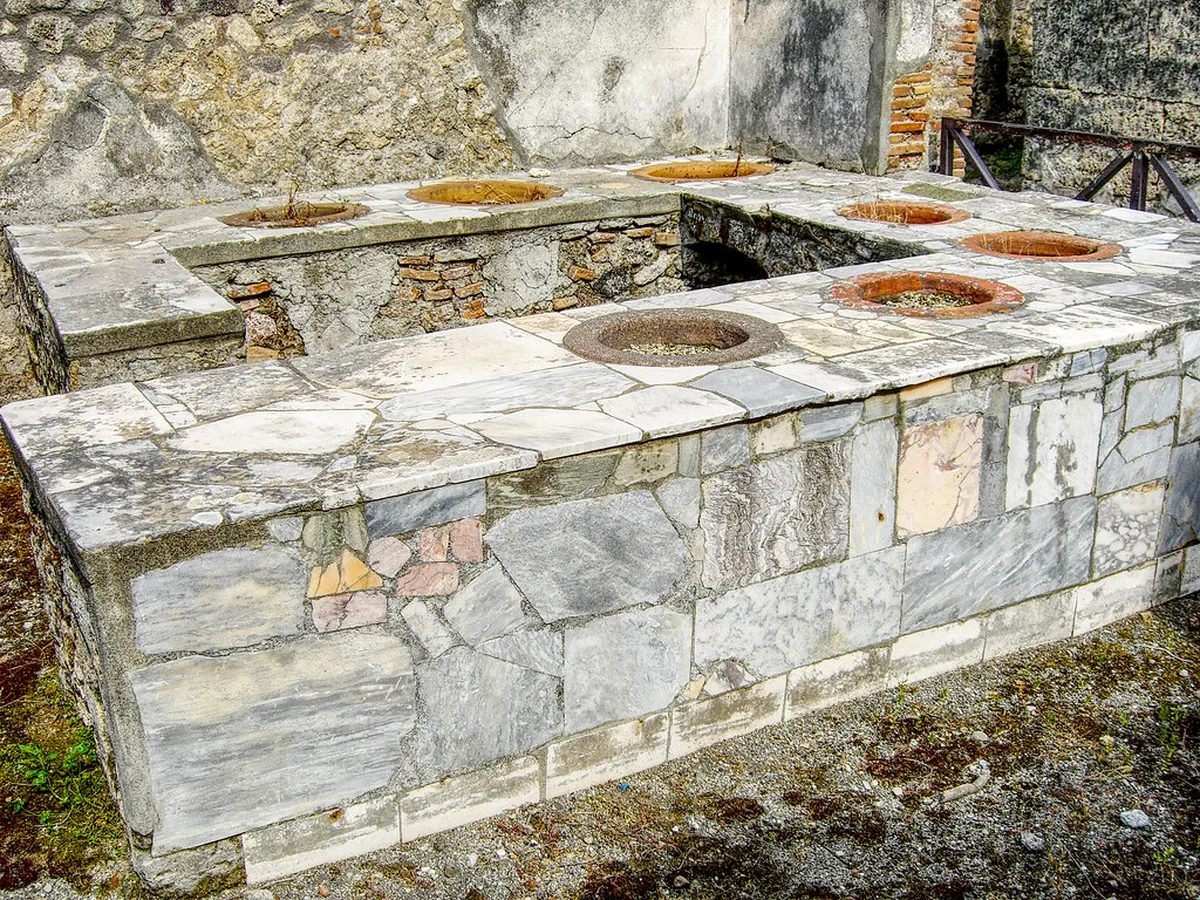
Start with the House of the Faun and the Forum, then work outward. The site is enormous — plan a minimum of four hours. A hat, water, and comfortable shoes are essential, as there is almost no shade and the ancient streets are uneven. Combine with a Mount Vesuvius hike only if you start from Rome no later than 07:00.
Pompeii is also a natural gateway to deeper southern Italy if you want to extend your trip overnight. Direct regional trains continue south from Naples to Bari (about 3.5 hours), and high-speed connections reach Lecce and the Salento coast. If you are considering a longer southern swing, our guides to the the train from Rome to Bari and the reaching Lecce from Rome route cover the fastest options in detail. For an inland detour, the the Rome to Matera route guide explains the two-train connection via Potenza.
Orvieto: A Medieval Hilltop Escape in Umbria
Orvieto sits on a dramatic volcanic tufo cliff 121 km north of Rome in the region of Umbria. The Frecciabianca or Regionale train from Roma Termini takes 60–75 minutes and costs about €9 each way — no advance booking needed. From Orvieto station, a funicular climbs the cliff face every ten minutes; a combined funicular plus centro storico bus pass costs €1.30.
The Duomo di Orvieto is the headline attraction: its Gothic facade of gold mosaics, marble reliefs, and bas-carved scenes of the Last Judgement is considered one of the finest in Italy. Admission is €5, and the adjacent Museo dell'Opera del Duomo houses original Lorenzo Maitani panels at no extra charge. Reserve time for Orvieto Underground, a network of Etruscan tunnels and cisterns beneath the streets that reveals 2,500 years of continuous habitation.
For lunch, sit down at one of the stone-vaulted trattorias along Via del Duomo for Umbrian pasta — the wild boar ragù and hand-rolled umbricelli with black truffle are local standards. The town is also famous for its Orvieto Classico white wine, a crisp DOC blend best tasted at a local enoteca before the return train. This is a calm, walkable town and one of the most satisfying half-day escapes from Rome.
Sperlonga: Beaches, Lidi, and White-Washed Streets
Sperlonga is the best coastal day trip from Rome if you want white sand, calm water, and an intact hilltop old town. The beach below the promontory is consistently one of the cleanest on the Tyrrhenian coast. Arrive by train to Fondi-Sperlonga station, then catch the dedicated shuttle bus that meets every arriving train for the ten-minute transfer to the beach. Journey time from Roma Termini is about 90 minutes.
The beach is divided between private lidi (beach clubs) and public spiagge libere. Understanding the difference saves confusion on arrival. A lido charges a set fee — typically €20–€35 for two sun loungers and a parasol for the full day — and provides bathrooms, a bar, food service, and towel rental. The public beaches are free but arrive by 09:00 in July and August if you want a good spot. Lido del Vescovo and Lido della Baia are the most popular clubs near the village entrance; booking a spot a day ahead via their websites is possible and recommended in August.
Spend the afternoon in Sperlonga Sopra, the whitewashed hilltop town above. Narrow alleys climb between bougainvillea-draped houses with sea views at every turn. Dinner al fresco at Ristorante Gli Archi in a small courtyard with a plate of spaghetti alle vongole and the evening sea breeze is the standard way to close the day. History buffs should also visit the Museo Nazionale Archeologico di Sperlonga and the adjacent Grotta di Tiberio ruins before leaving the beach.
Giardino di Ninfa and Sermoneta Castle
Giardino di Ninfa is frequently cited as one of the most romantic gardens in the world, and the description is accurate. Medieval ruins of a small abandoned town have been overtaken by exotic plantings — roses cascade over stone arches, streams weave between crumbling walls, and rare tree specimens planted since the 1920s form a living museum. The effect in late spring when everything blooms simultaneously is genuinely extraordinary.
Critical logistics: Ninfa is only open on select weekends and holidays from March to November — roughly one to two weekends per month. Tickets cost €15 and must be pre-booked on the Giardino di Ninfa official site before they sell out, often weeks ahead of popular spring dates. Check the calendar carefully before planning the trip; this is not a site you can visit spontaneously.
After the garden, the hilltop village of Sermoneta is only 7 km away and pairs well for the afternoon. The 13th-century Castello Caetani dominates the skyline and can be toured for a few euros. Walking through the medieval arch into the village center feels like stepping back several centuries. Getting here requires a car or a pre-arranged taxi from the Latina Scalo train station, as public bus connections are limited.
Castelli Romani: Wine Tasting and the Fraschetta Tradition
The Castelli Romani is a cluster of about thirteen hilltop towns set in the extinct-volcano Alban Hills, just 20 km southeast of Rome. The volcanic soil produces Italy's best-known Frascati white wine — a crisp, mineral DOC blend that tastes considerably better poured at a hillside enoteca than in a supermarket bottle. Regional trains to Frascati from Roma Termini take about thirty minutes and cost €2.10 each way, making this the most affordable excursion on this entire list.
The town of Ariccia, a short bus ride from Frascati, is the place to understand the fraschetta dining tradition. A fraschetta is a rustic tavern — originally a farmhouse with a bundle of evergreen branches (frasca) hung outside to signal that wine was being served. In Ariccia, these osterias specialize in porchetta di Ariccia IGP: whole pigs slow-roasted with wild fennel and black pepper, sliced to order and served on brown paper over communal tables. Osteria ar Mattonato and Osteria al Pittore are two consistently recommended options. Order the fixed menu to sample the local gnocchi and abbacchio alongside the porchetta.
If you are in the Castelli Romani on the first Sunday of June, the village of Nemi hosts the annual Sagra delle Fragole (strawberry festival), where the local volcanic-soil strawberries — small, intensely sweet, and locally prized — are sold by the kilo and turned into everything from jam to wine. Combine Frascati, Ariccia, and Nemi into one long day using the local COTRAL buses that connect the hill towns roughly every thirty minutes.
Castel Gandolfo: The Pope's Summer Residence
Castel Gandolfo sits on the rim of the Castelli Romani's volcanic lake, 25 km from Rome, with sweeping views over Lake Albano from the main piazza. The town of 8,000 people is best known as the papal summer residence — the Apostolic Palace, Villa Barberini, and the Vatican Gardens here were opened to the public in 2016 and remain one of the region's most unusual attractions.
Entry to the Apostolic Palace museum and gardens starts at €11 and must be booked in advance on the Vatican Museums website. Tours run most days 09:00–18:00, with last entry 90 minutes before close; it is closed during certain religious periods and on Sundays when the Pope is in residence. The Vatican Farm inside the grounds still supplies produce to the papal kitchens. Allow two to three hours for the palace and gardens combined.
After the tour, rent a kayak or paddleboard on Lake Albano from one of the lakeside operators at the base of the cliff — about €10–€15 per hour. The view of the Apostolic Palace from the water, with its windows overlooking the lake, is one of the more memorable perspectives in Lazio. The town piazza has several trattorias serving simple lake fish dishes, a good spot for lunch before the return train to Rome.
Bracciano and Cerveteri: Volcanic Lakes and Etruscan History
Bracciano and Cerveteri are distinct destinations that can be combined into one long day if you have a car, or visited separately by train. Bracciano, 47 km northwest of Rome, centers on Lake Bracciano — a large, clear volcanic lake popular for swimming — and the imposing Castello Odescalchi, a late-15th-century fortress still privately owned by the Odescalchi family and open for guided tours at about €10. The castle is better preserved than almost any other in Lazio and served as the filming location for several major productions.
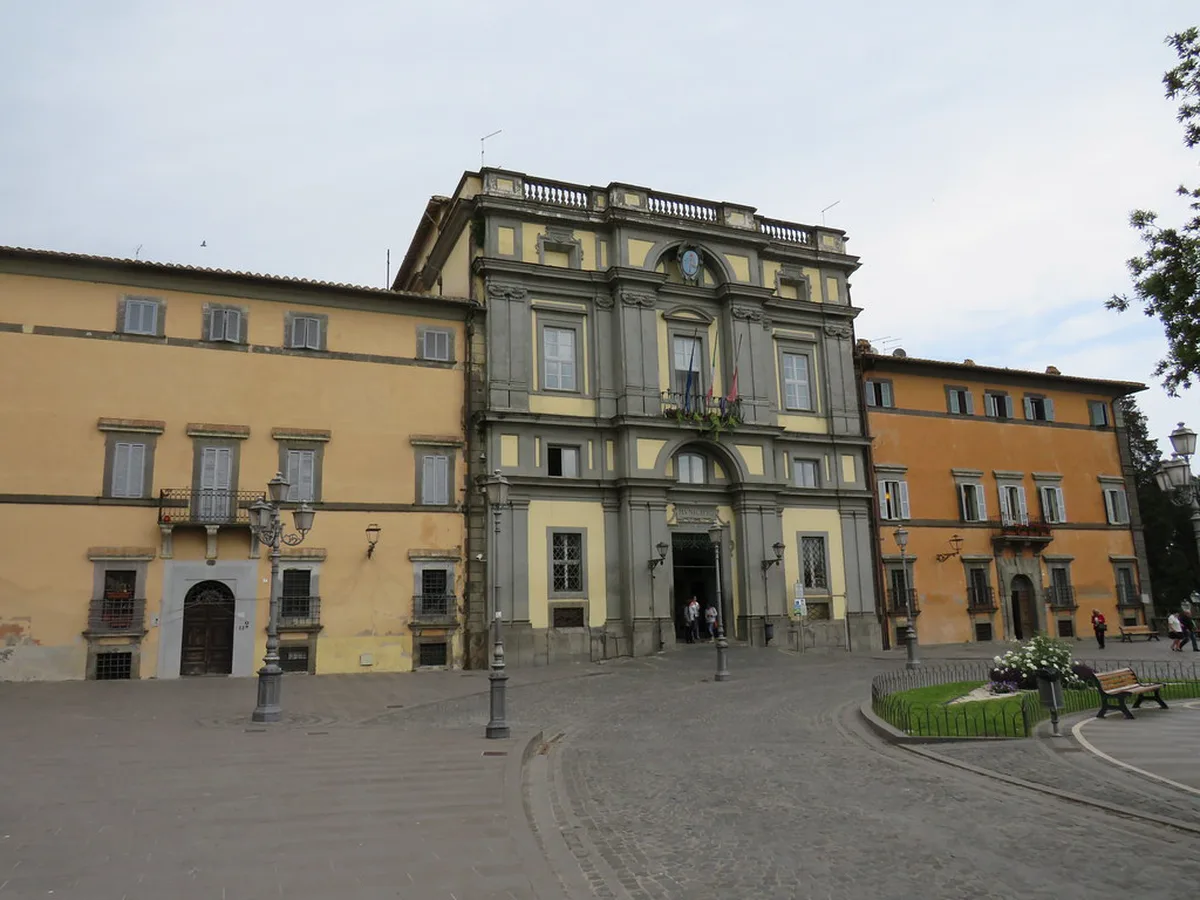
The train from Roma Ostiense or San Pietro takes around 55 minutes. The lakefront below the historic center has free swimming areas and several trattorias serving freshwater fish — tench, eel, and perch caught from the lake. This is a relaxed, unhurried day with no major ticket booking required.
Cerveteri, 44 km northwest of Rome, is the more historically significant stop: the Necropoli della Banditaccia is an Etruscan City of the Dead inscribed on the UNESCO World Heritage List. Hundreds of circular stone tumuli contain burial chambers carved to resemble the domestic interiors of the living — beds, furniture niches, even painted crockery on stone shelves. Entry is €8. Cerveteri is less visited than Pompeii and dramatically atmospheric for anyone interested in pre-Roman Italy. A COTRAL bus connects it from Lepanto metro station in Rome.
Anzio: Seafront Town and WWII History
Anzio, about 60 km south of Rome, is a seaside town with two distinct draws: the Sicily-Rome American Cemetery and Memorial at nearby Nettuno, and one of the freshest and most affordable seafood harbors within day-trip range of the capital. Regional trains from Roma Termini run hourly and take about one hour.
The cemetery at Nettuno is maintained by the American Battle Monuments Commission and is open daily 09:00–17:00, free of charge. It contains the graves of 7,861 American soldiers who died during the Allied landings here in January 1944 — the Battle of Anzio that preceded the liberation of Rome. The visitor center provides detailed context on the campaign. Walking through 77 acres of white crosses aligned between cypress trees is a sober and moving experience, particularly for visitors with family connections to WWII.
Back in Anzio, the harbor is lined with seafood restaurants serving the daily catch. Lunch at one of the trattorias directly on the marina — try the grilled orata or a mixed fritto di mare — typically costs €25–€35 per person including wine and is substantially better value than equivalent seafood in the capital. The Villa di Nerone archaeological park, with Nero's coastal ruins partially submerged by the sea, is a short walk south of the harbor and worth thirty minutes.
Visitors can also take a ferry from Anzio harbor to the island of Ponza (about 2 hours each way), though this effectively turns the day trip into an overnight stay rather than a comfortable return by train.
Essential Logistics for Planning Your Day Trip
The Italian rail system is efficient once you understand which service applies to your destination. High-speed Frecciarossa and Frecciargento trains (Trenitalia) and Italo trains connect Rome to Florence, Naples, and Pompeii. These require advance booking and seat reservations; check both operators' apps as prices differ. For shorter regional destinations — Orvieto, Tivoli, Frascati, Ostia Antica — use the Regionale service, which has a fixed price and no seat reservation. You can always buy regional tickets on the day.
The most important rule for paper tickets on regional trains: validate your ticket in the small green or yellow stamping machines on the platform before boarding. Failing to validate is treated as travelling without a ticket and carries a €50 fine. Digital tickets bought via the Trenitalia or Italo apps include a QR code that serves as validation — just have it ready on your phone for the conductor. Always check the Trenitalia website for real-time strike updates before heading to the station, as Italian rail strikes are announced 24–48 hours in advance.
Renting a car makes sense only for destinations with poor public transport connections: the Giardino di Ninfa plus Sermoneta combo, the full Castelli Romani circuit, and Cerveteri all benefit from a car. Pick up any rental at Fiumicino Airport to avoid driving through Rome's ZTL restricted zones, which carry automatic camera fines for non-residents. For most other trips, getting around Rome by metro or bus to the station is faster and less stressful than navigating the capital by car. Check out our complete guide to 12 Best Things to Do in Rome for how to structure the rest of your stay around these excursions.
One common planning mistake is attempting the Amalfi Coast as a day trip from Rome. The journey involves multiple train and ferry transfers that can take over four hours each way, leaving very little time on the coast. Unless you book a private driver with a set itinerary, you will spend more time in transit than at the destination. Budget an overnight in Naples or Salerno instead, and use Rome as your hub only for the destinations listed above.
Always validate regional train tickets in the stamping machines before boarding — failing to do so incurs a €50 fine. Digital Trenitalia and Italo app tickets with QR codes are pre-validated and need only to be shown to the conductor.
Frequently Asked Questions
Can I visit Pompeii and Florence on the same day from Rome?
No, these cities are in opposite directions and require significant travel time. Attempting both would leave no time for sightseeing. It is best to dedicate one full day to each destination separately.
Do I need to book day trip train tickets in advance?
For high-speed trains to Florence or Naples, booking in advance saves considerable money. Regional trains to places like Tivoli or Frascati have fixed prices. You can buy regional tickets at the station just before departure.
Which day trip is best for a rainy day?
Ostia Antica and the museums of Florence are excellent rainy-day options. They offer significant indoor coverage or museum space. Avoid the gardens of Tivoli or Ninfa if heavy rain is in the forecast.
Taking a day trip from Rome allows you to see the incredible layers of Italian history that exist beyond the capital's busy streets. Whether you choose the ancient port of Ostia or the Renaissance beauty of Florence, these excursions will enrich your Mediterranean adventure. If you are still finalizing your plans, our Rome 3-day itinerary can help you slot these trips into your schedule.
Remember to pack comfortable walking shoes and always carry a reusable water bottle for the many public fountains you will find. Italy's regional diversity is its greatest strength, and these eleven destinations offer a perfect taste of life outside the Eternal City.
You might also like
Continue reading
More guides you'll find useful