18 Best Free Things to Do in Rome: A Budget Guide (2026)
Discover the best free things to do in Rome, from the Pantheon and St. Peter's to hidden gems like the Gianicolo cannon and budget dining secrets.
On this page
18 Best Free Things to Do in Rome (2026)
After my fourth trip to the Eternal City, I am still finding new ways to explore without spending a single euro. Rome is often viewed as an expensive museum, but much of its magic happens in the open air and in centuries-old churches that charge nothing at the door. This guide was last refreshed in June 2026 to reflect the newest access rules and city council updates.
Understanding the Best Time To Visit Rome: Seasonal Guide & Weather Tips is crucial for avoiding the largest crowds at these free spots. While many iconic landmarks remain open to the public, some now require small reservation fees or have specific free-entry windows. I have compiled this list to help you navigate the city like a local while keeping your wallet closed.
St. Peter's Basilica
St. Peter's Basilica is one of the most impressive buildings on earth — and it costs nothing to enter. The interior alone takes an hour to absorb properly: Michelangelo's Pietà behind glass, Bernini's towering bronze baldacchino over the main altar, and gold mosaics that cover more than 10,000 square metres of ceiling. Every corner holds a masterpiece that would anchor any museum collection.
Entry is free but you must pass through airport-style security before stepping inside. Dress rules are strictly enforced: covered shoulders and knees for everyone. The basilica is open daily from 07:00 to 19:00 (closing at 18:00 from October to March). Arrive before 08:30 to beat the lines that form by mid-morning, especially in summer. Note that the Vatican Museums and Sistine Chapel are a separate paid attraction — the basilica itself is free.
The dome climb (€8 via stairs, €10 by lift) is optional and not free, but even staying on the basilica floor gives you a complete experience. Walk slowly and use the free audio descriptions posted near each major work. The space rewards patience.
The Pantheon
The Pantheon is the best-preserved building from ancient Rome and still draws gasps from first-time visitors. Its unreinforced concrete dome, built around 125 AD, remains the largest of its kind in the world. At the apex sits the oculus, a circular opening 9 metres wide that functions as the building's only light source and rain drain simultaneously.
Entry costs €5 for most visitors. However, the Pantheon is free on the first Sunday of every month, when it opens from 09:00 to 19:00. Children under 18 and Rome residents also enter free daily. On free Sundays the queues form by 09:30, so arrive at least 20 minutes before opening.
The most dramatic visit is on April 21, Rome's founding anniversary, when the midday sun enters the oculus and projects a perfect circle of light directly onto the entrance portal at noon. The effect lasts roughly five minutes and is completely free to witness from inside the building. No other Roman monument offers this kind of precise solar alignment — it was almost certainly intentional from the original architects.
Italy's free museum initiative opens major state sites—including the Colosseum, Roman Forum, Pantheon, and Capitoline Museums—on the first Sunday of every month. This is often the highest-value free day in Rome, but expect queues. Arrive by 08:00 to beat the crowds.
Trevi Fountain
The Trevi Fountain is Rome's most visited landmark and, from the upper square level, it remains free around the clock. The Baroque composition — Oceanus on his triumphal arch chariot, flanked by Tritons and sea horses — was designed by Nicola Salvi and completed in 1762. At night the floodlights turn the travertine stone a warm gold colour that photographs quite differently from the midday version.
Since February 1, 2026, the Rome city council charges €2 to enter the lower basin area directly beside the fountain between 09:00 and 21:00. Viewing from the upper terrace surrounding the fountain remains entirely free at any hour. The fee applies to the roped access zone, not to the general piazza. Arrive before 08:00 or after 22:00 if you want the basin view without paying or queuing.
Coin etiquette: stand with your back to the fountain, hold a coin in your right hand, and toss it over your left shoulder. One coin signals a return to Rome, two coins a new romance, three coins a forthcoming wedding. The collected coins are donated weekly to a Catholic charity. The ritual is free and strangely compelling even for sceptics.
Piazza Navona
Piazza Navona occupies the footprint of the ancient Circus Agonalis, a stadium built by Emperor Domitian around 86 AD. You can still see the elongated oval shape of the original track in the square's outline. Today the space is public, free, and always animated — street artists, portrait painters, and musicians spread across the cobblestones from morning until late evening.
The centrepiece is Bernini's Fountain of the Four Rivers, completed in 1651, representing the Nile, Ganges, Danube, and Río de la Plata. Each figure was carved by a different assistant but designed by Bernini himself. Two smaller fountains at the ends of the square complete the composition. None of them charge admission; they are simply part of the city's living streetscape.
Mornings before 09:00 offer the quietest experience and the best light for photographs. By afternoon the square fills with cafe tables (expensive but optional) and performers. Evenings are lively and well-lit — the square stays open all night. Avoid any restaurant with a multilingual menu laminated to the window; prices inside those are typically double the neighbourhood average.
Spanish Steps and Piazza di Spagna
The Spanish Steps connect the Piazza di Spagna below with the Trinità dei Monti church above across 135 travertine steps built between 1723 and 1725. Climbing them costs nothing. The view from the top over Via dei Condotti toward the city centre is one of the most photographed in Rome — and completely free.
Note that sitting on the steps is prohibited to protect the stone surface, and fines are actively enforced by city police (up to €400). Keep moving while you are on the steps. The 'Barcaccia' (sinking boat) fountain at the base was designed by Pietro Bernini, the father of the more famous Gian Lorenzo Bernini, and is free to approach and photograph.
The surrounding streets — Via dei Condotti, Via Borgognona — are Rome's luxury shopping corridor, but window shopping costs nothing. The area is worth visiting in the late afternoon when the low sun catches the church facade and the whole scene turns amber. Early mornings before 08:00 give you the steps almost entirely to yourself.
Colosseum and Roman Forum on First Sunday
The Colosseum, Roman Forum, and Palatine Hill normally share a combined ticket priced at €18. On the first Sunday of every month, all three become free as part of Italy's national free-museum initiative. This is one of the highest-value free days in Rome, because the standard ticket covers three major sites simultaneously.
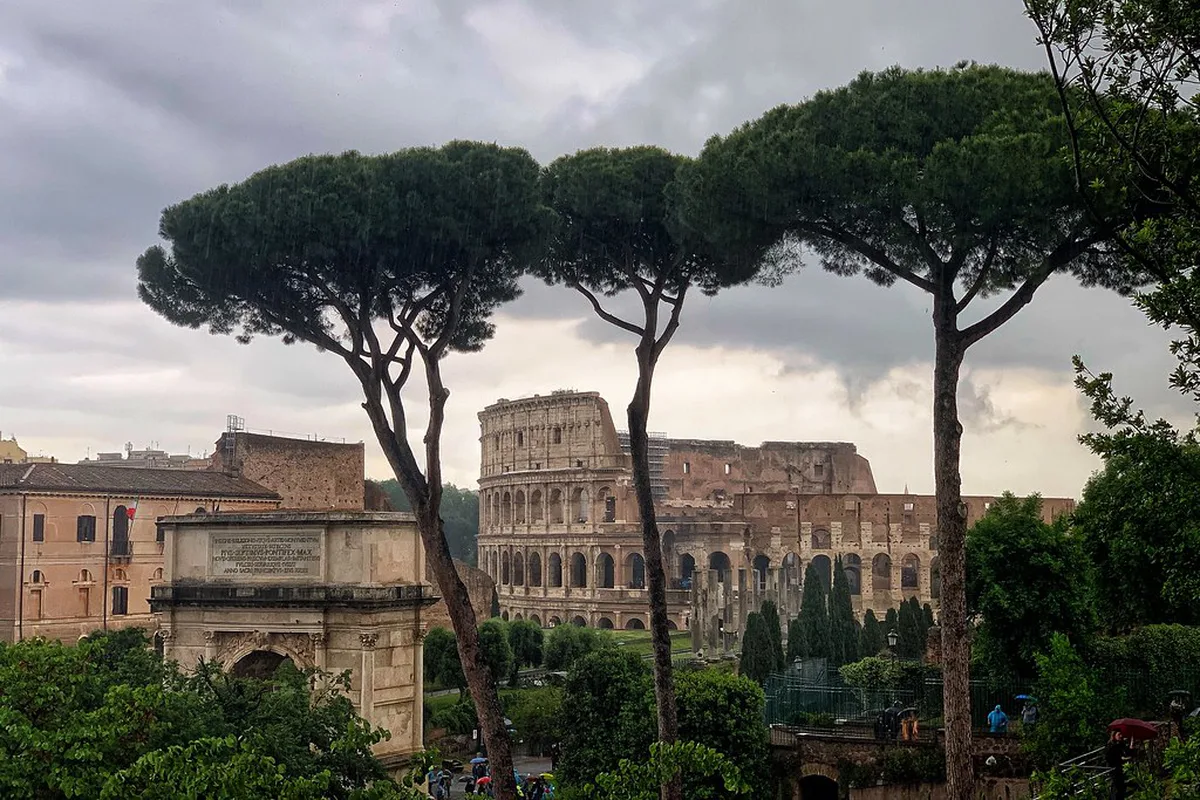
The catch is the queue. On free Sundays the Colosseum gate opens at 08:30 and by 09:00 the wait regularly reaches 90 minutes. Arrive at 08:00, stand at the main entrance on Via Sacra, and you will be among the first wave inside. Bring water and a snack — the site has no free water refill station once you pass security. Strollers and large bags go through a separate security lane that is sometimes faster.
If the first Sunday of a given month falls on a public holiday, check the official Parco Colosseo website for schedule changes — the free day occasionally shifts. The Roman Forum viewed from Via dei Fori Imperiali is free every day of the week regardless, so even on non-free Sundays you can walk the perimeter and see the major columns and arches from street level at no cost.
Villa Borghese Gardens and the Pincio Terrace
Villa Borghese is Rome's largest public park, 80 hectares of umbrella pines, rose gardens, and hidden statues on a hill above Piazza del Popolo. Entry to the park is free at all hours. The famous Borghese Gallery inside the park requires a ticket (€20 plus booking fee), but the gardens themselves — and several smaller museums within them — cost nothing.
Museo Pietro Canonica, set in the villa where the sculptor lived and worked, is one of Rome's most overlooked free museums. It is open Tuesday through Sunday from 10:00 to 16:00. The ground floor preserves Canonica's studio, his tools, and a collection of his finished bronzes. It feels nothing like a formal museum — more like walking into a working artist's home — and on weekday mornings it is almost empty.
Walk to the Pincio Terrace (Terrazza del Pincio) at the park's eastern edge for one of the best free panoramas over Piazza del Popolo and the city roofline. Sunset here is particularly good. Bikes rent for around €6 per hour near the main entrance on Viale del Museo Borghese if you want to cover the full park, but walking is entirely sufficient for the terrace and the Canonica museum.
Trastevere Neighborhood
Trastevere is the one neighbourhood in central Rome where wandering without a plan is the plan. The streets narrow to single-person width in places, wisteria drapes over ochre walls, and the sound of the city drops to a murmur. Most of it sits on the right bank of the Tiber, reachable on foot from the Colosseum in about 25 minutes across Ponte Palatino.
The Basilica of Santa Maria in Trastevere is the neighbourhood's anchor church and free to enter. It is one of the oldest churches in Rome, first built in the 3rd century, and its 12th-century apse mosaics are among the finest Byzantine artworks in the city. The church is open daily from 07:30 to 21:00. No ticket, no dress-code enforcement beyond the usual covered shoulders rule.
The neighbourhood rewards evening visits most. By 19:00 the tourist day-trippers have largely left and local residents fill the small piazzas. Street food is cheaper here than near the major monuments — look for pizza al taglio and suppli (fried rice balls) at the takeaway windows on Viale di Trastevere. A suppli runs about €2, which is the most affordable snack within the historic centre.
Gianicolo Hill and the Noon Cannon
Gianicolo (Janiculum Hill) rises just south-west of Trastevere and offers the most expansive free panorama of Rome — wider and less crowded than either the Pincio or the Aventine. The terrace at Piazzale Garibaldi is accessible by foot in about 15 minutes from the Trastevere train station. There is no entrance gate, no queue, and no fee.
Every day at exactly 12:00, a blank cannon shot is fired from a battery beside the equestrian statue of Garibaldi. The tradition dates to 1847, when Pope Pius IX ordered the daily shot to synchronise church bells across the city. Soldiers in ceremonial uniform load and fire the cannon; the concussive boom carries across the rooftops. Standing near the stone parapet five minutes before noon to watch the preparation is worth the walk up alone.
The hill is also dotted with busts of Garibaldi's soldiers and features a small lighthouse donated by Italians in Argentina. The lighthouse is lit at night and visible from much of the city below. Combine this with a visit to the nearby Fontana dell'Acqua Paola for a quieter stretch of free sightseeing that most day-tour itineraries skip entirely.
Orange Garden and the Aventine Keyhole
The Giardino degli Aranci (Orange Garden) on Aventine Hill is a small but perfect park with terraced views over the Tiber and the dome of St. Peter's. Entry is free and the garden is open from sunrise to sunset. The orange trees are ornamental bitter oranges (not edible), but the scent when they blossom in spring is extraordinary. Marble benches face the view — this is one of the best spots in Rome for a quiet morning coffee from a nearby bar.
Five minutes' walk from the garden brings you to the most talked-about keyhole in Italy: the green door of the Priorato dei Cavalieri di Malta at Piazza dei Cavalieri di Malta 4. The keyhole frames a perfectly composed view down a corridor of clipped hedges to the dome of St. Peter's, exactly centred at the far end. The effect is entirely accidental from an architectural standpoint — the hedge tunnel was designed as a garden feature, not a viewing device.
Looking through the keyhole is free. There is usually a short queue of four to eight people, but it moves fast — each person gets about 20 seconds. The door itself belongs to the Sovereign Military Order of Malta and the compound is not open to the public. The keyhole is the only access and it never disappoints. Walk from the Orange Garden, turn right on Via di Santa Sabina, and follow the signs for Piazza dei Cavalieri di Malta.
Free Churches with Masterpieces
Rome has over 900 churches and many of the most significant ones are free to enter. San Luigi dei Francesi, a short walk from Piazza Navona, holds three Caravaggio paintings depicting the life of Saint Matthew. The chapel lights work on a coin-operated timer (€1 for several minutes of illumination), but the paintings are visible without the light — the coin just makes them easier to examine. Open Monday to Saturday 09:30 to 12:45 and 14:30 to 18:30.
Santa Maria del Popolo, at the north end of Via del Corso, contains two Caravaggio masterpieces in the Cerasi Chapel plus a chapel designed by Raphael. The church is free and open daily from 07:00 to 19:00. The Cerasi Chapel sits to the left of the altar — look for the curtained recess. Basilica di San Pietro in Vincoli, near the Colosseum, is free and houses Michelangelo's Moses, the centrepiece of the original tomb design for Pope Julius II. Open 08:00 to 12:30 and 15:00 to 18:00.
A few practical rules apply to all of these: covered shoulders and knees required, no food or drink inside, and photography is generally permitted without flash. Most churches close for 2–3 hours around midday, so morning visits (before 12:30) or late-afternoon visits (after 15:00) work best for maximising time inside.
| Church | Area | Key Masterpiece |
|---|---|---|
| San Luigi dei Francesi | Piazza Navona | Three Caravaggio paintings (Calling of Saint Matthew) |
| Santa Maria del Popolo | Piazza del Popolo | Two Caravaggio paintings in Cerasi Chapel |
| Basilica di San Pietro in Vincoli | Near Colosseum | Michelangelo's Moses sculpture |
Largo di Torre Argentina
Largo di Torre Argentina is the archaeological site where Julius Caesar was assassinated on March 15, 44 BC. Four Republican-era temples dating from the 3rd and 2nd centuries BC were discovered here during 1920s road construction. The site sits several metres below modern street level, visible from the surrounding pavements for free at all hours.
The site opened for public walk-through access in 2023 after decades as a street-level viewing-only ruin. Entry to walk among the foundations costs €6, but the free street-level view from the perimeter — especially from the north and east sides — is completely adequate for appreciating the scale. The resident cat sanctuary operates from a room at the southeast corner; volunteers are usually present and happy to chat about the site's history.
This is one of the locations in Rome where history has the least tourist infrastructure around it — no gift shop visible from the ruins, no audio-guide kiosks at the perimeter. That makes it feel more authentic than many paid sites. Combine it with a visit to the nearby Campo de' Fiori (a free public square with a morning produce market from 08:00 to 14:00, Monday through Saturday).
Appian Way (Via Appia Antica)
The Via Appia Antica was Rome's most important road south, running 350 miles to Brindisi on the Adriatic coast. The section closest to the city — roughly the first 3 km from the Porta San Sebastiano gate — runs through the Parco dell'Appia Antica and is free to walk at any time. Every Sunday and public holiday the road is closed to motor traffic from 09:00 to 18:00, which makes it by far the best day to visit.
The paving stones are original Roman basalt, worn smooth over two millennia. You walk between ancient tombs, collapsed aqueduct arches, and the occasional working farm. The Circus of Maxentius (4th century) is visible from the road. The Catacombs of San Callisto and San Sebastiano along the route charge for entry (€8 each), but the road surface and surrounding landscape cost nothing.
Wear proper walking shoes — the basalt surface is uneven and can be slippery after rain. Bring water, as there are few facilities along the walking stretch. The first 2 km from the city gate have the densest concentration of tombs and the best preserved paving. Bus 118 from Colosseo metro station drops you at the start of the road if you prefer not to walk the 2 km approach from the city walls.
Tiber River Walk and Isola Tiberina
A paved riverside path runs along both banks of the Tiber from Ponte Margherita in the north to Ponte Sublicio in the south — about 5 km each way. The lower level, reached by stairs from most central bridges, offers views of the river and the bridge undersides that are entirely different from the street-level experience. Access is free and the paths are open all hours, though daylight is strongly preferred for safety.
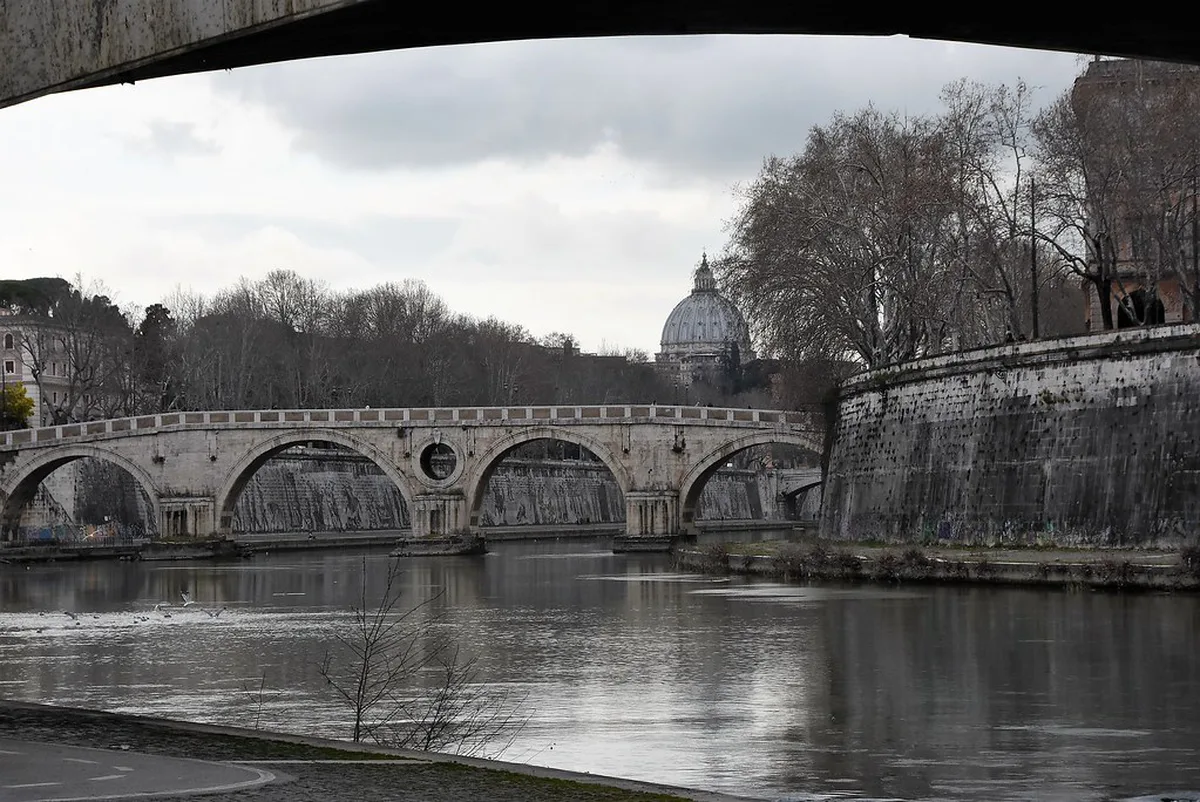
Isola Tiberina (Tiber Island) sits mid-river, reachable for free across Ponte Fabricio — the oldest bridge in Rome still in its original form, built in 62 BC. The island has a hospital (the Fatebenefratelli, in continuous operation since 1583), a small church, and in summer the annual festival Estate Isola Tiberina (July to August) which stages outdoor cinema and live music. Screenings are free or low-cost (around €5) depending on the event.
Use the stairs near Ponte Sisto at the Trastevere end to reach the lower path, then walk north along the west bank toward the island. The route passes under several medieval bridges and the overhanging buildings of the Jewish Ghetto — an atmospheric stretch that sees far fewer tourists than the street above.
Free Museum Sundays: First vs. Last Sunday
Rome runs two separate free-museum programmes that confuse many visitors because they operate on different schedules for different institutions. Understanding which day covers which museum saves a wasted trip.
First Sunday of the month — state-run archaeological sites and national museums are free. This includes the Colosseum, Roman Forum, Palatine Hill, Castel Sant'Angelo, and the Capitoline Museums. These are Italy's Prima Domenica programme sites, managed by the Ministry of Culture. Arrive at opening time (08:00 or 09:00 depending on site) to avoid the worst queues. The Galleria Borghese is listed as a participant but still requires an advance reservation even on free days — reserve online at least 48 hours in advance.
Last Sunday of the month — the Vatican Museums (including the Sistine Chapel) are free from 09:00 to 14:00 (last entry 12:30). This programme is run independently by the Vatican and is not part of Italy's national free day. The queue on last Sundays regularly stretches past Piazza Risorgimento. Arrive by 07:30 to stand near the front of the line before gates open. You can also book Vatican Museum tickets in advance for any other day to avoid the crowds entirely.
Where to Eat in Rome on a Budget
Budget eating in Rome follows one rule: move one street away from any major monument and prices drop by 30–40%. The restaurants directly facing the Pantheon or the Trevi Fountain charge tourist premiums because they can. The same pasta dish costs half the price two streets away at a place with a handwritten menu and no laminated tourist photos at the entrance.
Street food is Rome's best budget move. Suppli (deep-fried rice balls filled with tomato and mozzarella) run €2–3 at takeaway counters across the city. Supplì Roma on Via di San Francesco a Ripa in Trastevere is the canonical address, but almost any bakery or rosticceria sells them. Pizza al taglio (by the slice) costs €2–4 per slice depending on the topping. Forno Campo de' Fiori sells a good version near the morning market.
Rome's 'nasoni' fountains — small cast-iron drinking spouts — provide free cold drinking water across the city. There are over 2,500 of them. Carry a refillable bottle and fill it at any nasone rather than buying bottled water near attractions, where a 500ml bottle can cost €4. The water quality is tested regularly by ACEA, the city water authority, and is safe to drink.
Rome's iconic green nasoni fountains scattered throughout the city dispense tested, safe drinking water for free. Refill your bottle here instead of buying bottled water near monuments—a single 500ml bottle can cost €4 at tourist hotspots. With over 2,500 nasoni across the city, you are never far from a free water source.
Essential Rome Budget Travel Tips
The biggest cost-saving decision in Rome is accommodation location. Staying in Trastevere or Prati (just north of the Vatican) puts you within 20 minutes' walk of most major free attractions and reduces the number of metro or bus trips you need. Transit costs €1.50 per single journey; a 48-hour pass runs €7. If your hotel is in the historic centre, you may not need public transport at all on most days.
Free walking tours operate daily from several piazzas — operators in Piazza Navona and near Campo de' Fiori run tip-based tours starting around 10:00 and 15:00. The quality varies, but the better operators cover the Historic Centre, Trastevere, and the Vatican neighbourhood in separate 2-hour routes. Search for operators with confirmed reviews rather than street touters. These tours are a practical way to cover the main squares and churches in one structured loop before exploring independently.
The broader Rome travel guide covers paid attractions worth budgeting for — the Borghese Gallery, the Vatican Museums on a pre-booked weekday, and the underground tunnels below the Basilica of San Clemente among them. For families, check the Rome with kids guide for free playgrounds and child-friendly free sites. The best viewpoints in Rome guide covers additional free panorama terraces beyond Gianicolo and the Pincio. Italy's national tourism portal at italia.it lists annual free-entry days that occasionally supplement the regular monthly free Sundays.
Frequently Asked Questions
Is the Pantheon still free to enter?
The Pantheon now charges a five-euro entry fee for most visitors. However, you can still enter for free on the first Sunday of every month. Residents of Rome and children under eighteen also enjoy free access daily.
When are museums free in Rome?
State museums are free on the first Sunday of each month throughout the year. The Vatican Museums offer free entry on the last Sunday of every month. Arrive very early to these sites as lines can be extremely long.
How can I see the Roman Forum for free?
You can view the Roman Forum for free from the sidewalks of Via dei Fori Imperiali. Another great free viewpoint is located behind the Piazza del Campidoglio on the Capitoline Hill. These spots offer excellent views of the ancient ruins without a ticket.
Rome is a city that offers immense value to those who know how to navigate its free treasures. From the spiritual heights of St. Peter's to the quiet charm of the Orange Garden, the best experiences often cost nothing. I hope this guide helps you enjoy the Eternal City while keeping your travel budget intact.
Remember to stay flexible and embrace the spontaneous moments that happen between the major landmarks. Whether it is a sunset over the Tiber or a quiet moment in a Baroque church, Rome will always surprise you. Safe travels on your Roman adventure in 2026 and beyond.
You might also like
Continue reading
More guides you'll find useful