15 Best Things to Do in Rome with Kids: A Family Guide (2026)
Discover the 15 best things to do in Rome with kids, from Vespa tours and the Colosseum to the best kid-friendly gelato and neighborhoods for families.
On this page
15 Best Things to Do in Rome with Kids
Rome is one of the great family travel cities in Europe, but it rewards planning more than almost anywhere else. The ancient cobblestones, legendary lines at the Colosseum, and midday heat can grind a trip to a halt if you arrive unprepared. Go in with the right expectations and you will find a city that delights children at every turn, from gladiator stories underground to piazzas full of running space on warm evenings.
This guide covers the 2026 season with updated ticket prices, the clearest family-friendly neighborhoods to base yourself in, and the local food and drink stops that make a Roman trip memorable for parents as much as for kids. We focus on experiences that are genuinely engaging for younger travelers, not just attractions that happen to allow children.
Must-See Rome Attractions
The Colosseum is the obvious starting point, and it delivers for children in a way that few ancient sites do. The scale alone is staggering from the moment you approach, and the underground tunnels where gladiators and animals waited before combat are genuinely thrilling for older kids. In 2026, adult entry costs around €18–22, and the site opens daily at 09:00. Book a Carpe Diem Tours guided tour to bypass the ticket queue entirely and access restricted areas standard entry does not include. A good guide reframes the arena as a story rather than a monument, which makes all the difference for children aged seven and up.
Right across from the Colosseum entrance is the Parco del Colle Oppio, a shaded hilltop park with a playground that offers an elevated view of the arena. After a tour, this is the ideal decompression stop. Children burn off energy while parents eat a sandwich and actually look at the view without anyone pulling at them.
Vatican City is bigger and takes more stamina. The Vatican Museums alone cover roughly seven kilometres of gallery corridor, so families need to be strategic. The Sistine Chapel and the Gallery of Maps are the two sections that consistently land with children — the ceiling fresco is genuinely dramatic, and the maps gallery reads as a giant illustrated puzzle. Book timed entry directly through the official Vatican Museums website at least three weeks ahead in summer 2026. Wednesday mornings, when the Pope holds a public audience in St. Peter's Square, thin the museum crowds noticeably. Also read our full guide on How to Visit the Colosseum: 7 Essential Planning Steps for stroller access details and the best entry time slots.
Castel Sant'Angelo, the circular fortress on the Tiber, is often overlooked by first-time visitors but is one of the best-value sites for families. Entry runs around €13. The ramparts, spiral ramp, and secret escape passageways that once connected the castle to the Vatican are exactly the kind of architecture that sparks imagination. The terrace cafe serves juice and a decent panino, making it a practical lunch stop with one of the most relaxed views in Rome.
Museums, Art, and Culture in Rome
Explora, Rome's dedicated children's museum near Piazza del Popolo, is one of the best rainy-day options in the city. It is designed for children up to age twelve, with hands-on zones covering science, a mock supermarket, a fire station, and basic engineering. Tickets cost around €10 per person and entry is by timed two-hour slot, which must be pre-booked. It is open Tuesday through Sunday with four daily entry times. Reach it via the Flaminio Metro A stop.
The Leonardo da Vinci Experience Museum on Via della Conciliazione, a short walk from the Vatican, features full-scale working models of Leonardo's inventions that children are actually allowed to operate. Tickets are roughly €13, and the museum opens daily at 09:00. Allow ninety minutes to move through the five thematic halls. For older children who have studied Renaissance history, this is far more engaging than a conventional art gallery.
The Museo delle Illusioni near Piazza Venezia is a small but effective space of optical illusions, mirror rooms, and upside-down furniture. It runs about 45 minutes and costs around €14. There is no queue management issue since it is less well-known than the headline museums, making it one of the easiest last-minute additions to an itinerary on a hot afternoon.
La Casina di Raffaello inside Villa Borghese is a genuinely hidden gem: a small library and play space that is free to enter and rarely mentioned in travel guides. It has Italian-language books, a compact playroom, and air conditioning — three things that matter enormously on a hot August afternoon. Bring a coffee from the kiosk outside and let younger children play while older ones browse. It also functions as a bookshop selling children's books and toys.
Parks, Gardens, and Outdoor Spots in Rome
Villa Borghese is the most family-friendly large green space in central Rome. The park is largely flat, with wide paved paths that work well for strollers and bikes. You can rent four-person pedal carts and rowboats on the lake for around €15 per hour. Enter from the Pincio Terrace near Piazza del Popolo for a panoramic city view as you arrive. The Bioparco zoo, also within the park grounds, has over 200 species and is genuinely stroller-accessible — use tram lines 3 or 19 to reach the northern entrance. Check the feeding schedule at the gate for the best animal interactions.
Villa Doria Pamphili, southwest of Trastevere, is Rome's largest park and draws mainly local families rather than tourists. It has a lake with waterfowl, a large wooden playground, and long gravel paths suitable for sturdy strollers (not travel buggies). A taxi from the centre costs roughly €20. The restaurant ViVi at the park entrance serves basic kids' meals and picnic boxes to go, making the logistics of a half-day visit easy to manage.
Piazza Navona is the best piazza for families in the historic centre. It is car-free, flanked by three baroque fountains, and consistently busy with street musicians and painters who hold children's attention without costing anything. Arrive after 18:00 when the worst of the heat has passed and the outdoor café tables fill with locals. Avoid eating in the piazza-facing restaurants, which charge a heavy premium. Walk one street back for the same food at a fraction of the price.
The Appian Way is closed to cars on Sundays, which makes it Rome's best cycling route for families. Bike rentals start at €5 per hour at the Appia Antica Regional Park visitor centre on Via Appia Antica. The road surface is ancient stone, so a child seat or a step-through frame bike with large tyres handles it better than a standard road bike. Bring water — there are no drinking fountains on this stretch.
Take a Vespa Sidecar Tour
A Vespa sidecar tour is consistently the highlight of family trips to Rome, and the reason is simple: it solves the biggest problem of sightseeing with children. You cover ground across the whole city without anyone complaining about tired feet. Private family tours run around 3.5 hours and cost from €180. Drivers pick you up from your hotel, include multiple stops for photos and bathroom breaks, and provide water and a small snack. No adult needs to drive — the professional driver handles everything.
The sidecar is fully enclosed and road-legal, making it safer than it sounds. Most operators require a minimum height of around 100 cm for children to sit securely. Morning slots offer the clearest air and the best light for photographs. Book at least two weeks ahead in summer, as family-rated operators fill their calendar quickly in June and July 2026.
Beyond the practicalities, the format changes how children engage with the city. Instead of walking past the Pantheon at eye-level among adult legs, children get an unobstructed side-on view of everything. The novelty of the vehicle itself keeps young children attentive even at sites they might otherwise ignore. It is a reliable first morning investment that orients the whole family for the days ahead.
The Roman Forum's ancient stone road surface is punishing on standard stroller wheels. Bring a baby carrier instead for archaeological sites, and leave the stroller at your accommodation on those days. Save the stroller for Villa Borghese and the Prati district, where smooth wide pavements make pushing effortless.
Stay Local in Monteverde or Trastevere
Choosing where to stay shapes everything else about a family trip to Rome. The tourist centre around the Trevi Fountain and Spanish Steps is convenient but expensive, noisy at night, and less comfortable for children who need space to run. Trastevere and Monteverde, both south and southwest of the historic centre, offer a different pace entirely.
Trastevere is the better-known of the two: a medieval neighbourhood of narrow lanes, ivy-covered facades, and small piazzas that fill with locals in the evenings. It is not entirely tourist-free, but the atmosphere is predominantly residential and the restaurant options are genuinely better value than in the centre. The neighbourhood is walkable and relatively flat. The main piazza, Santa Maria in Trastevere, has an open space in front of the basilica where children play in the fountain spray on hot days.
Monteverde, slightly further out, is almost entirely a local residential district. It has excellent corner cafés, a well-equipped children's playground in Villa Pamphili nearby, and apartment rental prices noticeably lower than Trastevere. Families who want a two-bedroom apartment with a washing machine — far more practical than a hotel room with two children — will find better stock here. The 8 tram connects Monteverde to the city centre in about 20 minutes. Starting the day with coffee at a neighbourhood bar rather than a tourist-facing café resets the mood of the whole trip.
Explore the Jewish Ghetto (and Try the Artichokes)
The Jewish Ghetto, located between the Tiber and Largo di Torre Argentina, is one of Rome's oldest continuously inhabited neighbourhoods and one of the most rewarding for families who take the time to walk it. The area is largely car-free, the streets are narrow enough to be manageable with children, and the architecture includes fragments of ancient Roman columns incorporated into later medieval buildings. Look for the brass 'stumbling stones' embedded in the pavement outside former homes — they are a quiet, powerful way to explain recent history to older children.
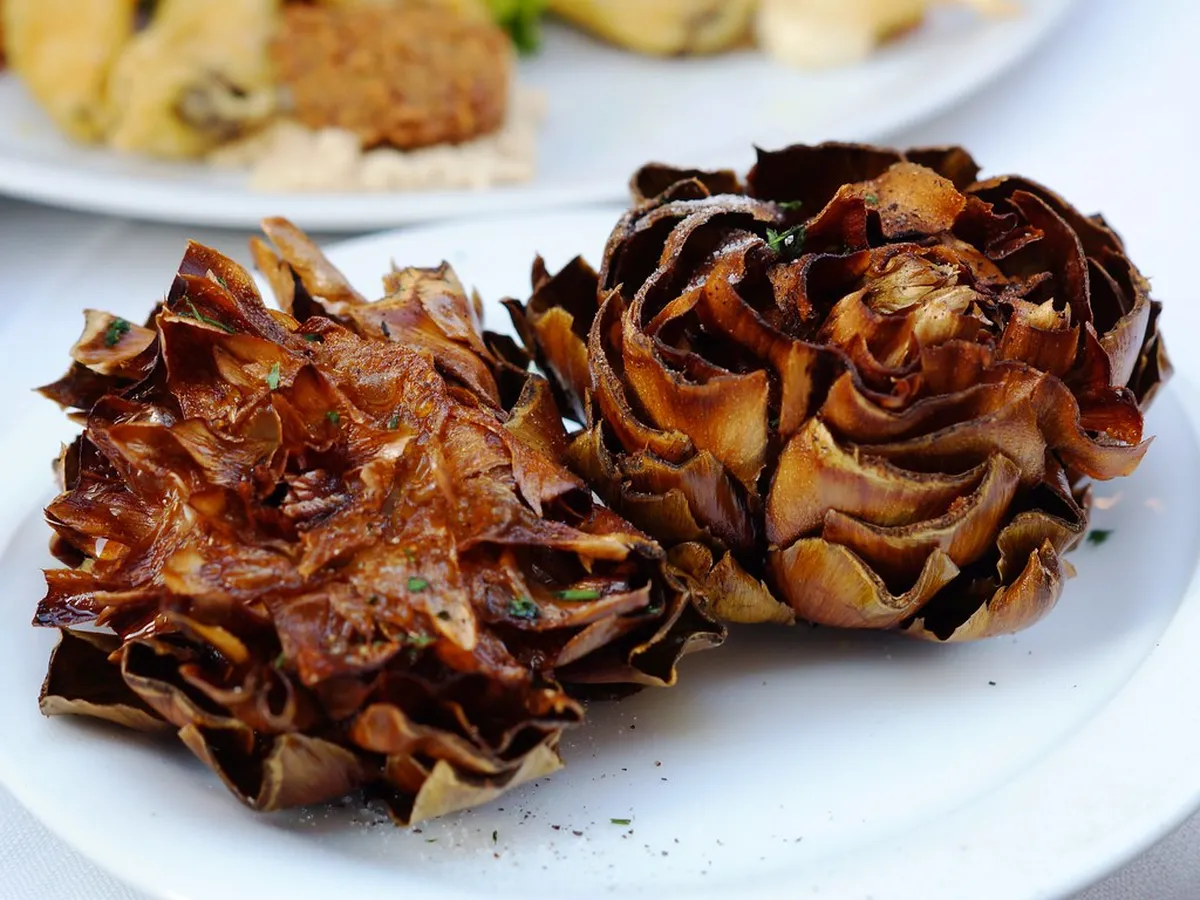
The culinary centrepiece is carciofi alla giudia, deep-fried artichokes cooked Roman-Jewish style until the outer leaves open out and turn golden and crispy. The texture is somewhere between a potato chip and a leafy vegetable, and children who normally refuse greens often eat the whole thing. Most of the kosher trattorias in the neighbourhood serve them from around noon. The ricotta and sour cherry tart, torta di ricotta e visciole, is the dessert to order here and far less well-known than it deserves to be.
Kid-Friendly Restaurants and Street Food
Gatta Mangiona in Monteverde is the best destination pizzeria for families in Rome. The pizza is Roman-style, thin and crisp, with a serious char on the crust. The supplì — fried risotto balls with a molten mozzarella centre — are the thing to order first while you wait for the pizza. This is not a tourist restaurant; it draws locals from across the city and requires a reservation on weekend evenings. Children who are confident eaters do well here; if yours are finicky, the margherita and a marinara pizza between two adults covers most scenarios.
For a seafood dinner in Trastevere, Osteria der Belli at Piazza Sant'Apollonia is a reliable choice. The seafood pasta is the main event. Romans eat dinner late — between 20:00 and 23:00 — so if you arrive between 17:00 and 19:00 without a reservation, you will usually find a table. After dinner, the short walk across the bridge to Gelateria del Teatro on Via dei Coronari is worth the detour: they make small-batch flavours using fresh herbs and seasonal fruit.
For lunch on the move, pizza al taglio shops sell pizza by the slice for €3–5, warm and ready to eat. These are common throughout Trastevere and the Jewish Ghetto and are far more practical with children than a sit-down restaurant at midday. Supplì di Roma near Largo di Torre Argentina is specifically worth knowing: a tiny counter shop selling supplì at around €2 each, open from lunchtime.
Campo de' Fiori market (Monday–Saturday, 07:00–14:00) sells cheese, cured meats, fresh produce, and local gifts. It is a good morning stop for assembling a picnic for Villa Borghese. Avoid the restaurants on the square itself in favour of the streets immediately behind it.
Gelato, Espresso, and the Daily Rituals
Gelato is the obvious pleasure, but the lemon sorbet at Limone — a small gelateria with locations near the Pantheon and in Trastevere — is worth going out of your way for. The lemon basil flavour is the one to order: sharp, herbal, and nothing like the sweet yellow ice cream that passes for lemon gelato at tourist shops. It is best on a hot afternoon between 14:00 and 17:00 when everywhere else is crowded.
Less well-known but equally Roman is grattachecca, a traditional shaved ice drink sold from kiosks along the Tiber embankment from late spring through early autumn. The vendor shaves ice from a large block and dresses it with fresh fruit juice, tamarind syrup, or coconut. It costs around €3–4 and is genuinely different from both gelato and granita. Children take to it immediately, and it is one of the few things you will not find replicated in other Italian cities. The kiosks near Ponte Sisto and along Lungotevere are open from around 10:00 until late evening.
Grattachecca is the perfect refreshment on hot afternoons when gelato lines are longest. Order the tamarind or coconut flavour if you want something different — they are far more popular with children than the berry options. The ice is shaved fresh in front of you and costs a fraction of a gelato while tasting far more like an authentic Roman summer tradition.
Italian espresso culture is fast and cheap when you stand at the bar. A caffè costs around €1 at a neighbourhood bar and roughly €1.50 at a tourist-facing café. Cappuccinos are by convention a morning drink only; ordering one after lunch marks you out as a tourist to every Roman in the room. Children can order a crema di caffè (cold, sweet, coffee-cream) or a cioccolata calda (thick hot chocolate). Aperitivo, the evening pre-dinner ritual of a spritz with free small bites, typically runs from 18:00 to 20:00. Outdoor piazzas in Trastevere and Prati are ideal for this: adults drink, children run, and nobody minds the noise level.
How to Plan a Smooth Rome Attractions Day
Book the Colosseum and Vatican in advance — at least three to four weeks ahead in summer 2026 — and take the earliest available entry slot. By 09:30 the Colosseum is already busy; by 11:00 the queues outside are the full tourist experience that nobody wants. The Vatican is best on a Wednesday morning when the papal audience draws the faithful to St. Peter's Square and the museum galleries inside are noticeably quieter.
Plan for a midday pause between 13:00 and 16:00 in July and August. Heat regularly hits 32–35°C during these hours. Return to the apartment or hotel for a nap, a cold shower, or a swim if your accommodation has a pool. Rome's best evening atmosphere begins around 18:00, so you lose nothing by pausing in the middle of the day. Review the 12 Best Things to Do in Rome pillar guide for a full season-by-season overview and tips on the best months to visit with children.
The city's free drinking fountains, called nasoni, provide cold fresh water on every main street. Fill a reusable bottle at each one and you will never need to buy water from a kiosk. Teach children to plug the bottom hole to make the water arc from the top — it becomes a ritual they look for on every street. This small thing saves money and keeps hydration simple on long walking days. Check our guide on 18 Best Free Things to Do in Rome: A Budget Guide for all the no-cost highlights worth building into your itinerary.
Family-Friendly and Budget-Friendly Options in Rome
Entry fees in Rome add up fast for a family of four. The main cost-saving strategies are straightforward. Children under six enter the Colosseum and most national museums free of charge; children under eighteen enter some state museums free on the first Sunday of each month. The Roman Forum and Palatine Hill are included in the Colosseum ticket, which represents strong value since they are separate archaeological sites that take another two to three hours to explore.
Piazza Navona, the Pantheon exterior, the Trevi Fountain, the Spanish Steps, and the entire Jewish Ghetto are all free to walk through. The Pantheon now charges a small entry fee (€5 for adults, free for children under 18) but this is one of the best-preserved Roman buildings in existence and worth it. The cat sanctuary at Largo di Torre Argentina, where dozens of rescued cats live among the ruins where Julius Caesar was assassinated, is free to view from the street and consistently fascinates children who love animals.
Janiculum Hill offers one of the best free activities in Rome: the daily noon cannon firing from the Gianicolo terrace, which has been happening every day since 1847. Arrive by 11:30 for a front-row position and factor in that the bang is very loud for young children — ear defenders are worth bringing. The Puppet Theater on the hill (San Carlino) runs shows from September through spring; check the schedule if you are visiting outside summer. The hill is reachable by the 115 bus from Trastevere.
Day trips extend the value of a Rome base significantly. A day trip to Tivoli, 30 kilometres east by regional train, gives families the Villa d'Este gardens with their 500 fountains for around €10 adult entry. Children who have tired of museums find the fountains, water features, and open terraces endlessly entertaining. Read our 11 Best Day Trips from Rome guide for further options including Ostia Antica, which rivals the Roman Forum for atmosphere at a fraction of the queuing stress.
Stroller vs. Carrier: A Practical Guide for Rome
The Roman Forum and Palatine Hill are effectively impossible with a standard stroller. The original Roman road surface — large irregular stones called sanpietrini — transmits every vibration directly to the frame and any child sitting in it. A baby carrier is a far better option for any site built on ancient ground. The Colosseum has a lift, but the connecting path to the Forum drops onto uneven excavated terrain almost immediately. Plan to use a carrier for the archaeological circuit and leave the stroller at the hotel on those days.
By contrast, Villa Borghese, the Prati district near the Vatican, and the main boulevards around Piazza Venezia have smooth, wide pavements that work well for any stroller, including compact city buggies. The Bioparco zoo inside Villa Borghese is one of the most genuinely stroller-accessible major attractions in Rome. Castel Sant'Angelo's internal spiral ramp is navigable with a sturdy pushchair. The Explora children's museum is fully accessible.
If you bring a stroller, choose a model with large wheels and a rigid frame rather than a lightweight travel buggy. The Bugaboo and similar performance urban strollers handle the cobblestones significantly better than compact folding models. Some apartment rentals in Trastevere and Prati offer ground-floor storage rooms for strollers — worth asking about when booking, since carrying a pushchair up a narrow spiral staircase is the least enjoyable Roman experience on offer. Metro stations vary: Line A has more working lifts than Line B, but neither is fully reliable. For any day involving heavy metro use, a carrier is the safer bet.
Frequently Asked Questions
What is the best age to take a child to Rome?
Rome is enjoyable for all ages, but children aged seven and older often appreciate the history more. Younger kids will love the gelato, fountains, and parks, while older children can engage with gladiator stories and museum interactive displays.
Are there playgrounds near the Colosseum?
Yes, there is a small playground located in the Parco del Colle Oppio just across the street. It offers a great view of the Colosseum while providing a space for children to play and burn off energy after a tour.
How do I book skip-the-line tickets for the Vatican with kids?
The best way is to book directly through the official Vatican Museums website several weeks in advance. Alternatively, booking a family-specific guided tour can help you navigate the crowds and find the most interesting galleries for children.
Rome is a city that rewards those who take their time and embrace the local pace of life. By mixing world-class history with simple pleasures like park visits and gelato, you can create a memorable trip for the whole family. Remember to stay flexible and allow for spontaneous discoveries in the winding cobblestone alleys.
Whether you are exploring ancient ruins or riding in a Vespa sidecar, the Eternal City offers endless wonder. Use these tips to navigate the logistics and focus on the joy of experiencing Italy together. Safe travels on your upcoming Roman adventure with your little explorers!
You might also like
Continue reading
More guides you'll find useful